← Year 2 design and technology worksheets

Year 2 Freestanding structures: playgrounds worksheet

“Shapes in Playgrounds” is free to print, with no account. It is the first sheet in the Year 2 design and technology unit “Freestanding structures: playgrounds”, for children aged 6 to 7, and takes about 20 minutes.

Print it on A4. The child's pages come first; the answers, and what each wrong answer tells you, are on the grown-up page that follows. Weeks 17 to 24 of the year, 8 sheets in the unit.

Free sample · answers on the last page

Shapes in Playgrounds

Name: ____________ · Date: ____________
Year 2 · Design & technology · about 20 minutes
Answers are on the grown-up page

Today I can name the shapes and materials used in playground structures.

A Look back3 min

  1. 1.

    How many corners does this triangle have?

  2. 2.

    How long is this strip in centimetres?

    012345678910cm
  3. 3.

    How many flat faces does this cube have?

B Watch me, then you4 min

Ali is drawing a playground for the park. He wants a roundabout that spins smoothly.

Watch me

A roundabout is a big circle.

A circle has no corners and no straight edges.

Designers pick a circle so the roundabout can spin smoothly.

Now you
  1. 1.

    A seesaw tips up and down on its middle. Which shape is its plank most like?

    circlelong straight linecurve
  2. 2.

    The screws and bolts that hold playground parts together are usually made from which material?

    woodmetalpaperfabric

C Your turn7 min

Look at the playground. Match each piece to its shape, then sort the parts by material.
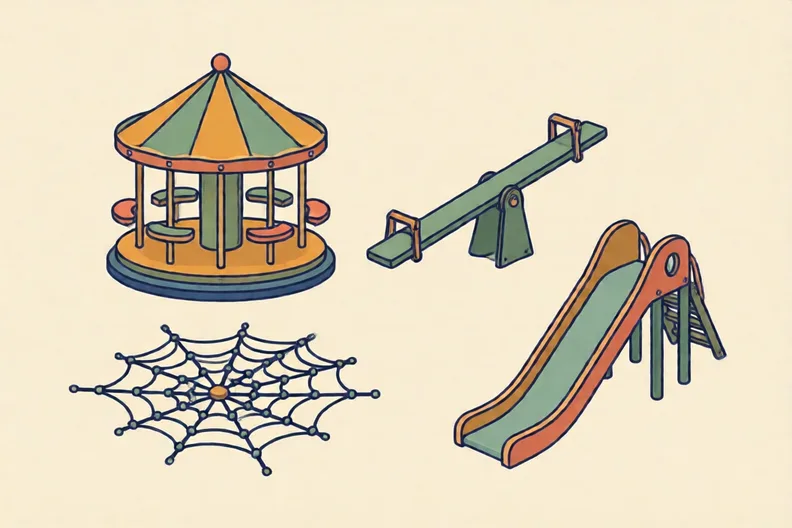
A park with a roundabout, a seesaw, a climbing net and a slide in bright colours
  1. 1.

    Draw a line from each piece to its shape.

    roundaboutseesawclimbing net
    curves like a weba big circlelong straight lines
  2. 2.

    Write each part in the column of the material it is made from.

    the metal boltthe plastic slidethe wooden plank
    woodmetalplastic
  3. 3.

    Which feature helps keep children safer if they fall?

    rubber floorbright painta tall wobbly tower
  4. 4.

    This is the top of a roundabout. Name one other thing in a playground that is round.

Say it out loud: Which parts were easy to match, and which took a second look? What did you notice about the shapes?

D Spot the mistake3 min
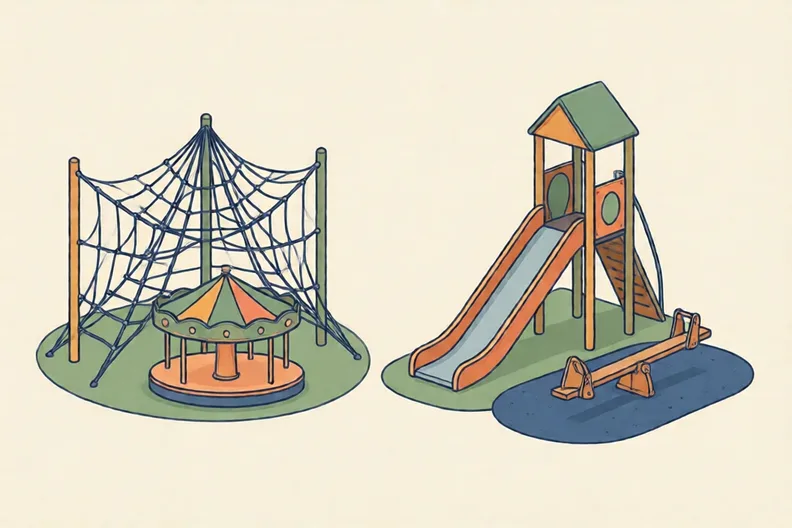
Two different playgrounds side by side, one with a spider web net and one with a straight slide
Lou says: “All playgrounds look the same, so we can copy any design.”
  1. 1.

    Is Lou right? Circle the answer that fits.

    No, designers choose shapes and materials on purpose.Yes, all playgrounds look the same.

E Think deeper4 min

Look at the park in the picture and imagine a new playground for it.
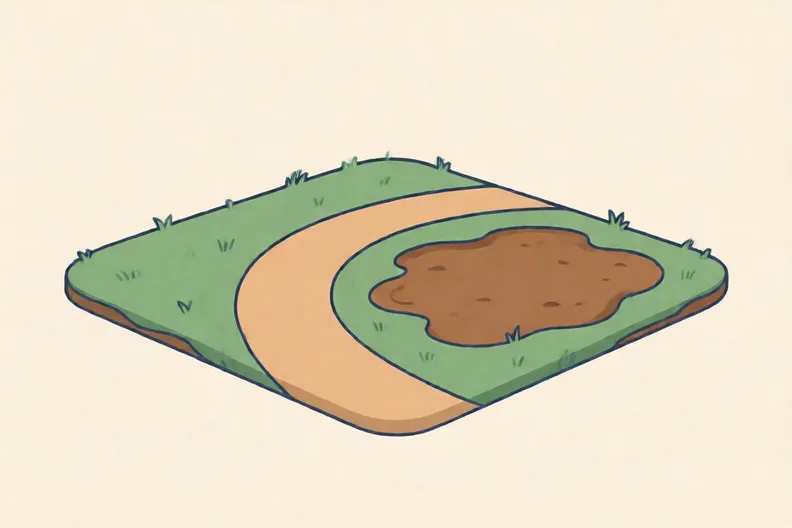
A park corner with green grass, a curved path, and a bare patch of ground.
  1. 1.

    Sketch a playground for this park. Label two shapes and one material. Tell your grown-up why you chose them.

How did it feel?

I can do it Nearly Not yet
StudyDen · Year 2 · Design & technology · Freestanding structures: playgroundsAnswers are on the grown-up page

For the grown-up

Shapes in Playgrounds · 2 minutes to read

Answers, and what a wrong one tells you

A

1. 3

2. 7

3. 6

B

1. long straight line If your child picks circle, ask whether a seesaw plank has any curves. Point to the straight edge.

2. metal If your child picks wood, ask what the screws and bolts feel like. Hard, strong metal holds parts tight.

C

1. roundabout → a big circle; seesaw → long straight lines; climbing net → curves like a web If your child joins the seesaw to the circle, ask which piece turns round and which one tips up and down.

2. wood: the wooden plank · metal: the metal bolt · plastic: the plastic slide If your child puts the bolt under wood, ask which word is on the card. Read the material out loud before writing.

3. rubber floor If your child picks bright paint, ask what the paint does when a child lands on it. Soft ground is what softens a fall.

4. Look for: A named round object found on or near a playground, such as a wheel, a ring, a clock face or a spinning disc. If your child names a square thing, ask what on a playground spins or rolls. A tyre swing or a wheel is round.

D

1. No, designers choose shapes and materials on purpose. If your child circles yes, point to the two playgrounds in the picture. Ask what is different about them, then why a designer might choose each one.

E

1. Look for: A labelled sketch showing at least two shapes and one material, with a reason for one design choice.

Words to use

Say“Which shape is that piece? What is it made from? Why do you think the designer chose it?”
Instead of“That's wrong, try again.”

After the sheet

Go to a park or look out of a window together. Name the shapes you can see on the playground and what each piece is made from. Sketch one piece in pencil. A grown-up does any cutting with sharp tools.

Tick what your child got right in StudyDen. Anything missed comes back in a later Look back box, so there's no need to redo the sheet.

The rest of this unit

7 more sheets come with a StudyDen plan, in teaching order:

  1. Freestanding Playground Structures(with a plan)
  2. Frames, shells and bracing(with a plan)
  3. Measure and mark card(with a plan)
  4. Designing a playground(with a plan)
  5. Building Our Mock-Up(with a plan)
  6. Finishing touches that help(with a plan)
  7. Testing Our Playground(with a plan)

Every Year 2 design and technology worksheet

The worksheets plan opens a printable sheet for every lesson in Years 1 to 6, each with its answers on a separate page for you. It costs £6.99 a month or £59 a year for the whole family, with no free trial.

The full StudyDen plan adds the lessons themselves, marked as your child works, with the worksheets included. It is 7 days free, then £29.99 a month.

Both start with a free account; you choose the plan when you sign up.