← Year 1 history worksheets

Year 1 John Cabot and Brunel worksheet

“Early Explorers and Boats” is free to print, with no account. It is the first sheet in the Year 1 history unit “John Cabot and Brunel”, for children aged 5 to 6, and takes about 21 minutes.

Print it on A4. The child's pages come first; the answers, and what each wrong answer tells you, are on the grown-up page that follows. Weeks 25 to 36 of the year, 12 sheets in the unit.

Free sample · answers on the last page

Early Explorers and Boats

Name: ____________ · Date: ____________
Year 1 · History · about 21 minutes
Answers are on the grown-up page

Today I can tell what an explorer is and how early canoes were made.

A Look back3 min

  1. 1.

    Owain Glyndŵr wanted to be Prince of which country? Write it.

    Owain GlyndŵrPrince of
  2. 2.

    Which season comes after spring? Circle one.

    SpringAutumnWinter
    summerwinter
  3. 3.

    Which season comes just before summer? Circle one.

    SummerAutumnWinter
    springwinter

B Watch me, then you4 min

Ali wants to cross a river. He will make a canoe from a tree trunk.
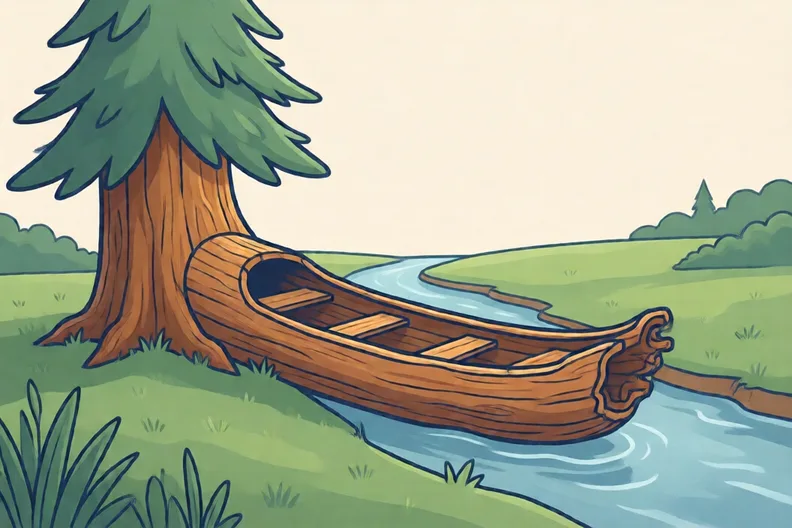
A pine tree trunk lying on a riverbank, cut open to make a boat
Watch me

A tree trunk is a long, round piece of wood.

People cut out the wood inside the trunk.

Now the trunk has an empty space inside. It is hollow.

A hollow trunk can float on the river as a canoe.

Now you
  1. 1.

    Which word means an empty space cut out of the inside? Circle one.

    hollowsharpsoft
  2. 2.

    Which word names a narrow boat you move with a paddle? Circle one.

    canoeexplorerhollow

C Your turn6 min

Read each question. Circle the right word.
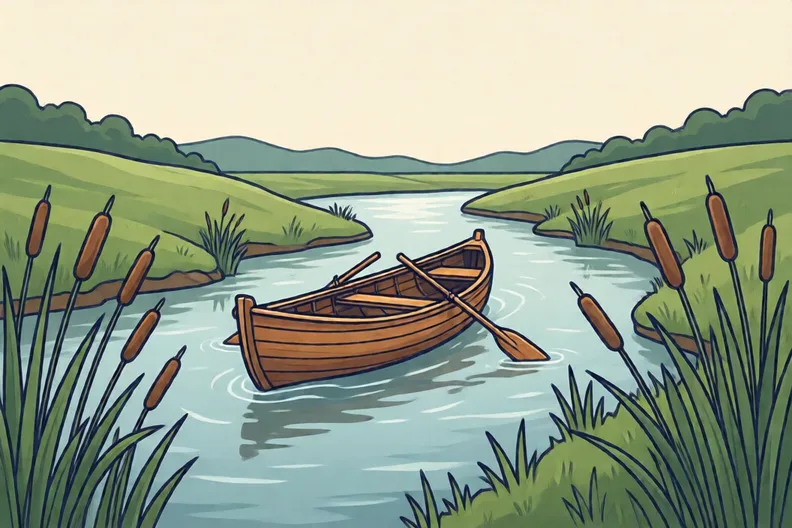
A small canoe floating on a calm river between green banks
  1. 1.

    Which word means someone who goes somewhere they have never been? Circle one.

    explorercanoehollow
  2. 2.

    Ali sits in it and paddles across the river. What is it? Circle one.

    hollowcanoesharp
  3. 3.

    Which word means an empty space cut out of the inside of a tree? Circle one.

    explorercanoehollow
  4. 4.

    Join each word to its meaning with a line.

    explorercanoehollow
    an empty space cut out insidea person who goes somewhere newa narrow boat you paddle

Say it out loud: Which word was hardest to match to its meaning? What helped you remember it?

D Spot the mistake3 min
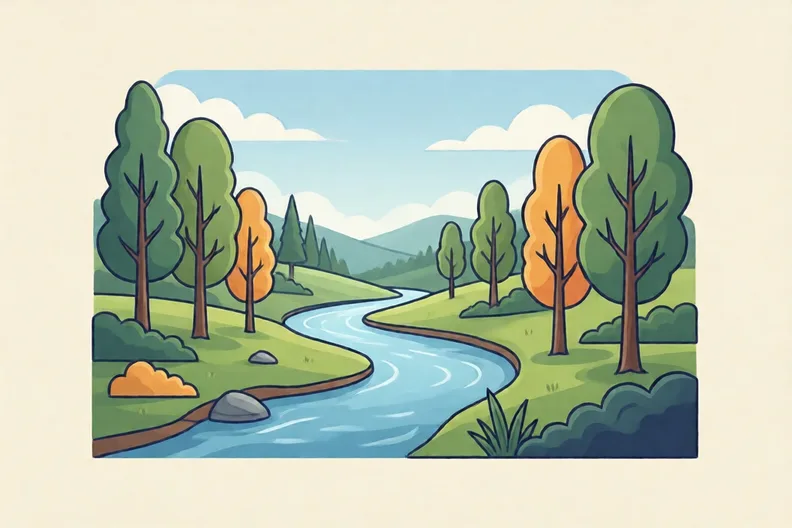
A river winding between green hills and tall trees
Ali says: “Early explorers always used a map to find their way.”
  1. 1.

    Tell your grown-up one thing early explorers used to find their way.

E Think deeper3 min

A river winding between green hills and tall trees
  1. 1.

    Many explorers long ago had no map. How could a river help an explorer find their way?

How did it feel?

I can do it Nearly Not yet
StudyDen · Year 1 · History · John Cabot and BrunelAnswers are on the grown-up page

For the grown-up

Early Explorers and Boats · 2 minutes to read

Answers, and what a wrong one tells you

A

1. Look for: Writes Wales. If your child is stuck, ask: was Owain Prince of Scotland, England or Wales?

2. summer

3. spring

B

1. hollow

2. canoe

C

1. explorer

2. canoe

3. hollow If your child picks canoe, ask what the empty space inside a tree is called.

4. explorer → a person who goes somewhere new; canoe → a narrow boat you paddle; hollow → an empty space cut out inside

D

1. Look for: Mentions rivers or things seen in nature, such as hills, trees or the sun. Not a map. If your child says a map, explain that many early explorers had no map. Ask what they could see outside.

E

1. Look for: Says a river can lead to food or water, or show a way to cross or follow it.

Words to use

Say“What did the explorer see to find the way? Which word fits the picture?”
Instead of“Tell them the answer straight away.”

After the sheet

Find a cardboard tube at home and look inside. Ask what space is inside it, then pretend a pencil is a paddle.

Tick what your child got right in StudyDen. Anything missed comes back in a later Look back box, so there's no need to redo the sheet.

The rest of this unit

11 more sheets come with a StudyDen plan, in teaching order:

  1. Finding the way by nature(with a plan)
  2. Galleys on the big sea(with a plan)
  3. Vikings and their longboats(with a plan)
  4. Finding the way like a Viking(with a plan)
  5. Zheng He's Stone Story(with a plan)
  6. Chinese junks and compasses(with a plan)
  7. Cabot's voyages in time(with a plan)
  8. Tools at Sea(with a plan)
  9. Brunel's Atlantic Race(with a plan)
  10. Tickets on the SS Great Britain(with a plan)
  11. Sail to steam(with a plan)

Every Year 1 history worksheet

The worksheets plan opens a printable sheet for every lesson in Years 1 to 6, each with its answers on a separate page for you. It costs £6.99 a month or £59 a year for the whole family, with no free trial.

The full StudyDen plan adds the lessons themselves, marked as your child works, with the worksheets included. It is 7 days free, then £29.99 a month.

Both start with a free account; you choose the plan when you sign up.