← Year 4 critical thinking worksheets

Year 4 Critical thinking: Summer 2 worksheet

“Testing Rules With What Ifs” is free to print, with no account. It is the first sheet in the Year 4 critical thinking unit “Critical thinking: Summer 2”, for children aged 8 to 9, and takes about 21 minutes.

Print it on A4. The child's pages come first; the answers, and what each wrong answer tells you, are on the grown-up page that follows. Weeks 31 to 36 of the year, 6 sheets in the unit.

Free sample · answers on the last page

Testing Rules With What Ifs

Name: ____________ · Date: ____________
Year 4 · Critical thinking · about 21 minutes
Answers are on the grown-up page

Today I can test a rule with a 'What if?' case and see where it breaks.

A Look back3 min

  1. 1.

    Ice cream sales rose as the days got hotter. Which reply is the best reading of the chart?

    Ice creams sold each day012345678910MonTueWed
    Ice creams make the weather hotter.Hot weather may be the reason sales rose.Every hot day has more sales than every cold day.
  2. 2.

    Sort these cards into the right pile. The tally shows 7 sunny days and 3 rainy days.

    SunnyRainy
    Seven days were sunnySunny days are the bestThree days were rainyRain is boring
    FactOpinion
  3. 3.

    The tally shows 12 votes for bikes and 3 for scooters. Does this prove bikes are the best? Which reply is right?

    BikeScooter
    Yes, 12 is more than 3.No, popular is not the same as best.Yes, everyone agrees.

B Watch me, then you4 min

A thought experiment is a 'What if?' test you run in your head. A rule says: never run in the school corridor. Is there a case where running is the sensible thing?

Watch me
An empty school corridor with a polished floor and coat pegs on the wall

The rule says never. That is a strong word.

What if a child is hurt and a grown-up must be fetched fast?

Running to get help breaks the rule, but it is the right thing to do. So the rule is too strong.

Now you
  1. 1.

    Rule: Never leave the playground without a grown-up. Which situation tests the rule?

    You play tag with friends on the playground.Your teacher asks you to take a note to the office.You sit on the playground bench to read.
  2. 2.

    Why is the word always a warning sign in a rule?

    It makes a claim that is easy to break.It means the rule is a fact.It is only used in maths.

C Your turn6 min

A rule says: always wear a helmet when you cycle. Decide what each situation does to the rule.
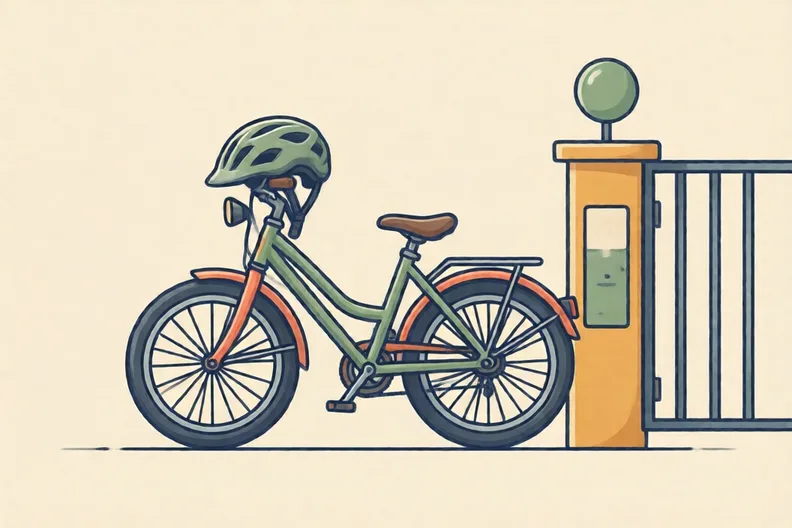
A bicycle with a helmet hanging from the handlebars beside a school gate
  1. 1.

    You ride to the park with your helmet on. What does this do to the rule?

    Breaks the ruleFits the ruleDoes not test the rule
  2. 2.

    You ride to school with no helmet. What does this do to the rule?

    Breaks the ruleFits the ruleDoes not test the rule
  3. 3.

    You walk your bike to school with no helmet. What does this do to the rule?

    Breaks the ruleFits the ruleDoes not test the rule
  4. 4.

    You ride round the park with your helmet in your bag. What does this do to the rule?

    Breaks the ruleFits the ruleDoes not test the rule

Say it out loud: Which word in the rule told you whether the situation was a test? Say the pattern out loud.

D Spot the mistake3 min

Maya says: “Everyone in my class likes maths, so nobody in the school finds it hard.”
Class likesmathsNobody findsit hard
  1. 1.

    Write one what if that shows Maya's claim is too strong.

E Think deeper4 min

Make up your own rule using never or always. Then test it.
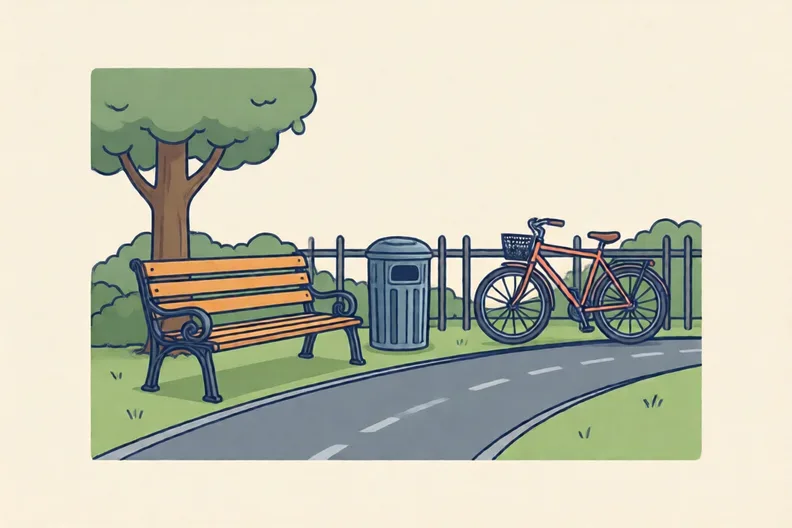
A park bench beside a path with a litter bin and a bicycle leaning on a fence
  1. 1.

    Write your rule. Then write a what if case that might break it. Last, write one sentence on whether the rule should change.

How did it feel?

Tell your grown-up: did the what if idea feel fun, tricky, or both?

I can do it Nearly Not yet
StudyDen · Year 4 · Critical thinking · Critical Thinking: Testing Claims and ArgumentsAnswers are on the grown-up page

For the grown-up

Testing Rules With What Ifs · 2 minutes to read

Answers, and what a wrong one tells you

A

1. Hot weather may be the reason sales rose. If they chose the first option, they have the cause the wrong way round. Ask: can selling ice cream make the weather hotter?

2. Fact: Seven days were sunny, Three days were rainy · Opinion: Sunny days are the best, Rain is boring If 'Rain is boring' landed in Fact, ask the child whether everyone would agree. If not, it is an opinion.

3. No, popular is not the same as best. If they said bikes are best, ask whether 'most popular' and 'best' mean the same thing. Ask them to name one popular thing that is not the best.

B

1. Your teacher asks you to take a note to the office. If they picked a choice that keeps the rule, ask: does this child leave the playground alone? Taking a note for the teacher shows where 'never' is too strong.

2. It makes a claim that is easy to break. If they chose 'a fact', ask: can a rule be a fact and still have a case where it goes wrong? One exception is enough.

C

1. Fits the rule

2. Breaks the rule If they said it fits, they may have missed 'always'. Ask: is the helmet on the head while the bike is being ridden?

3. Does not test the rule If they said it breaks the rule, ask: is the child cycling at all? The rule only applies to riding.

4. Breaks the rule If they said it fits, ask: is the helmet being worn, or only carried? The word wear is the clue.

D

1. Look for: A what if case, such as a child in another class who finds maths hard, or a child who likes maths but still finds it hard, showing that 'nobody' is too strong. If they agree with Maya, ask: does liking maths in one class prove that nobody in the school finds it hard? Ask them to name one child who might.

E

1. Look for: A rule using never or always, a what if case that could break the rule, and one sentence saying whether the rule should change.

Words to use

Say“What was the rule, and what what if case could break it?”
Instead of“Rules are rules, so there is no need to think about them again.”

After the sheet

Pick a rule at home, such as 'always be in bed by eight'. At teatime, ask one what if together, like 'What if someone is poorly?' and talk about whether the rule still works.

Tick what your child got right in StudyDen. Anything missed comes back in a later Look back box, so there's no need to redo the sheet.

The rest of this unit

5 more sheets come with a StudyDen plan, in teaching order:

  1. Does the Rule Still Hold?(with a plan)
  2. Building My Casebook(with a plan)
  3. Debate with evidence(with a plan)
  4. Choosing the Right Tool(with a plan)
  5. Whole toolkit together(with a plan)

Every Year 4 critical thinking worksheet

The worksheets plan opens a printable sheet for every lesson in Years 1 to 6, each with its answers on a separate page for you. It costs £6.99 a month or £59 a year for the whole family, with no free trial.

The full StudyDen plan adds the lessons themselves, marked as your child works, with the worksheets included. It is 7 days free, then £29.99 a month.

Both start with a free account; you choose the plan when you sign up.