← Year 4 history worksheets

Year 4 Ancient Greek civilisation: what is its most significant legacy? worksheet

“Myth or real history?” is free to print, with no account. It is the first sheet in the Year 4 history unit “Ancient Greek civilisation: what is its most significant legacy?”, for children aged 8 to 9, and takes about 20 minutes.

Print it on A4. The child's pages come first; the answers, and what each wrong answer tells you, are on the grown-up page that follows. Weeks 7 to 12 of the year, 6 sheets in the unit.

Free sample · answers on the last page

Myth or real history?

Name: ____________ · Date: ____________
Year 4 · History · about 20 minutes
Answers are on the grown-up page

Today I can tell a myth from a real event and explain why a great story lasts.

A Look back3 min

  1. 1.

    Which is older: 500 BC or 300 BC? Circle the older one.

    500 BC400 BC300 BC
    500 BC300 BC
  2. 2.

    People lived in the city of Troy more than 3,000 years ago. Homer's poem is about 2,700 years old. Which came first?

    1200 BC1000 BC800 BC600 BC400 BC200 BCAD 1Troy standsHomer's poem
    the city of TroyHomer's poem
  3. 3.

    The Romans came to Britain in AD 43. Is that before or after the 0 mark on the timeline?

    100 BC50 BCAD 1AD 50AD 100Romans arrive
    beforeafter

B Watch me, then you4 min

Homer wrote The Iliad in about 700 BC. Where does that go on a timeline?

Watch me
800 BC700 BC600 BC500 BC400 BC300 BC200 BC100 BCAD 1Homer's poem

The 0 on the line is where BC ends and AD begins.

BC years count down towards the 0 mark.

700 BC is 700 years before the 0 mark, so it is on the left.

Now you
  1. 1.

    Ali says Homer's poem was written after the 0 mark on the timeline. Is Ali right? Circle yes or no.

    800 BC400 BCAD 1AD 400AD 800
    yesno

C Your turn7 min

Read each question. Circle the answer that fits the story, then put the parts in order.
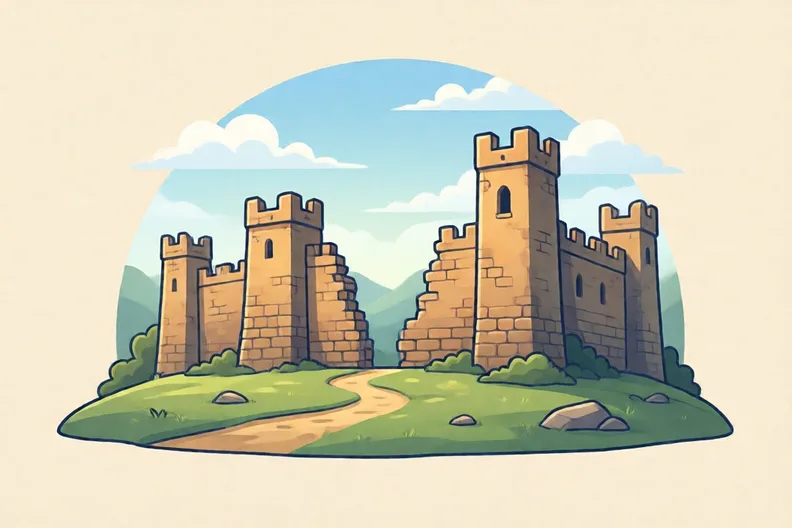
Ruined stone walls on a grassy hill under a blue sky
  1. 1.

    Was the city of Troy a real place? Circle one.

    a real placea made-up place
  2. 2.

    In Homer's story of the Trojan War, gods join the fighting. Is his story a true event or a myth? Circle one.

    a true eventa myth
  3. 3.

    Was Achilles a king of Troy or a hero in a myth? Circle one.

    a king of Troya hero in a myth
  4. 4.

    The Greeks won by tricking Troy with a wooden horse. They needed this trick after Achilles died. The war began when Paris took Helen to Troy. Put the story in order. Write 1 to 4 in the boxes.

    1. The Greeks win the war
    2. Paris takes Helen to Troy
    3. The Greeks hide in a wooden horse
    4. Achilles is killed in battle

Say it out loud: What changed from one question to the next? Tell your grown-up one part that was real and one part that only lives in the story.

D Spot the mistake3 min
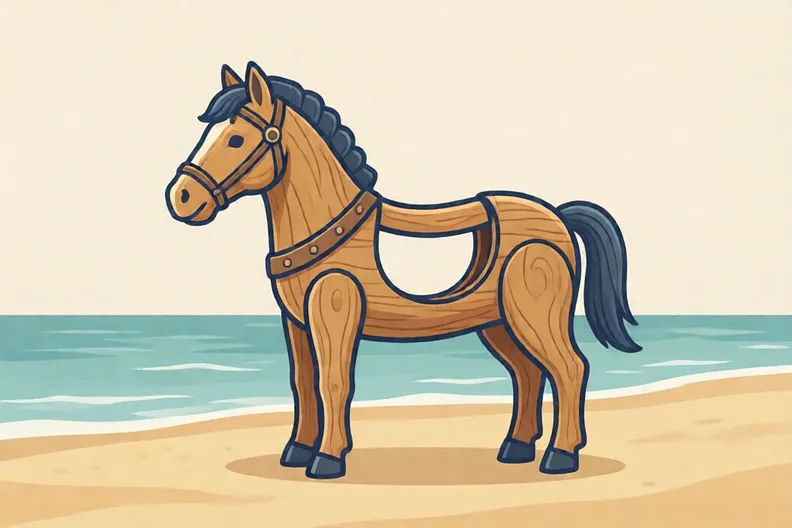
A huge wooden horse standing on a sandy beach
Kit says: “The Trojan War was real, so the wooden horse was real too.”
  1. 1.

    Why is Kit wrong? Write one sentence.

E Think deeper4 min

1000 BC500 BCAD 1AD 5001000150020002500Homer's poemToday
  1. 1.

    Why do you think a story from more than 2,500 years ago is still read today? Give two reasons.

How did it feel?

I can do it Nearly Not yet
StudyDen · Year 4 · History · Ancient Greek civilisation: what is its most significant legacy?Answers are on the grown-up page

For the grown-up

Myth or real history? · 2 minutes to read

Answers, and what a wrong one tells you

A

1. 500 BC your child may think the bigger number is later. BC years count down, so ask which year sits further left on the line.

2. the city of Troy your child may have picked the poem. Ask which is longer ago, 3,000 years or 2,700 years.

3. after

B

1. no your child thinks 700 BC is later than the 0 mark. BC years count down, so 700 BC is earlier. Point to the 0 mark on the line and ask which side the poem is on.

C

1. a real place your child thinks the whole story is made up. Troy's ruins have been dug up, so the city was real.

2. a myth your child may think the story happened because the city was real. Ask whether real gods could join a battle.

3. a hero in a myth your child may think Achilles was a real king. He is a character in the myth, so ask who first told his story.

4. 1 Paris takes Helen to Troy · 2 Achilles is killed in battle · 3 The Greeks hide in a wooden horse · 4 The Greeks win the war your child may have put the end first. Ask what has to happen before the Greeks can win.

D

1. Look for: Says the horse comes from the myth or story, or that a real city or fight does not make every part of the story true. your child has mixed up a myth with history. Ask whether this story is in a history book or was told as a story.

E

1. Look for: Two reasons, such as an exciting story, its use in schools, or its influence on later art and writing.

Words to use

Say“Ask: is this from a history book, or from a story people told? How do you know?”
Instead of“Tell them the Trojan War was a real war that happened just as Homer described.”

After the sheet

At dinner, tell a silly made-up story about the family cat. Then ask which parts could be true and which could never be.

Tick what your child got right in StudyDen. Anything missed comes back in a later Look back box, so there's no need to redo the sheet.

The rest of this unit

5 more sheets come with a StudyDen plan, in teaching order:

  1. Thinkers Who Asked Big Questions(with a plan)
  2. The first Olympic Games(with a plan)
  3. Athens and Britain: who votes?(with a plan)
  4. Greek words and buildings(with a plan)
  5. Judging the greatest legacy(with a plan)

Every Year 4 history worksheet

The worksheets plan opens a printable sheet for every lesson in Years 1 to 6, each with its answers on a separate page for you. It costs £6.99 a month or £59 a year for the whole family, with no free trial.

The full StudyDen plan adds the lessons themselves, marked as your child works, with the worksheets included. It is 7 days free, then £29.99 a month.

Both start with a free account; you choose the plan when you sign up.