← Year 1 religious education worksheets

Year 1 Stories: how do different people find deeper meanings? worksheet

“Hidden messages in stories” is free to print, with no account. It is the first sheet in the Year 1 religious education unit “Stories: how do different people find deeper meanings?”, for children aged 5 to 6, and takes about 20 minutes.

Print it on A4. The child's pages come first; the answers, and what each wrong answer tells you, are on the grown-up page that follows. Weeks 25 to 30 of the year, 6 sheets in the unit.

Free sample · answers on the last page

Hidden messages in stories

Name: ____________ · Date: ____________
Year 1 · Religious education · about 20 minutes
Answers are on the grown-up page

Today I can find the hidden message inside a short fable.

A Look back3 min

  1. 1.

    A story has a beginning, a middle and an end. Which word goes in the empty box? Circle one.

    BeginningMiddle
    EndStartLesson
  2. 2.

    Monday comes first, then Tuesday. Which day goes in the empty box? Circle one.

    MondayTuesdayThursday
    WednesdayFridaySunday
  3. 3.

    The seasons go round. What season comes after Autumn? Circle one.

    SummerAutumnSpring
    WinterSpringSummer

B Watch me, then you5 min

A hare and a tortoise have a race. The hare runs fast, then stops for a nap. The tortoise keeps walking. What is the hidden message?
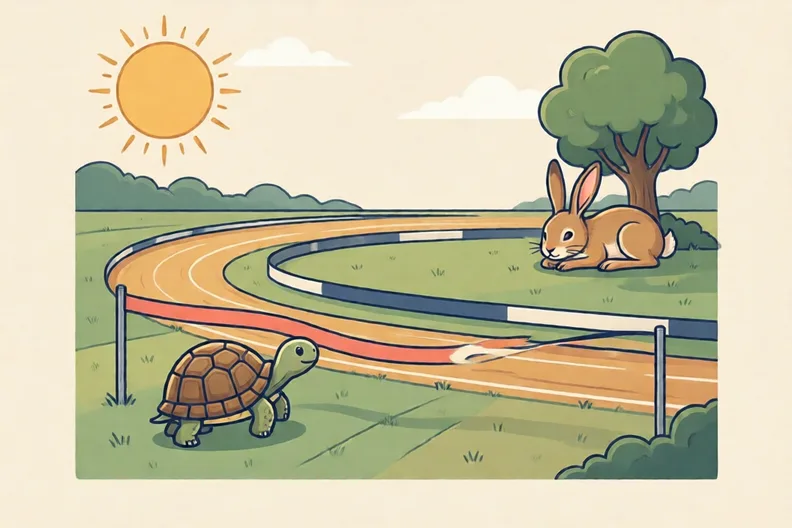
A sunny grassy track with a tortoise near the finish ribbon and a hare asleep far behind
Watch me
Hare runs far aheadHare falls asleepTortoise walks on

The hare runs fast, then falls asleep.

The tortoise keeps going slowly and steadily.

The hidden message: keep going, even when you are slow.

Now you
  1. 1.

    A lion lets a mouse go free. Later, the mouse chews the ropes that trap the lion. What is the hidden message? Circle the best one.

    Lion lets mouse goLion caught in netMouse chews ropes
    Big animals are always bestSmall kindness can help even a big friendLions should always sleep

C Your turn7 min

Read each fable and look at its pictures. Circle the hidden message for each one.

  1. 1.

    A crow is thirsty. It drops pebbles into a pot until the water rises. What is the hidden message? Circle one.

    Crow is thirstyCrow drops pebblesWater rises, drinks
    Crows should live near waterThink carefully and you can solve a problemNever drink from pots
  2. 2.

    A goose lays a golden egg every day. The owner wants all the gold at once and loses the goose. What is the hidden message? Circle one.

    Goose lays gold eggsOwner wants it allGoose gone, no eggs
    Gold eggs are very rareGeese should be kept in a shedBeing greedy can lose what you already have
  3. 3.

    A fox cannot reach some grapes. It says they must be sour. What is the hidden message? Circle one.

    Fox sees grapesFox jumps, missesFox calls them sour
    Do not pretend you did not want what you cannot reachGrapes are always sourFoxes do not like fruit
  4. 4.

    A country mouse visits a town mouse. The feast is fancy, but a dog chases them. The country mouse runs home. What is the hidden message? Circle one.

    Country mouse visitsTown mouse feastsDog chases them both
    Mice should never leave homeA quiet, safe life can be better than a fancy, scary oneTown food is always the best

Say it out loud: Which words in each story helped you find the hidden message?

D Spot the mistake3 min
An open book of animal stories on a table beside a small lamp
Kit says: “A fable is a true story about real people.”
  1. 1.

    Is Kit right? Write why in one or two sentences.

E Think deeper3 min

  1. 1.

    Make up a short story with an animal. Give it a hidden message. Tell it to your grown-up, then write the message here.

How did it feel?

I can do it Nearly Not yet
StudyDen · Year 1 · Religious education · Stories: how do different people find deeper meanings?Answers are on the grown-up page

For the grown-up

Hidden messages in stories · 2 minutes to read

Answers, and what a wrong one tells you

A

1. End If they choose Start, they may think the ending comes first. Point to the last box and ask what happens there.

2. Wednesday If they choose Friday, they may have skipped some days. Ask them to say the days in order, touching each box as they go.

3. Winter If they choose Spring, they may have skipped a season. Ask them to say the seasons in order, pointing as they go.

B

1. Small kindness can help even a big friend If they choose Big animals are always best, they are looking at size. Ask: what did the mouse do for the lion?

C

1. Think carefully and you can solve a problem If they choose Crows should live near water, they are talking about the crow, not the lesson. Ask what the crow thought of to get a drink.

2. Being greedy can lose what you already have If they choose Gold eggs are very rare, they have noticed a detail, not the lesson. Ask what the owner did and what happened after.

3. Do not pretend you did not want what you cannot reach If they choose Grapes are always sour, they have taken the fox's words as the lesson. Ask: did the fox really think they were sour?

4. A quiet, safe life can be better than a fancy, scary one If they choose Town food is always the best, they have looked at the feast. Ask: what made the country mouse glad to go home?

D

1. Look for: Says no, because fables are made-up stories, often with animals, that teach a lesson. If they write yes, they may think all old stories are true. Say: fables are made up to teach a lesson, even when they seem like real life.

E

1. Look for: A short animal story with one sentence saying what it teaches.

Words to use

Say“What is the story trying to teach us? Which words helped you find it?”
Instead of“Tell them the answer straight away.”

After the sheet

At bedtime, read one page of any story and ask: what is this story trying to teach us? Talk it through together.

Tick what your child got right in StudyDen. Anything missed comes back in a later Look back box, so there's no need to redo the sheet.

The rest of this unit

5 more sheets come with a StudyDen plan, in teaching order:

  1. The Lost Son Story(with a plan)
  2. Hidden meanings in a parable(with a plan)
  3. The Crying Camel(with a plan)
  4. The Ants Story(with a plan)
  5. One Small Kind Act(with a plan)

Every Year 1 religious education worksheet

The worksheets plan opens a printable sheet for every lesson in Years 1 to 6, each with its answers on a separate page for you. It costs £6.99 a month or £59 a year for the whole family, with no free trial.

The full StudyDen plan adds the lessons themselves, marked as your child works, with the worksheets included. It is 7 days free, then £29.99 a month.

Both start with a free account; you choose the plan when you sign up.