← Year 4 design and technology worksheets

Year 4 Textile pattern pieces: hats and caps worksheet

“Hats, jobs and looks” is free to print, with no account. It is the first sheet in the Year 4 design and technology unit “Textile pattern pieces: hats and caps”, for children aged 8 to 9, and takes about 22 minutes.

Print it on A4. The child's pages come first; the answers, and what each wrong answer tells you, are on the grown-up page that follows. Weeks 17 to 24 of the year, 8 sheets in the unit.

Free sample · answers on the last page

Hats, jobs and looks

Name: ____________ · Date: ____________
Year 4 · Design & technology · about 22 minutes
Answers are on the grown-up page

Today I can explain how a designer's choices about function and aesthetics shape a hat.

A Look back3 min

  1. 1.

    A lever turns around one fixed point. What is that point called? Circle your answer.

    pivot
    pivothandleweight
  2. 2.

    How many centimetres long is the strip?

    012345678910cm
  3. 3.

    A wheel on an axle is used to help with a job. What does it do? Circle your answer.

    axle
    moving things with less effortmaking paper stiffercolouring fabric

B Watch me, then you4 min

A milliner is a person who makes hats. This milliner is making a rain hat that must keep rain off and look cheerful.

Watch me
yellowgrey

Function: the hat must keep rain off the head.

Aesthetics: bright yellow gives the hat a cheerful look.

So the milliner picks waterproof fabric for the job and yellow for the look.

Now you
  1. 1.

    A child wants a party hat that looks bright and sunny. Which colour would you pick? Circle your answer.

    blackyellowbrown
    blackyellowbrown

C Your turn8 min

Each row changes one thing. Read the hat's job first, then decide how it looks.
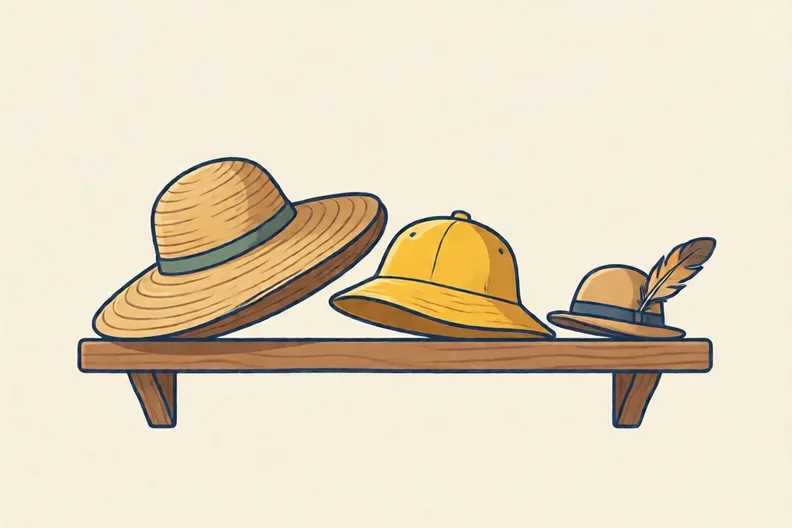
Three hats on a wooden shelf: a straw hat, a yellow rain hat and a hat with a feather
  1. 1.

    Write each card in the right column.

    Keeps the sun off the faceBright stripesStops rain soaking throughSparkly sequins
    FunctionAesthetics
  2. 2.

    A sun hat must let air pass through to keep the head cool. Which material is best? Circle your answer.

    thick feltopen strawwaterproof plastic
  3. 3.

    A milliner wants a hat that looks playful for a party. Which decision is about aesthetics? Circle your answer.

    add bright feathersmake the brim wider for shadeadd a strap to hold it on
  4. 4.

    Pick one hat from the shelf picture. Write two sentences about it: one about its job and one about how it looks.

Say it out loud: What is the job of the hat, and what is the look? Which words in each card told you?

D Spot the mistake3 min

Virgil Abloh was a fashion designer. He designed clothes, and also caps, bags and shoes.
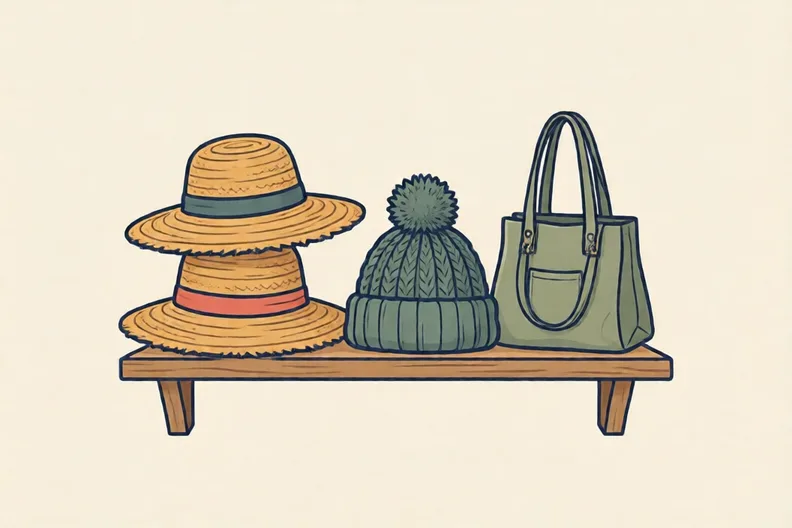
A small shop shelf with straw hats, a woolly hat and a canvas bag
Sam says: “Fashion designers only design clothes, so they never design hats.”
  1. 1.

    Is Sam right? Explain why in one sentence.

E Think deeper4 min
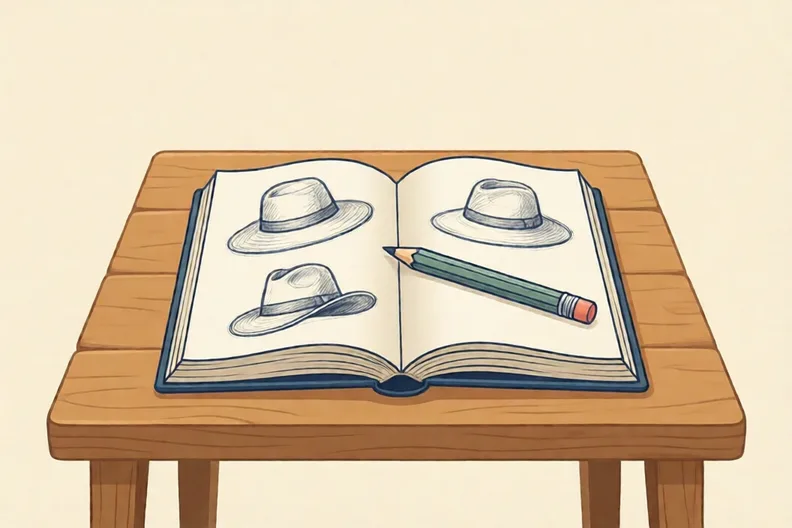
An open sketchbook on a table with three quick pencil hat sketches
  1. 1.

    Virgil Abloh trained to design buildings before he designed clothes. Name another job whose skills could help a hat designer, and explain how.

How did it feel?

I can do it Nearly Not yet
StudyDen · Year 4 · Design & technology · Textile pattern pieces: hats and capsAnswers are on the grown-up page

For the grown-up

Hats, jobs and looks · 2 minutes to read

Answers, and what a wrong one tells you

A

1. pivot If they choose handle, they have picked the part the hand pushes. Ask them to point to the fixed point the lever turns on.

2. 7 If they write 8, they counted the start as an extra step. Ask them to line the strip up with the 0 mark and read where it ends.

3. moving things with less effort If they choose colouring fabric, they have mixed up the wheel with a paintbrush. Ask them to turn the wheel with one finger and say what gets easier.

B

1. yellow If they choose black or brown, ask which colour looks most like sunshine.

C

1. Function: Keeps the sun off the face, Stops rain soaking through · Aesthetics: Bright stripes, Sparkly sequins If a card is in the wrong column, ask them what the hat would do without it. If the answer is a job, it is function. If it only changes how the hat looks, it is aesthetics.

2. open straw If they choose thick felt, the felt is dense and traps heat. Ask them whether air can pass through it.

3. add bright feathers If they choose the strap or the wider brim, those are jobs for the hat. Ask them which option only changes how the hat looks.

4. Look for: Two sentences about one named hat: one about its job or function and one about how it looks or its aesthetics. If both sentences are about the look, ask them what the hat is for and write that down as the first sentence.

D

1. Look for: Says Sam is wrong and gives a reason, such as that fashion designers also design accessories like hats, bags or belts. If they say Sam is right, read the line about Virgil Abloh again. Ask: what did he design besides clothes?

E

1. Look for: A named job plus a reason that links its skills to designing or making hats. If they name a job with no reason, ask what that person does that would help with a hat's shape or look.

Words to use

Say“What does this hat need to do, and how should it look?”
Instead of“Hats are just for keeping warm, so the look does not matter.”

After the sheet

Look at three hats at home, or in a catalogue, and sort them into what each hat does and how it looks.

Tick what your child got right in StudyDen. Anything missed comes back in a later Look back box, so there's no need to redo the sheet.

The rest of this unit

7 more sheets come with a StudyDen plan, in teaching order:

  1. Ask Before You Design(with a plan)
  2. Hats from flat pieces(with a plan)
  3. Fabric Properties Detectives(with a plan)
  4. Simple Pattern Pieces(with a plan)
  5. Cutting a Test Pattern(with a plan)
  6. Use feedback to improve(with a plan)
  7. Improve a Hat with Feedback(with a plan)

Every Year 4 design and technology worksheet

The worksheets plan opens a printable sheet for every lesson in Years 1 to 6, each with its answers on a separate page for you. It costs £6.99 a month or £59 a year for the whole family, with no free trial.

The full StudyDen plan adds the lessons themselves, marked as your child works, with the worksheets included. It is 7 days free, then £29.99 a month.

Both start with a free account; you choose the plan when you sign up.