← Year 5 critical thinking worksheets

Year 5 Critical thinking: Spring 1 worksheet

“Hasty or safe? Checking samples” is free to print, with no account. It is the first sheet in the Year 5 critical thinking unit “Critical thinking: Spring 1”, for children aged 9 to 10, and takes about 24 minutes.

Print it on A4. The child's pages come first; the answers, and what each wrong answer tells you, are on the grown-up page that follows. Weeks 13 to 18 of the year, 6 sheets in the unit.

Free sample · answers on the last page

Hasty or safe? Checking samples

Name: ____________ · Date: ____________
Year 5 · Critical thinking · about 24 minutes
Answers are on the grown-up page

Today I can tell a hasty generalisation from a safe one by checking how many people were asked and who they were.

A Look back3 min

  1. 1.

    Ravi meets 2 cats. Both are grumpy. He says: “All cats are grumpy.” Which kind of claim is this? Circle your answer.

    GrumpyFriendly
    Hasty generalisationSafe generalisation
  2. 2.

    Lena says: “The park is closed because the park is closed.” Does the reason prove the claim? Circle your answer.

    Park is closedbecausePark is closed
    Yes, the reason proves itNo, the reason just repeats the claim
  3. 3.

    Survey A asked 5 pupils from one class. Survey B asked 50 pupils from every class. Which survey tells you more about the whole school, and why?

    Pupils asked in each survey05101520253035404550Survey ASurvey B

B Watch me, then you4 min

Mia asks 3 friends at lunch what they like to read. All 3 say comics. Mia says: “Everyone in our school loves comics.”

Watch me
ComicsOther books

Mia asked only 3 people. That is a small sample.

All 3 were her friends at one lunch table, so her sample is not varied either.

Her claim is about the whole school, so it is a hasty generalisation.

Now you
  1. 1.

    Jaz asks 4 people at the bus stop if they like rain. All 4 say no. Jaz says: “People never like rain.” Is this claim fair? Circle your answer.

    Like rainDo not like rain
    HastySafe
  2. 2.

    Ben asks 20 pupils in one school how they travel. He writes: “Pupils always walk to school.” Circle the word that would make his claim safer.

    How 20 pupils travel to school012345678910111213141516WalkBusCar
    alwaysoftennever

C Your turn8 min

Priya asks pupils which lunch they like best. For each row, circle Hasty or Safe for her claim.

  1. 1.

    Priya asks 3 pupils, all at her school. All 3 say pasta. She says: “Pasta tends to be the favourite lunch for Year 5 pupils.” Circle your answer.

    At our schoolFrom other schools
    HastySafe
  2. 2.

    Priya asks 30 pupils, all at her school. Most say pasta. She says: “Pasta tends to be the favourite lunch for Year 5 pupils.” Circle your answer.

    At our schoolFrom other schools
    HastySafe
  3. 3.

    Priya asks 30 pupils from six schools: 12 from hers and 18 from others. Most say pasta. She says: “Pasta tends to be the favourite lunch for Year 5 pupils.” Circle your answer.

    Where the 30 pupils came from02468101214161820At our schoolFrom other schools
    HastySafe
  4. 4.

    Priya asks 30 pupils from six schools. Most of the 12 at her school say pasta, but most of the other 18 do not. She writes down only her own 12. She says: “Pasta tends to be the favourite lunch for Year 5 pupils.” Circle your answer.

    At our schoolFrom other schools
    HastySafe

Say it out loud: What changed from one row to the next, and what stayed the same? Which change made the claim safer or less safe?

D Spot the mistake3 min
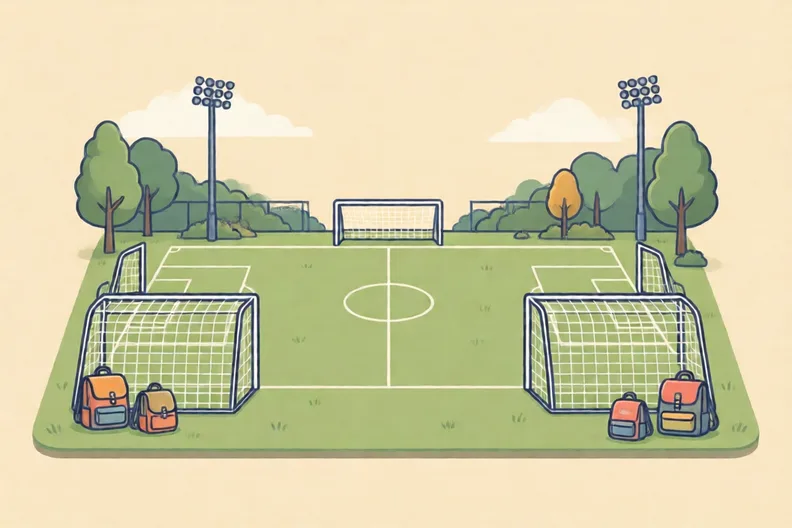
An empty school football pitch with goal posts and a few bags on the grass
Ali says: “I asked 3 friends at football. They all like pasta. So every child in the world likes pasta.”
  1. 1.

    Why is Ali's jump too big? Write one sentence.

E Think deeper4 min

  1. 1.

    Write one safe sentence about this chart. Use at least two hedging words, such as tends to, often or on average. Say it only describes this class.

    Favourite colour in a made-up class of 10BlueGreenRed= 1

How did it feel?2 min

I can do it Nearly Not yet
StudyDen · Year 5 · Critical thinking · Year 5 Critical Thinking: Reasoning ErrorsAnswers are on the grown-up page

For the grown-up

Hasty or safe? Checking samples · 2 minutes to read

Answers, and what a wrong one tells you

A

1. Hasty generalisation your child may think two cases is enough. Ask: how many cats did Ravi actually meet? Two is far too few to say what all cats are like.

2. No, the reason just repeats the claim If your child says yes, ask: does the reason give any new information? If the reason is the claim said again, it proves nothing.

3. Look for: Picks Survey B and says it asked more pupils or a wider mix of classes. If your child picks Survey A, ask how many pupils each survey asked, and from how many classes. More pupils from more classes gives better evidence.

B

1. Hasty If your child says safe, ask: how many people were asked, and were they all at one bus stop? Four people at one place cannot show what people never do.

2. often If your child picks never, ask: do 14 of the 20 pupils never walk? The chart shows most walk, so never is wrong. Often leaves room for exceptions.

C

1. Hasty your child may think the hedge word 'tends to' makes it safe. Ask: is 3 pupils from one school enough to show what Year 5 pupils tend to eat?

2. Hasty If your child says safe because 30 is a big number, ask: were all 30 from the same school? Size helps, but variety matters too.

3. Safe If your child says hasty, ask: did the pupils come from different schools? A wider, varied sample with a hedged claim is a safer generalisation.

4. Hasty If your child says safe, ask: what happened to the 18 pupils from other schools? Leaving out evidence that does not fit is cherry-picking.

D

1. Look for: Says that 3 friends at one game is too few or not varied enough, so the claim about every child is not supported. If your child only says 'he is wrong', ask: how many people did Ali ask, and who were they? Then ask whether that can show what every child likes.

E

1. Look for: A sentence that says blue is the most popular in this class, uses at least two hedging words, and says it only describes these 10 pupils.

Words to use

Say“How many people did she ask, and were they all alike? Could they show what everyone thinks?”
Instead of“Tell them the answer is 'hasty' and move on without asking why.”

After the sheet

Ask 3 people at home which vegetable they like best. Next time you see friends or family, ask 10 more people. Compare the two lists and talk about which one you would trust more.

Tick what your child got right in StudyDen. Anything missed comes back in a later Look back box, so there's no need to redo the sheet.

The rest of this unit

5 more sheets come with a StudyDen plan, in teaching order:

  1. Careful claims, not bold ones(with a plan)
  2. Idea or Person?(with a plan)
  3. Who is speaking?(with a plan)
  4. Spotting Attacks on the Person(with a plan)
  5. Feelings or Facts?(with a plan)

Every Year 5 critical thinking worksheet

The worksheets plan opens a printable sheet for every lesson in Years 1 to 6, each with its answers on a separate page for you. It costs £6.99 a month or £59 a year for the whole family, with no free trial.

The full StudyDen plan adds the lessons themselves, marked as your child works, with the worksheets included. It is 7 days free, then £29.99 a month.

Both start with a free account; you choose the plan when you sign up.