← Year 5 history worksheets

Year 5 Britain's settlement by Anglo-Saxons: what changed after the Romans left? worksheet

“Britain as the Romans left” is free to print, with no account. It is the first sheet in the Year 5 history unit “Britain's settlement by Anglo-Saxons: what changed after the Romans left?”, for children aged 9 to 10, and takes about 22 minutes.

Print it on A4. The child's pages come first; the answers, and what each wrong answer tells you, are on the grown-up page that follows. Weeks 19 to 24 of the year, 6 sheets in the unit.

Free sample · answers on the last page

Britain as the Romans left

Name: ____________ · Date: ____________
Year 5 · History · about 22 minutes
Answers are on the grown-up page

Today I can explain what changed in Britain as the Romans left, and where the Scots came from.

A Look back3 min

  1. 1.

    The Romans came to Britain in 43 CE. In 122 CE, a Roman emperor ordered a great wall across the north. Who was he?

    AD 1AD 25AD 50AD 75AD 100AD 125AD 150Romans arriveWall ordered
  2. 2.

    Which group of peoples lived in Britain before the Romans came? Write one word.

    AD 1AD 20AD 40AD 60AD 80AD 100Romans arrive
  3. 3.

    Fill the gap in this chain of ages.

    Stone AgeIron Age

B Watch me, then you4 min

In 367 CE, Picts from the north and Scots from Ireland attacked Roman Britain. In 401 CE, the last Roman soldiers left Hadrian's Wall. What changed for Britain?

Watch me
AD 360AD 370AD 380AD 390AD 400AD 410Picts and Scots attackLast soldiers leave

Find 367 and 401 on the timeline. The attack came first.

Roman soldiers had guarded Britain against raids like this one.

After 401 the soldiers had gone, so Britain had to protect itself.

Now you
  1. 1.

    After 401 CE, who had to guard Britain's towns? Circle your answer.

    AD 400AD 405AD 410AD 415AD 420Last soldiers leaveCities told to defend
    the Britons themselvesthe Roman armythe Picts
Romans guard BritainRoman soldiers goBritons guard towns

C Your turn8 min

Use the timelines and dates to answer each question about Britain as the Romans left.
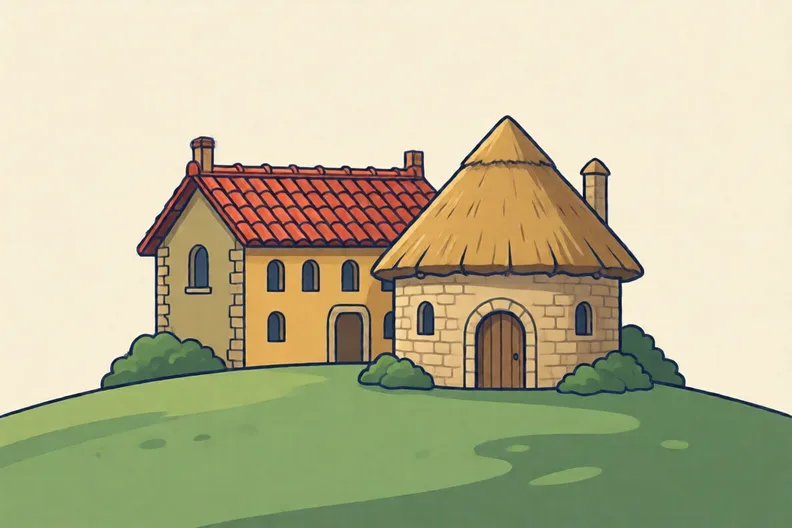
A Roman-style villa with a mosaic floor beside a round stone house on a hill
  1. 1.

    Picts and Scots attacked in 367 CE. Were Roman soldiers still guarding Britain then? Circle your answer.

    AD 360AD 370AD 380AD 390AD 400AD 410AD 420Picts and Scots attackLast soldiers leave
    YesNo
  2. 2.

    In 410 CE, Honorius told Britain's cities to defend themselves. Why did they now need to do this?

    AD 395AD 400AD 405AD 410AD 415Last soldiers leaveCities told to defend
  3. 3.

    Put these events in order, earliest first. Write 1, 2 and 3 in the boxes.

    AD 360AD 370AD 380AD 390AD 400AD 410AD 420
    1. Honorius writes to cities (410 CE)
    2. Picts and Scots attack (367 CE)
    3. Last soldiers leave the wall (401 CE)
  4. 4.

    Roman towns and villas were built mostly on flat lowland farmland. Wales and Scotland are mostly hills and mountains. Which region had mainly Romano-British life when the Romans left?

    South-East EnglandScotlandWales

Say it out loud: Which questions needed the timeline, and which needed you to explain? What changed for Britain?

D Spot the mistake3 min
A grey sea between two coasts, with two small boats and no people
Kit says: “The Scots tribe started in Scotland and later moved over to Ireland.”
  1. 1.

    Write what is true about where the Scots tribe came from.

    Across the seaScotland

E Think deeper4 min

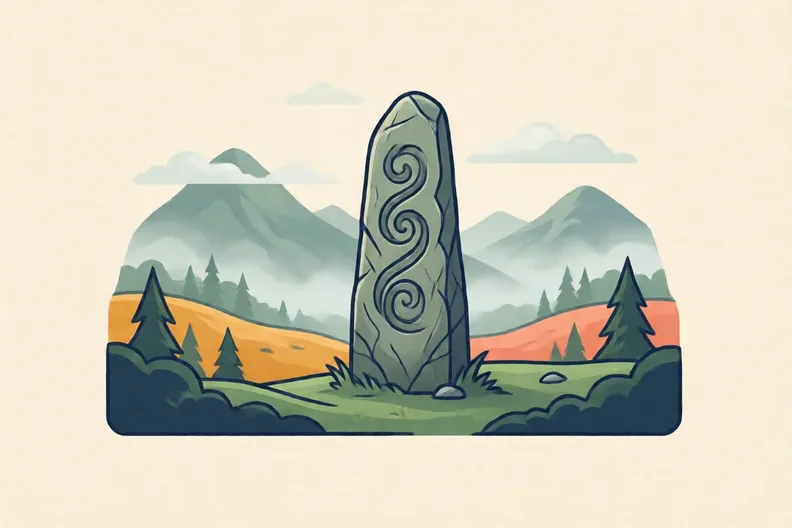
Misty northern hills with a standing stone carved with symbols, no people
  1. 1.

    Britain was a patchwork when Rome left. Explain why, using one region with Roman-style life and one with strong Celtic life.

How did it feel?

I can do it Nearly Not yet
StudyDen · Year 5 · History · Britain's settlement by Anglo-Saxons: what changed after the Romans left?Answers are on the grown-up page

For the grown-up

Britain as the Romans left · 2 minutes to read

Answers, and what a wrong one tells you

A

1. Look for: Names Hadrian as the emperor who ordered the wall. If your child is stuck, ask what that wall is called today. It carries the emperor's name.

2. Look for: Celts, Britons or Celtic peoples, named as the people in Britain before the Romans.

3. Look for: Bronze Age, the age that came between the Stone Age and the Iron Age.

B

1. the Britons themselves If your child chose the Roman army, point to 401 on the timeline. Ask: where were the Roman soldiers after that year?

C

1. Yes If your child chose No, point to 367 and 401 on the timeline. Ask: had the soldiers left yet when the attack came?

2. Look for: Says the Roman soldiers had gone, so the cities had no army to protect them. If your child is stuck, point to 401 on the line. Ask who had been protecting the cities before then.

3. 1 Picts and Scots attack (367 CE) · 2 Last soldiers leave the wall (401 CE) · 3 Honorius writes to cities (410 CE)

4. South-East England If your child chose Scotland, the Picts kept their own Celtic ways there. Ask: where were Roman-style towns and villas common?

D

1. Look for: The Scots came from Ireland, and the name Scotland came later after they settled there. Kit has the order backwards. Ask your child: where did the Scots start, and where did the name Scotland come from?

E

1. Look for: Names one region with Romano-British life and one with strong Celtic life, and says they lived differently.

Words to use

Say“Which event came first? What changed for Britain after the soldiers left? Show me on the timeline.”
Instead of“Just tell them the answer, or say the dates are too hard for them.”

After the sheet

Cut a strip of paper for your own life. Mark your birthday and two family days, then talk about what changed after each one.

Tick what your child got right in StudyDen. Anything missed comes back in a later Look back box, so there's no need to redo the sheet.

The rest of this unit

5 more sheets come with a StudyDen plan, in teaching order:

  1. Why the Anglo-Saxons came(with a plan)
  2. Seven kingdoms of Britain(with a plan)
  3. Two routes back to Britain(with a plan)
  4. The Rise of Mercia(with a plan)
  5. Christianity comes back to Britain(with a plan)

Every Year 5 history worksheet

The worksheets plan opens a printable sheet for every lesson in Years 1 to 6, each with its answers on a separate page for you. It costs £6.99 a month or £59 a year for the whole family, with no free trial.

The full StudyDen plan adds the lessons themselves, marked as your child works, with the worksheets included. It is 7 days free, then £29.99 a month.

Both start with a free account; you choose the plan when you sign up.