Clues from Anglo-Saxon graves
Today I can explain how grave goods help us learn about the Anglo-Saxons.
A Look back3 min
- 1.
The Romans invaded Britain in AD 43. What happened in AD 410, at the empty box on the timeline? Write it here.
- 2.
AD 43 AD 410. Write the sign that makes this true.
- 3.
This is a history detective chain. The first box is empty. Write the missing first step.
B Watch me, then you4 min
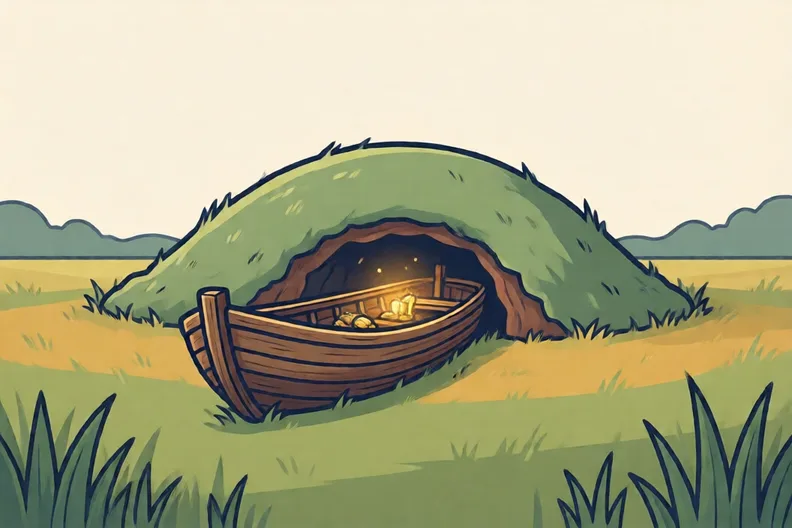
Archaeologists began digging at Sutton Hoo in 1938. The famous ship was found in 1939.
The dig began in 1938 and the ship was found in 1939.
1939 is one year after 1938, so it sits just to its right.
1938 − 1930 = 8, so the dig began 8 years after 1930.
- 1.
The ship was found in 1939. How many years after 1930 was that?
C Your turn8 min
Look at the grave goods on the table. Many red garnets in Anglo-Saxon jewellery came from India. Silver bowls came from Byzantium, far to the east. Then answer each question.
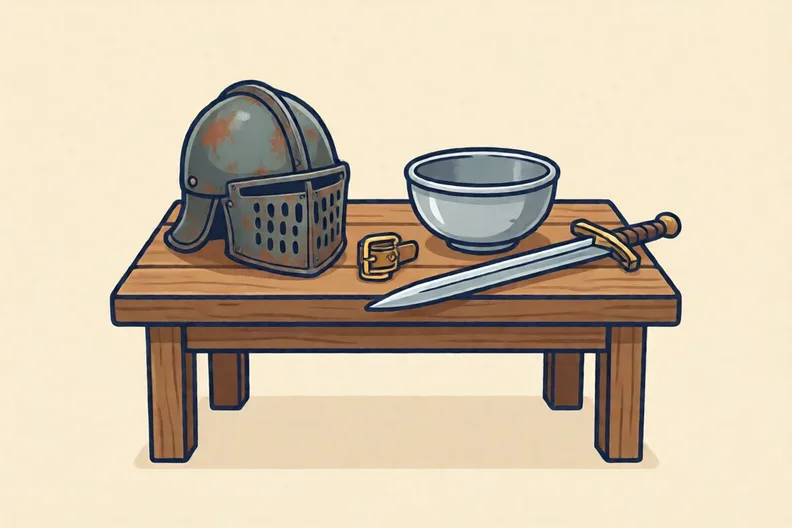
- 1.
Which of these is a grave good? Circle one.
a sword buried in a gravea letter from a kinga school registera newspaper article - 2.
Write each card under the right heading.
A sword was buried in the graveA gold buckle was in the graveThe sword was used in battleThe person's favourite foodWe know Good guess No way to know - 3.
Join each object to where its materials may have come from. Draw a line.
garnet jewellerysilver bowlsiron swordByzantiumAnglo-Saxon workshopIndia - 4.
Put these steps of an archaeologist's work in order. Write 1 to 4 in the boxes.
- Study the objects and make inferences
- Dig carefully and find objects
- Write up what the objects tell us
- Record where each object was found
Say it out loud: Which object told you the most about the person in the grave? Tell your grown-up why.
D Spot the mistake3 min
- 1.
Tell Kit one thing grave goods show us that writing alone cannot. Write it here.
E Think deeper4 min
- 1.
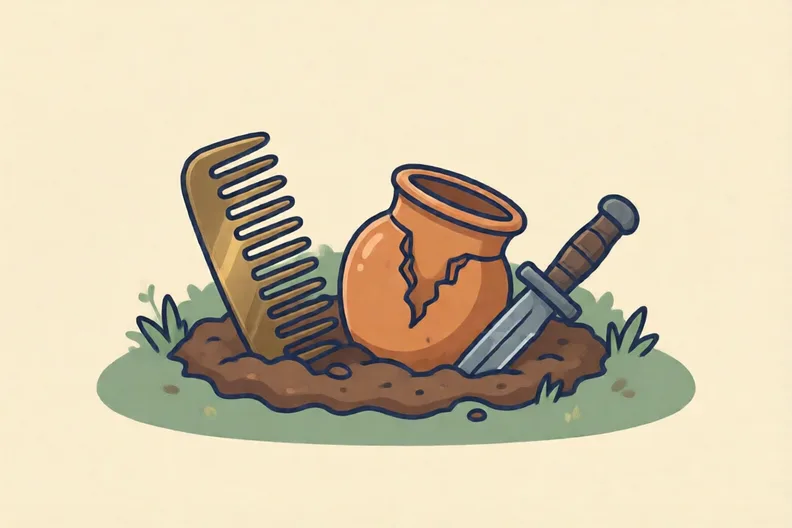
Only some objects survive in the ground for 1,400 years. Gold and iron often last. Which objects might have rotted away, and what clues would we lose?