← Year 6 critical thinking worksheets

Year 6 Critical thinking: Autumn 2 worksheet

“Testing Hidden Assumptions” is free to print, with no account. It is the first sheet in the Year 6 critical thinking unit “Critical thinking: Autumn 2”, for children aged 10 to 11, and takes about 22 minutes.

Print it on A4. The child's pages come first; the answers, and what each wrong answer tells you, are on the grown-up page that follows. Weeks 7 to 12 of the year, 6 sheets in the unit.

Free sample · answers on the last page

Testing Hidden Assumptions

Name: ____________ · Date: ____________
Year 6 · Critical thinking · about 22 minutes
Answers are on the grown-up page

Today I can test a hidden assumption by looking for one counter-example.

A Look back3 min

  1. 1.

    The tally shows how 8 children came to school. Write one thing it states and one thing you could infer from it.

    WalkBusBike
  2. 2.

    Sam says: “Our team won, so we played well.” Write the hidden assumption in your own words.

    Goals scored01234Our teamOther team
  3. 3.

    An advert says: “Every dentist we asked agrees.” Does this mean every dentist in the country agrees? Choose the best answer.

    Dentists askedAgreeNot sure= 1
    Yes, every dentist agreesNo, only the dentists asked agree

B Watch me, then you4 min

Mia says every hen on Ash Farm is brown. The farmer counts 8 hens. Is her claim safe?
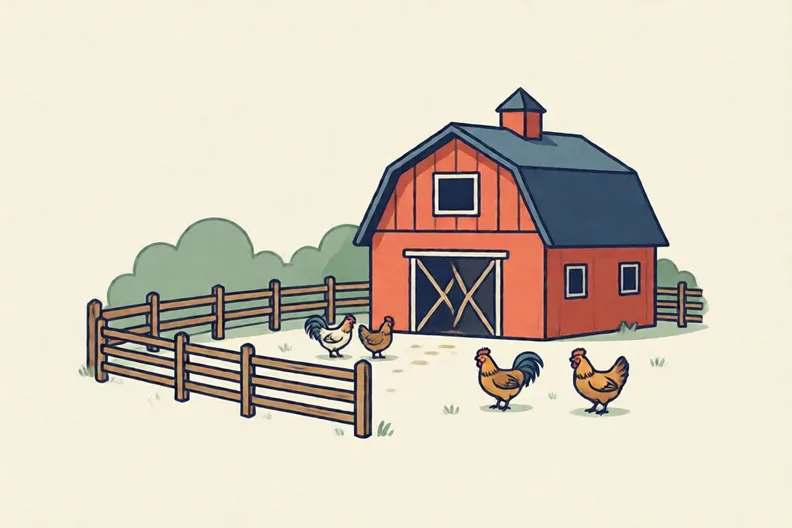
A farmyard with a red barn, a fence and hens scratching in the dust
Watch me
BrownWhite

Claim: every hen on the farm is brown.

The tally shows 1 white hen.

One white hen breaks the word ‘every’, so the claim is false.

Now you
  1. 1.

    A park has 5 pigeons. The claim is: all the birds here are pigeons. What is the fewest gulls that would break the claim?

    PigeonGull

C Your turn7 min

Read each claim and the tally. Decide whether the claim survives.

  1. 1.

    The claim is: All the apples in the box are red. Does one green apple defeat the claim? Circle the answer.

    RedGreen
    Yes, it defeats the claimNo, it does not defeat it
  2. 2.

    The claim is: Most of the apples in the box are red. Does one green apple defeat the claim? Circle the answer.

    RedGreen
    Yes, it defeats the claimNo, it does not defeat it
  3. 3.

    The claim is: No apple in the box is green. Does the tally break it? Circle the answer.

    RedGreen
    Yes, it defeats the claimNo, it does not defeat it
  4. 4.

    The claim is: Most of the apples in the box are red. Does the tally support it? Circle the answer.

    RedGreen
    Yes, most are redNo, most are not red

Say it out loud: What changed from row to row? Did the claim survive each time, and which word made the difference?

D Spot the mistake3 min

Ali says: “The chart shows 7 white geese and only 1 grey one. One grey goose does not matter, so ‘all geese are white’ still stands.”
Geese on the pond012345678WhiteGrey
  1. 1.

    Does ‘all geese are white’ still stand? Say why in one sentence.

E Think deeper4 min

  1. 1.

    Claim: all four-sided shapes are squares. The shape shows a rectangle. Does it defeat the claim or only weaken it? Explain, then make up your own claim and one counter-example.

How did it feel?

I can do it Nearly Not yet
StudyDen · Year 6 · Critical thinking · Year 6 Critical Thinking ToolkitAnswers are on the grown-up page

For the grown-up

Testing Hidden Assumptions · 2 minutes to read

Answers, and what a wrong one tells you

A

1. Look for: One fact read straight from the tally and one guess that goes beyond it, such as most children living nearby. If your child gives two counts, ask: which of these goes beyond what the tally shows?

2. Look for: Says that winning must mean playing well, with no exceptions allowed.

3. No, only the dentists asked agree

B

1. 1 If your child writes more than 1, they think the claim needs several exceptions. Fix: one gull is enough to break the word ‘all’.

C

1. Yes, it defeats the claim If your child circles no, they think ‘all’ allows a few exceptions. Fix: read the word ‘all’ aloud and ask whether one exception is allowed.

2. No, it does not defeat it If your child circles yes, they have treated ‘most’ as if it meant ‘all’. Fix: 6 of 7 apples are red, so most are still red and the claim stands.

3. Yes, it defeats the claim If your child circles no, they have not checked the green count. Fix: ask whether any green apple is in the box at all.

4. Yes, most are red If your child circles no, they have not compared the two counts with the total. Fix: 6 is more than half of 10, so most are red.

D

1. Look for: Says no, because one grey goose is a counter-example that breaks the word all. Ali thinks many white geese protect the claim. Ask your child whether ‘all’ allows even one exception.

E

1. Look for: Says the rectangle defeats the word all, then gives an own universal claim with a clear counter-example.

Words to use

Say“What would it take to break this claim? Does the word say all, most, or never?”
Instead of“Tell them they are wrong, without asking them to test the claim against an example.”

After the sheet

At home, pick a claim like ‘all socks in this drawer are blue’ and check together. One odd sock decides it.

Tick what your child got right in StudyDen. Anything missed comes back in a later Look back box, so there's no need to redo the sheet.

The rest of this unit

5 more sheets come with a StudyDen plan, in teaching order:

  1. Hidden ideas in arguments(with a plan)
  2. Exact Words, Exact Meaning(with a plan)
  3. From vague to testable(with a plan)
  4. Technically True, Still Misleading(with a plan)
  5. Bringing the toolkit together(with a plan)

Every Year 6 critical thinking worksheet

The worksheets plan opens a printable sheet for every lesson in Years 1 to 6, each with its answers on a separate page for you. It costs £6.99 a month or £59 a year for the whole family, with no free trial.

The full StudyDen plan adds the lessons themselves, marked as your child works, with the worksheets included. It is 7 days free, then £29.99 a month.

Both start with a free account; you choose the plan when you sign up.