← Year 6 critical thinking worksheets

Year 6 Critical thinking: Spring 2 worksheet

“How much proof is enough?” is free to print, with no account. It is the first sheet in the Year 6 critical thinking unit “Critical thinking: Spring 2”, for children aged 10 to 11, and takes about 20 minutes.

Print it on A4. The child's pages come first; the answers, and what each wrong answer tells you, are on the grown-up page that follows. Weeks 19 to 24 of the year, 6 sheets in the unit.

Free sample · answers on the last page

How much proof is enough?

Name: ____________ · Date: ____________
Year 6 · Critical thinking · about 20 minutes
Answers are on the grown-up page

Today I can decide how much evidence a claim needs, and explain why.

A Look back3 min

  1. 1.

    Which pet was brought to school most often? Circle the best answer.

    Pets brought to school012345678DogsCatsFishRabbits
    DogsCatsFishRabbits
  2. 2.

    How many sunny days were there in Week 1 and Week 2 together?

    Sunny days in MayWeek 1Week 2Week 3= 1
  3. 3.

    How many children came to school by bus or by bike?

    WalkBusCycle

B Watch me, then you4 min

A school council is testing two claims. One says the class hamster is called Biscuit. The other says a new cold spray stops every cold for ever.
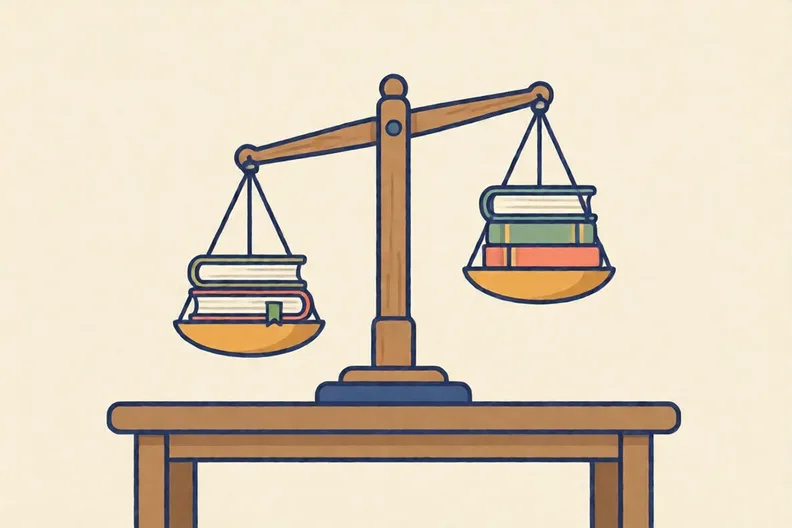
A wooden balance scale with one dish sitting lower than the other
Watch me
Cost of being wrong (made-up scale)012345Hamster nameCold spray claim

Ask: what does it cost us if this claim is wrong?

Being wrong about the hamster’s name costs almost nothing.

Being wrong about the spray could harm someone.

So the spray claim needs much stronger evidence.

Now you
  1. 1.

    Which claim needs more evidence before we believe it? Circle the best answer.

    The library closes at four on Friday.A new drink stops every cold for ever.

C Your turn8 min

Each claim below asks you to decide how strong the evidence must be. Look at the cost chart first.

Cost of being wrong (made-up scale)012345Bell timeHelmet safetyCough medicine
  1. 1.

    A friend says the bell rings at nine o’clock today. How much evidence is needed?

    A little evidenceStrong, careful evidence
  2. 2.

    A shop says a bike helmet passed every safety test. How much evidence is needed?

    A little evidenceStrong, careful evidence
  3. 3.

    A new cough medicine claims to work for all children. How much evidence is needed?

    A little evidenceStrong, careful evidence
  4. 4.

    A cream claims to cure every rash in one night. It has not been tested on anyone. How much evidence is needed?

    A little evidenceStrong, careful evidence

Say it out loud: What changed from one row to the next, and what stayed the same? Say the pattern in your own words.

D Spot the mistake3 min
An empty wooden courtroom bench in a quiet room with tall windows
Ali says: “A civil court must be just as sure as a criminal court before it decides.”
  1. 1.

    'Beyond reasonable doubt' means being sure. 'Balance of probabilities' means more likely true than not. A civil court settles disputes like an unpaid bill, with no prison. Which standard fits it? Circle the best answer.

    balance of probabilitiesbeyond reasonable doubt

E Think deeper4 min
Three plain wooden signposts pointing in different directions on grass
  1. 1.

    Write one ordinary claim and one extraordinary claim. For each, say what evidence you would need before you believed it.

How did it feel?

I can do it Nearly Not yet
StudyDen · Year 6 · Critical thinking · Critical Thinking ToolkitAnswers are on the grown-up page

For the grown-up

How much proof is enough? · 2 minutes to read

Answers, and what a wrong one tells you

A

1. Dogs your child may have mixed up Dogs and Rabbits, which are close in height. Ask them to read the top of each bar against the scale.

2. 10

3. 9

B

1. A new drink stops every cold for ever. your child may have chosen the library time. A closing time costs little if it is wrong. Ask what harm a false claim could do.

C

1. A little evidence your child may have chosen strong evidence. A wrong bell time costs little. Ask what would happen if this claim were wrong.

2. Strong, careful evidence your child may have chosen a little evidence. Ask who could be hurt if the claim is false, and what proof a buyer should ask for.

3. Strong, careful evidence your child may have treated a health claim like a bell time. Ask who could be harmed if the claim is false.

4. Strong, careful evidence

D

1. balance of probabilities your child may have chosen beyond reasonable doubt. That standard is for criminal courts, where a person could go to prison. Ask: which court risks more if it gets it wrong?

E

1. Look for: one ordinary claim and one extraordinary claim, each with the evidence it would need.

Words to use

Say“What would it cost us if this claim were wrong? Then how much proof should we ask for?”
Instead of“Just tell them the answer is strong evidence, so they remember it.”

After the sheet

Pick two claims from a cereal box or a leaflet at home. Ask: what if this were wrong? Decide together how much proof you would need for each.

Tick what your child got right in StudyDen. Anything missed comes back in a later Look back box, so there's no need to redo the sheet.

The rest of this unit

5 more sheets come with a StudyDen plan, in teaching order:

  1. Sorting claims by evidence(with a plan)
  2. Matching Words to Numbers(with a plan)
  3. Matching Words to Evidence(with a plan)
  4. Catching Our Own Wishes(with a plan)
  5. Same game, different views(with a plan)

Every Year 6 critical thinking worksheet

The worksheets plan opens a printable sheet for every lesson in Years 1 to 6, each with its answers on a separate page for you. It costs £6.99 a month or £59 a year for the whole family, with no free trial.

The full StudyDen plan adds the lessons themselves, marked as your child works, with the worksheets included. It is 7 days free, then £29.99 a month.

Both start with a free account; you choose the plan when you sign up.