← Year 6 history worksheets

Year 6 The Vikings: how do we know so much about Viking York? worksheet

“Digging up Coppergate” is free to print, with no account. It is the first sheet in the Year 6 history unit “The Vikings: how do we know so much about Viking York?”, for children aged 10 to 11, and takes about 24 minutes.

Print it on A4. The child's pages come first; the answers, and what each wrong answer tells you, are on the grown-up page that follows. Weeks 7 to 12 of the year, 6 sheets in the unit.

Free sample · answers on the last page

Digging up Coppergate

Name: ____________ · Date: ____________
Year 6 · History · about 24 minutes
Answers are on the grown-up page

Today I can explain that archaeologists learn about the past in more than one way.

A Look back3 min

  1. 1.

    Write these events in order, earliest first: Battle of Hastings 1066, Romans leave Britain 410, Lindisfarne raided 793.

    AD 400AD 500AD 600AD 700AD 800AD 90010001100
  2. 2.

    Match each group to what they are known for. Draw a line from each group to its match.

    RomansAnglo-SaxonsVikings
    RomansVikingsAnglo-Saxons
    LongshipsOld EnglishStraight roads
  3. 3.

    Which came later: the Romans leaving Britain, or the Battle of Hastings? Circle one.

    AD 400AD 500AD 600AD 700AD 800AD 90010001100Romans leaveBattle of Hastings
    The Romans leaving BritainThe Battle of Hastings

B Watch me, then you4 min

In 1972, builders in York dug up Viking objects. The careful dig at Coppergate ran from 1976 to 1981. How long did the dig last?

Watch me
1970197519801985Objects foundDig startsDig ends

The dig started in 1976 and ended in 1981.

Count the years from 1976 up to 1981.

1981 − 1976 = 5, so the dig lasted 5 years.

Now you
  1. 1.

    The builders found objects in 1972. The dig ended in 1981. How many years were there from 1972 to 1981?

    19701975198019851990Objects foundDig ends

C Your turn8 min

Each question asks about one way archaeologists find the past. Read the four options and circle the one the question asks for.
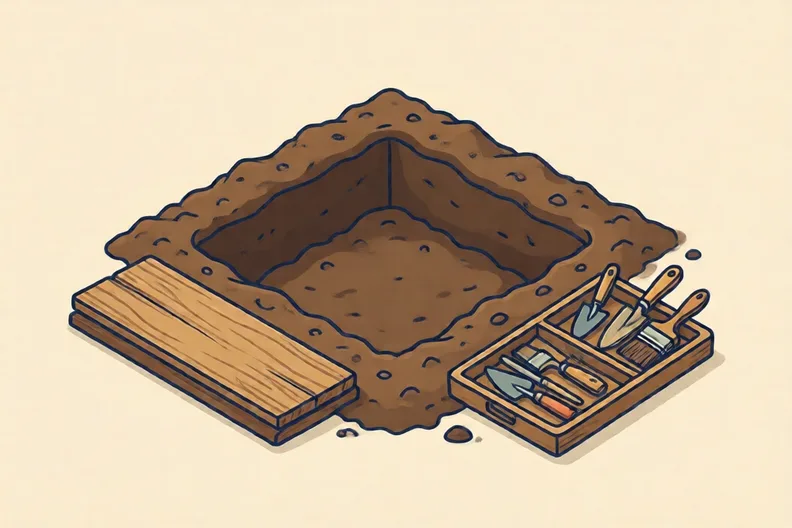
A square trench dug into brown soil, with a wooden board and tools beside it.
  1. 1.

    At Coppergate, a team took away the soil layer by layer to reach Viking houses. Which method was this? Circle it.

    Carefully digging a marked area to remove earthWalking over ploughed fields to pick up objects brought upUsing equipment to detect remains under the groundPhotographing shadows and crop marks from the air
  2. 2.

    After a farmer ploughs, a group crosses the field in lines, looking closely at the soil. Which method is this? Circle it.

    Carefully digging a marked area to remove earthWalking over ploughed fields to pick up objects brought upUsing equipment to detect remains under the groundPhotographing shadows and crop marks from the air
  3. 3.

    A team pushes a machine across a park. It shows old walls hidden underground, and nobody digs. Which method is this? Circle it.

    Carefully digging a marked area to remove earthWalking over ploughed fields to pick up objects brought upUsing equipment to detect remains under the groundPhotographing shadows and crop marks from the air
  4. 4.

    From a plane, someone spots the outline of old walls in a field of crops. Which method is this? Circle it.

    Carefully digging a marked area to remove earthWalking over ploughed fields to pick up objects brought upUsing equipment to detect remains under the groundPhotographing shadows and crop marks from the air

Say it out loud: Which of these methods finds things without digging a hole? Say it out loud.

D Spot the mistake3 min
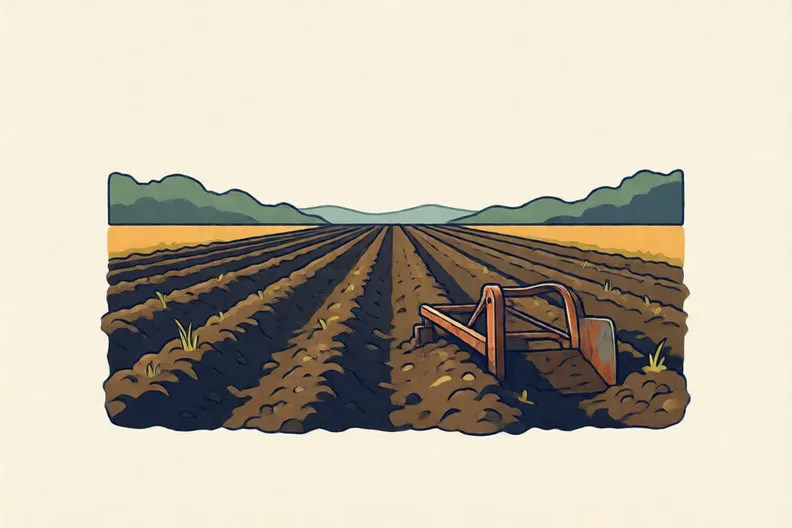
A ploughed field with dark furrows and a rusty metal object showing at the surface
Kit says: “Archaeologists can only find out about the past by digging.”
  1. 1.

    Is Kit right? Write why, and name one other way archaeologists find the past without digging.

E Think deeper4 min
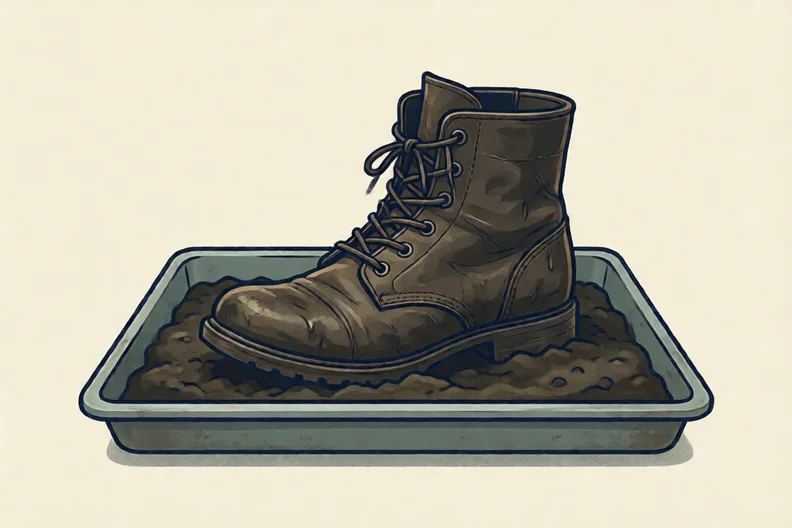
An old leather boot, dark and damp, lying in a tray of soil
  1. 1.

    Most objects as old as the Coppergate finds rot away, but leather and seeds survived there. What do you think the soil was like? Explain why in two or three sentences.

How did it feel?

I can do it Nearly Not yet
StudyDen · Year 6 · History · The Vikings: how do we know so much about Viking York?Answers are on the grown-up page

For the grown-up

Digging up Coppergate · 2 minutes to read

Answers, and what a wrong one tells you

A

1. Romans leave Britain 410, Lindisfarne raided 793, Battle of Hastings 1066 If they put 1066 first, ask which year is the smallest number, so it is furthest back in time.

2. Romans → Straight roads; Vikings → Longships; Anglo-Saxons → Old English If they join Romans to longships, ask which group sailed in longships. Then match the other two.

3. The Battle of Hastings If they chose the Romans, ask which event sits further to the right on the line. Later events sit further right.

B

1. 9 If the answer is not 9, ask them to count the gaps on the line one at a time, from 1972 up to 1981.

C

1. Carefully digging a marked area to remove earth If they circled the field walking option, ask whether anyone is digging a hole in that method.

2. Walking over ploughed fields to pick up objects brought up

3. Using equipment to detect remains under the ground

4. Photographing shadows and crop marks from the air

D

1. Look for: Says Kit is wrong and names field walking, surveying or aerial photography as another way. If your child only says no, ask how a ploughed field can bring up an old object. Then ask for one other method.

E

1. Look for: Suggests the soil was wet or had little air, which stopped or slowed rotting.

Words to use

Say“Which way did the archaeologists find it, and why did the boot survive so long?”
Instead of“Just tell them the answer, or say digging is the only way.”

After the sheet

Look in a drawer or box at home. Pick three old objects and ask: what could someone learn about our family from each one, without digging?

Tick what your child got right in StudyDen. Anything missed comes back in a later Look back box, so there's no need to redo the sheet.

The rest of this unit

5 more sheets come with a StudyDen plan, in teaching order:

  1. Why York Mattered(with a plan)
  2. Craftspeople of Viking York(with a plan)
  3. Trade Chains to York(with a plan)
  4. Clues from Viking objects(with a plan)
  5. What Coppergate Tells Us(with a plan)

Every Year 6 history worksheet

The worksheets plan opens a printable sheet for every lesson in Years 1 to 6, each with its answers on a separate page for you. It costs £6.99 a month or £59 a year for the whole family, with no free trial.

The full StudyDen plan adds the lessons themselves, marked as your child works, with the worksheets included. It is 7 days free, then £29.99 a month.

Both start with a free account; you choose the plan when you sign up.