← Year 6 PSHE worksheets

Year 6 PSHE: Spring 1 worksheet

“Food, sleep and moving” is free to print, with no account. It is the first sheet in the Year 6 PSHE unit “PSHE: Spring 1”, for children aged 10 to 11, and takes about 20 minutes.

Print it on A4. The child's pages come first; the answers, and what each wrong answer tells you, are on the grown-up page that follows. Weeks 13 to 18 of the year, 6 sheets in the unit.

Free sample · answers on the last page

Food, sleep and moving

Name: ____________ · Date: ____________
Year 6 · PSHE · about 20 minutes
Answers are on the grown-up page

Today I can explain how food, sleep and exercise link to learning.

A Look back3 min

  1. 1.

    When a moment feels big, which step do you do first? Circle one.

    BreatheStopChooseRun
  2. 2.

    On the weather scale, which feeling is the stormiest? Circle one.

    calmcontentworriedfurious
  3. 3.

    Why can feelings seem stronger in Year 6 than in Year 4? Circle one.

    lightestdarkest
    Your brain and body are still changingYou have stopped growingYour teacher is stricterYour friends made you feel it

B Watch me, then you4 min

Ben has porridge before school. Does it help him focus in class? Follow the chain.

Watch me
PorridgeGlucoseBrain fuelFocus in class

Porridge is a starchy carbohydrate.

It breaks down into glucose, the brain's main fuel.

So the brain has fuel to help Ben focus during lessons.

Now you
  1. 1.

    Early bedtime, then a missing link, then memory stored, then ready to learn. Which link is missing? Circle one.

    Early bedtimeMemory storedReady to learn
    Enough sleepSkipping lunchPlaying a game

C Your turn8 min

Answer each question. Notice how the question changes from one row to the next.

  1. 1.

    The Eatwell Guide asks us to eat a fair share of starchy foods. Which food is a starchy carbohydrate? Circle one.

    breadappleeggmilk
  2. 2.

    Most children your age need between 9 and 11 hours' sleep every night. Which of these is inside that range? Circle it.

    Enough sleepMemory storedReady to learn
    8 hours10 hours12 hours
  3. 3.

    Which of these is physical activity? Circle one.

    Move your bodyHeart beats fasterBreathe harder
    a brisk walk to schoolsitting and readinglying in bed
  4. 4.

    Use the loop to write one sentence about how exercise can help learning.

    ExerciseBetter sleepLearning

Say it out loud: Which of the three habits do you think affects the others most? Why?

D Spot the mistake3 min
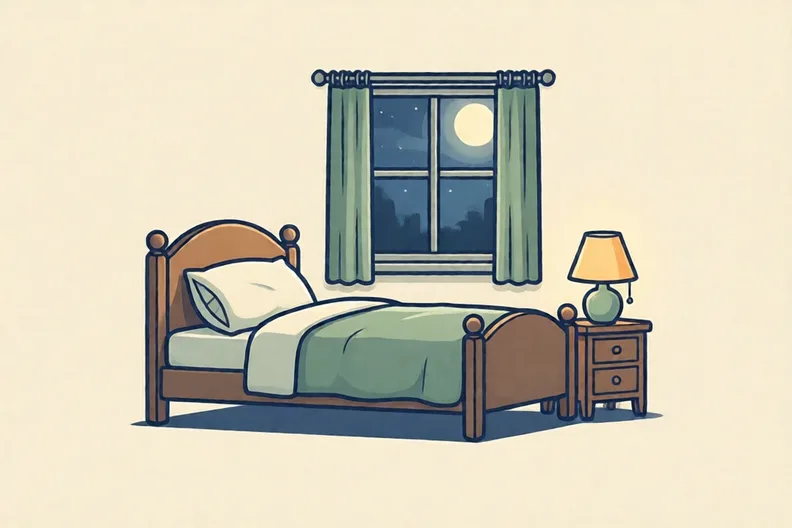
A quiet bedroom at night with a made bed and moonlight through a window
Ali says: “Sleep is just resting. The brain switches off, so nothing is learned while we sleep.”
  1. 1.

    Why is Ali wrong? Write one sentence.

E Think deeper4 min

  1. 1.

    Think about one school day. Write how a good night's sleep could change what happens in your lessons the next day.

    Good sleepMemory storedReady to learn

How did it feel?

Which idea from today will you think about the next time you feel tired or hungry at school?

I can do it Nearly Not yet
StudyDen · Year 6 · PSHE · Physical Health in Year 6Answers are on the grown-up page

For the grown-up

Food, sleep and moving · 2 minutes to read

Answers, and what a wrong one tells you

A

1. Stop your child may have picked the step that comes later. Ask: what do you do first when the moment feels big? Pause, then breathe, then choose.

2. furious your child may have chosen a feeling that is strong but not the strongest. Ask them to point along the scale from sunny to stormy.

3. Your brain and body are still changing your child may be blaming other people. Remind them that puberty changes the brain and body, so feelings can rise more strongly. Feelings are still their own to manage.

B

1. Enough sleep your child may have chosen something that does not link to sleep. Ask: what does the brain do with the day's learning while we sleep?

C

1. bread your child may have chosen a fruit, an egg or milk. Ask which food is made from flour or grain, then point to bread.

2. 10 hours your child may have picked 8 or 12 hours. Ask them to count up from 9 to 11, then check which choice falls inside.

3. a brisk walk to school your child may think quiet activities count. Physical activity is any movement from the body's muscles, so a brisk walk counts and sitting still does not.

4. Look for: A sentence linking exercise to better sleep and then to learning or memory.

D

1. Look for: Sleep is when the brain stores learning, so the brain is not switched off. your child may have repeated the claim. Ask what happens to new facts during deep sleep. The brain replays them and moves them into long-term memory.

E

1. Look for: Mentions sleep helping memory or concentration, linking to learning the next day.

Words to use

Say“Which of the three habits do you think helps the other two most? Why do you think so?”
Instead of“Just tell them to go to bed earlier and eat healthy food.”

After the sheet

Put three paper plates on the table labelled Food, Sleep and Moving. Move one plate and ask what else changes. Talk about how the three link.

Tick what your child got right in StudyDen. Anything missed comes back in a later Look back box, so there's no need to redo the sheet.

The rest of this unit

5 more sheets come with a StudyDen plan, in teaching order:

  1. Pressure to Drink, and Staying Safe(with a plan)
  2. Fact or Marketing?(with a plan)
  3. Drug Classes and Risk(with a plan)
  4. What Keeps Our Minds Healthy?(with a plan)
  5. The worry loop(with a plan)

Every Year 6 PSHE worksheet

The worksheets plan opens a printable sheet for every lesson in Years 1 to 6, each with its answers on a separate page for you. It costs £6.99 a month or £59 a year for the whole family, with no free trial.

The full StudyDen plan adds the lessons themselves, marked as your child works, with the worksheets included. It is 7 days free, then £29.99 a month.

Both start with a free account; you choose the plan when you sign up.