← Year 3 critical thinking worksheets

Year 3 Critical thinking: Summer 2 worksheet

“Safe Rules or Risky Rules” is free to print, with no account. It is the first sheet in the Year 3 critical thinking unit “Critical thinking: Summer 2”, for children aged 7 to 8, and takes about 22 minutes.

Print it on A4. The child's pages come first; the answers, and what each wrong answer tells you, are on the grown-up page that follows. Weeks 31 to 36 of the year, 6 sheets in the unit.

Free sample · answers on the last page

Safe Rules or Risky Rules

Name: ____________ · Date: ____________
Year 3 · Critical thinking · about 22 minutes
Answers are on the grown-up page

Today I can decide when a rule drawn from a few examples is safe to use.

A Look back3 min

  1. 1.

    Ali says: “Take a coat, because the wind is cold.” Circle the reason.

    Take a coatbecause the wind is cold
  2. 2.

    Mia says: “Wear trainers for sports day.” Circle the reason that supports her claim.

    green
    Trainers grip the ground wellMy favourite colour is green
  3. 3.

    Put these from weakest to strongest evidence. Write 1, 2 or 3 in each box.

    one guessone lookten tests
    1. We tested it ten times
    2. Someone guessed it
    3. Someone saw it once

B Watch me, then you4 min

Sam met 4 dogs at the park. All 4 wagged their tails. He says: “All dogs wag their tails.” Is that rule safe to use?

Watch me
Dogs Sam metwagged tailsdid not wag= 1

Sam met 4 dogs, and all 4 wagged.

4 dogs is a small group, so “All dogs” jumps too far.

Safer rule: “Most dogs I meet wag their tails.”

Now you
  1. 1.

    Ben has seen 5 buses in town. 4 are red and 1 is blue. Which rule is safer? Circle one.

    Buses Ben sawred busesblue buses= 1
    All buses here are red.Most buses here are red.

C Your turn8 min

Read each rule. Look at the picture. Does the rule still hold?

  1. 1.

    Rule: “All pencils in this pot are yellow.” Does this rule still hold?

    Pencils in the potyellow pencilsblue pencil= 1
    Yes, it still holdsNo, the picture breaks it
  2. 2.

    Rule: “Most pencils in this pot are yellow.” Does this rule still hold?

    Pencils in the potyellow pencilsblue pencil= 1
    Yes, it still holdsNo, the picture breaks it
  3. 3.

    Rule: “Most pencils in this pot are yellow.” Does this rule still hold?

    Pencils in the potyellow pencilsblue pencils= 1
    Yes, it still holdsNo, the picture breaks it
  4. 4.

    Sort these words. Write each word in the right column.

    AllMostNeverMany
    Smashed by one exceptionSurvives one exception

Say it out loud: What changed between the first two rows? Which word made the rule safer, and why?

D Spot the mistake3 min

Ravi says: “Everyone in our class loves pizza. I asked two friends and both said yes.”
Friend 1 said yesFriend 2 said yes
  1. 1.

    What is wrong with Ravi's rule? Write one sentence.

E Think deeper4 min

Think about a penguin. Penguins cannot fly.
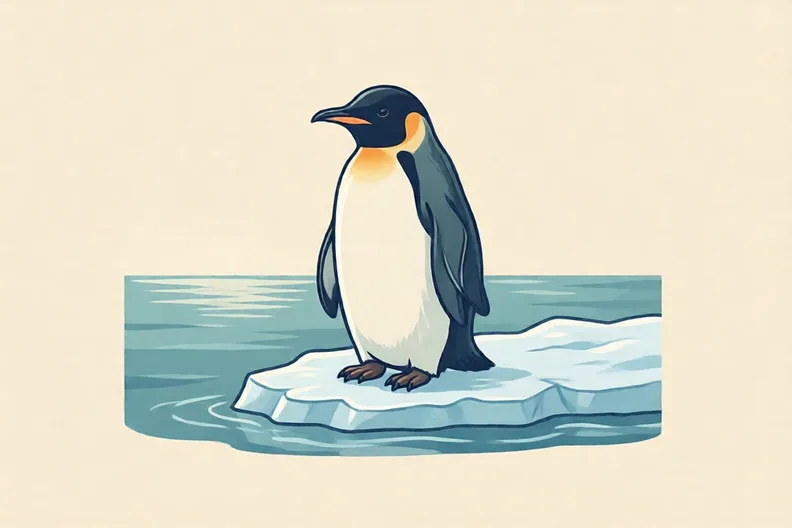
A penguin standing on ice beside the sea
  1. 1.

    Rules: “All birds fly.” and “Most birds fly.” Which rule does a penguin break? Explain why the other rule still stands.

How did it feel?1 min

I can do it Nearly Not yet
StudyDen · Year 3 · Critical thinking · Thinking Clearly: Arguments, Causes and EvidenceAnswers are on the grown-up page

For the grown-up

Safe Rules or Risky Rules · 2 minutes to read

Answers, and what a wrong one tells you

A

1. because the wind is cold

2. Trainers grip the ground well

3. 1 Someone guessed it · 2 Someone saw it once · 3 We tested it ten times

B

1. Most buses here are red. If they chose “All”, they missed the blue bus. One blue bus breaks the word “all”. Point to the blue bus and ask what it does to the rule.

C

1. No, the picture breaks it If they chose “Yes, it still holds”, ask: is a blue pencil yellow? One exception is enough to break the word “all”.

2. Yes, it still holds If they chose “No”, ask: does “most” allow a few exceptions? One blue pencil does not undo “most”.

3. No, the picture breaks it If they chose “Yes”, ask: are there more yellow pencils or more blue pencils? “Most” only works if most of the pencils are yellow.

4. Survives one exception: Most, Many · Smashed by one exception: All, Never

D

1. Look for: Says two friends is too few to speak for the whole class, so “everyone” jumps too far. Ravi needs to ask more people. If they say pizza is a bad food, that is an opinion, not the mistake. Ask: how many people did Ravi ask, and is that enough to speak for the whole class?

E

1. Look for: Says the penguin breaks “all birds fly” but not “most birds fly”, because most birds still fly and penguins are a small number of exceptions.

Words to use

Say“What is the rule? How many examples did they use? Could one more example break it?”
Instead of“Just say that's wrong, or say that 'all' is always the better word.”

After the sheet

Look in a cupboard for things of one kind, such as socks or spoons. Make a rule about them with 'all', then look for one that breaks it. Change 'all' to 'most' and check again.

Tick what your child got right in StudyDen. Anything missed comes back in a later Look back box, so there's no need to redo the sheet.

The rest of this unit

5 more sheets come with a StudyDen plan, in teaching order:

  1. Careful Words, Honest Claims(with a plan)
  2. Checking a newspaper article(with a plan)
  3. Planning a Debate Reply(with a plan)
  4. My Thinking Toolkit Guide(with a plan)
  5. Judging an Argument(with a plan)

Every Year 3 critical thinking worksheet

The worksheets plan opens a printable sheet for every lesson in Years 1 to 6, each with its answers on a separate page for you. It costs £6.99 a month or £59 a year for the whole family, with no free trial.

The full StudyDen plan adds the lessons themselves, marked as your child works, with the worksheets included. It is 7 days free, then £29.99 a month.

Both start with a free account; you choose the plan when you sign up.