← Year 3 history worksheets

Year 3 Sumer and other early civilisations: what made them similar? worksheet

“The land between two rivers” is free to print, with no account. It is the first sheet in the Year 3 history unit “Sumer and other early civilisations: what made them similar?”, for children aged 7 to 8, and takes about 20 minutes.

Print it on A4. The child's pages come first; the answers, and what each wrong answer tells you, are on the grown-up page that follows. Weeks 19 to 24 of the year, 6 sheets in the unit.

Free sample · answers on the last page

The land between two rivers

Name: ____________ · Date: ____________
Year 3 · History · about 20 minutes
Answers are on the grown-up page

Today I can explain why the land between two rivers helped Sumerian farmers grow food.

A Look back3 min

  1. 1.

    Which point is further back in time? Write A or B.

    400 BC300 BC200 BC100 BCAD 1Point APoint B
    AB
  2. 2.

    Point C is in 1066. Is 1066 before or after 1500?

    1000110012001300140015001600Point C
    beforeafter
  3. 3.

    How many years are there from Point D to Point E?

    1000 BC500 BCAD 1Point DPoint E

B Watch me, then you4 min

Farmers dug ditches to bring river water to their fields. Follow the chain of causes.

Watch me
Dig ditchesReliable waterSurplus foodCities and tools

Digging ditches gave a reliable water supply.

A reliable supply gave more food than people needed.

That surplus let some people build cities and make tools.

Now you
  1. 1.

    The chain is missing one step. Which card fits the empty box?

    Dig ditchesReliable waterCities
    Surplus foodA floodDry fields

C Your turn6 min

Use the compass and the chains to answer each question.

  1. 1.

    Picture a map with north at the top. The Euphrates is on the left and the Tigris on the right. Which river is on the west side?

    NNEESESSWWNW
    TigrisEuphrates
  2. 2.

    North is at the top. The Euphrates is on the left and the Tigris on the right. A farm is near the east edge of the land between them. Which river is nearest for digging its ditches?

    NNEESESSWWNW
    TigrisEuphrates
  3. 3.

    Did the first cities come before or after farmers had surplus food?

    Dig ditchesReliable water
    beforeafter
  4. 4.

    One field is next to the river. Another is far away on the dry plain. Which field grows more food? Write one reason.

    RiverDitchField by the river

Say it out loud: Why did farmers want to live between the two rivers?

D Spot the mistake3 min
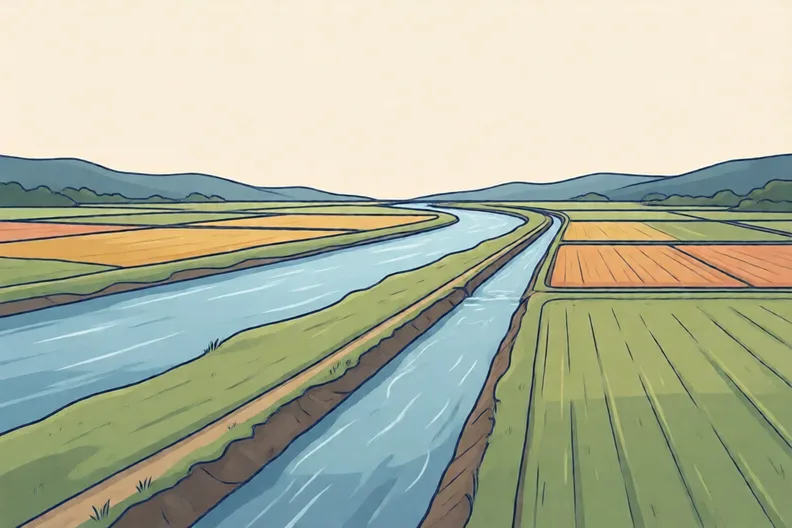
Wide fields beside a river, with a dug ditch running from it
Kit says: “Floods only ever destroy farmland, so river water was no use to Sumerian farmers.”
  1. 1.

    Write one reason why Kit is wrong.

E Think deeper4 min

Some facts about the Sumerians we can be sure of. Some we can only guess. Some we can never know. Sort each card into the right column.
An old clay pot with a chipped rim, set on dry ground
  1. 1.

    Write each card in the right column of the table.

    Sumerians lived between two rivers.Sumerians dug ditches for river water.Farmers probably used wooden tools.The first person who dug a ditch.How many ditches one farmer dug.
    We knowGood guessNo way to know

How did it feel?

I can do it Nearly Not yet
StudyDen · Year 3 · History · Sumer and other early civilisations: what made them similar?Answers are on the grown-up page

For the grown-up

The land between two rivers · 2 minutes to read

Answers, and what a wrong one tells you

A

1. A

2. before

3. 500 If they say 1500, they added 1000 and 500. Ask them to count the gap between the two points.

B

1. Surplus food If they pick a flood, remind them that the ditches gave a steady water supply, not floods.

C

1. Euphrates

2. Tigris If they pick Euphrates, they may have mixed up east and west. Ask them to point east on the compass.

3. after If your child says before, ask who would feed the people building cities if there was no spare food.

4. Look for: Picks the field by the river and gives a reason such as water from the river or ditches, or rich soil left by floods. If your child picks the far field, ask where the water for the crops comes from and how it reaches each field.

D

1. Look for: Gives one reason, such as floods leave rich soil behind, or Sumerians dug ditches to bring river water to their crops. Kit only thinks about the damage. Ask what a flood leaves behind in the soil, and why the ditches were dug.

E

1. We know: Sumerians lived between two rivers., Sumerians dug ditches for river water. · Good guess: Farmers probably used wooden tools. · No way to know: The first person who dug a ditch., How many ditches one farmer dug.

Words to use

Say“Which river is on the east side, and how do you know? Why did farmers live between the rivers?”
Instead of“Just tell them the answer, or say it was easy.”

After the sheet

Put two books on a table with a gap between them, like two rivers. Ask which book is on the east side, then why farmers wanted to live in the gap.

Tick what your child got right in StudyDen. Anything missed comes back in a later Look back box, so there's no need to redo the sheet.

The rest of this unit

5 more sheets come with a StudyDen plan, in teaching order:

  1. Trade, writing and building(with a plan)
  2. Other cradles of civilisation(with a plan)
  3. Art and artefacts long ago(with a plan)
  4. Early civilisations in common(with a plan)
  5. Same and different(with a plan)

Every Year 3 history worksheet

The worksheets plan opens a printable sheet for every lesson in Years 1 to 6, each with its answers on a separate page for you. It costs £6.99 a month or £59 a year for the whole family, with no free trial.

The full StudyDen plan adds the lessons themselves, marked as your child works, with the worksheets included. It is 7 days free, then £29.99 a month.

Both start with a free account; you choose the plan when you sign up.