← Year 4 French worksheets

Year 4 Introductions: singular 'être', 'avoir', and regular adjectives worksheet

“Introducing people in French” is free to print, with no account. It is the first sheet in the Year 4 French unit “Introductions: singular 'être', 'avoir', and regular adjectives”, for children aged 8 to 9, and takes about 20 minutes.

Print it on A4. The child's pages come first; the answers, and what each wrong answer tells you, are on the grown-up page that follows. Weeks 1 to 10 of the year, 10 sheets in the unit.

Free sample · answers on the last page

Introducing people in French

Name: ____________ · Date: ____________
Year 4 · French · about 20 minutes
Answers are on the grown-up page

Today I can introduce people with voici and describe them using il est or elle est.

A Look back3 min

Remind yourself of colours and numbers from earlier French lessons. Say each French word aloud before you choose.

  1. 1.

    The square is blue. Circle the French word for blue.

    rougebleuvert
  2. 2.

    Circle the French number for the dots.

    deuxtroisquatre
  3. 3.

    Circle the French number for the dots.

    quatrecinqsix

B Watch me, then you4 min

Voici means 'here is'. Il est means 'he is' or 'it is'. Elle est means 'she is' or 'it is'. Read the example aloud, then try the 'now you' question.
Watch me
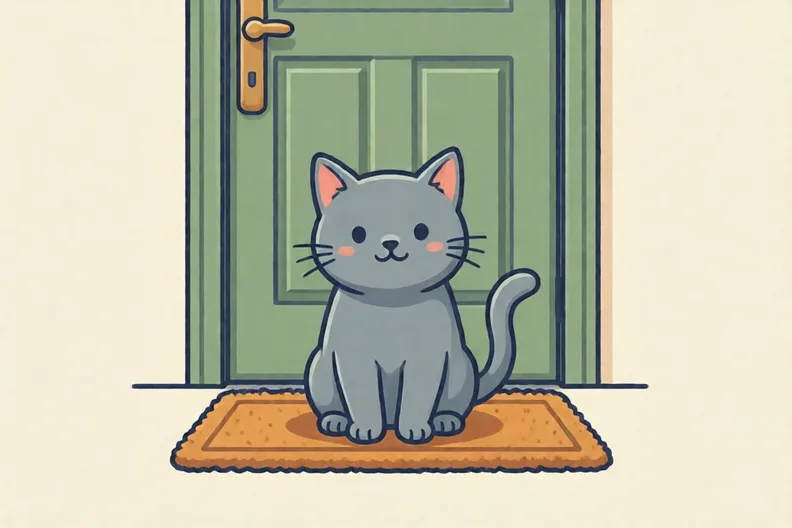
A small grey cat sitting on a doormat in front of a front door

Voici le chat. (Here is the cat.)

Il est petit. (He is small.)

Le chat is a boy word, so petit has no extra -e.

Now you
  1. 1.

    Voici la chaise. Elle est ___. (The chair is black.) Circle the word.

    noirnoire

C Your turn6 min

Circle the word that fits each sentence. Watch what changes from one row to the next.
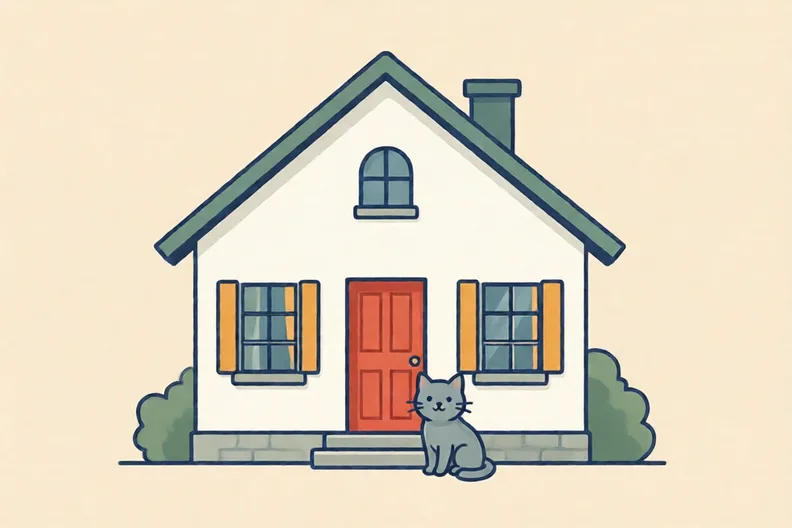
A large white house with a red door and a small grey cat by the step
  1. 1.

    Voici le livre. Il est ___. (The book is small.) Circle the word.

    petitpetite
  2. 2.

    Voici la maison. Elle est ___. (The house is small.) Circle the word.

    petitpetite
  3. 3.

    Voici la maison. Elle est ___. (The house is big.) Circle the word.

    grandgrande
  4. 4.

    Voici la voiture. Elle est ___. (The car is blue.) Circle the word.

    bleubleue

Say it out loud: Which word gets an extra -e, and why? Say the sentence aloud, then tell your grown-up what changed in each row.

D Spot the mistake3 min

Kit wrote a note about his pencil case. Read the note and check the word.
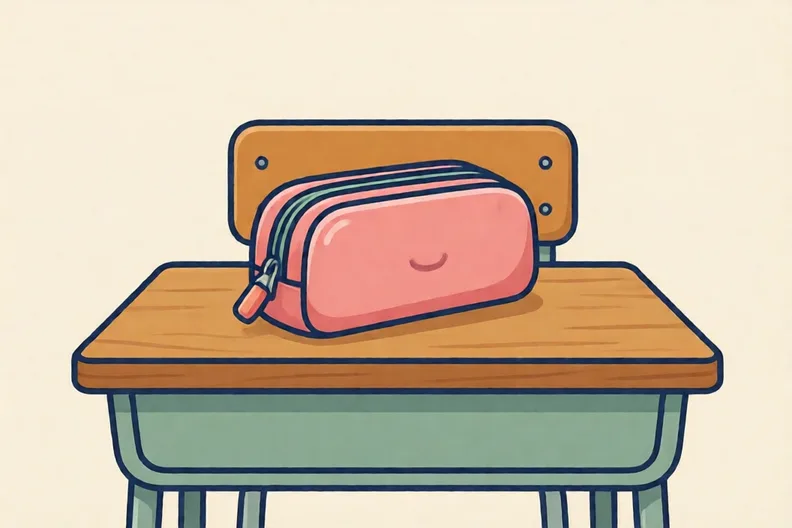
A small pink pencil case lying on a school desk
Kit says: “Voici la trousse. Elle est petit.”
  1. 1.

    Kit's note is wrong. Circle the word he should have written.

    petitpetite

E Think deeper4 min

Write about people you know. Start with Je suis and your own name, so you can say who you are.
An empty school classroom with a row of chairs and a blue door
  1. 1.

    Write four lines. Line 1: Je suis and your name. Line 2: voici and a boy you know. Line 3: il est and an adjective for him. Line 4: voici and a girl you know, then elle est and an adjective for her, with -e where needed.

How did it feel?

Tell your grown-up one French sentence you can now say, and which word was the tricky one.

I can do it Nearly Not yet
StudyDen · Year 4 · French · Introductions: singular 'être', 'avoir', and regular adjectivesAnswers are on the grown-up page

For the grown-up

Introducing people in French · 2 minutes to read

Answers, and what a wrong one tells you

A

1. bleu Rouge means red and vert means green. Ask your child to say the colour in English, then find its French partner: bleu.

2. trois Deux means two. Ask your child to count the dots aloud: un, deux, trois.

3. cinq Cinq means five. Count the dots together: un, deux, trois, quatre, cinq. Quatre is four, one less.

B

1. noire Noir is the word for a boy or a masculine thing. La chaise is a girl word, so it needs the extra -e: noire. Ask your child to say la chaise and point to the -e.

C

1. petit Ask your child whether le livre is a boy word or a girl word. A boy word has no extra -e, so say il est petit together.

2. petite La maison is a girl word, so it needs the extra -e: petite. Ask your child to point to the -e and say elle est petite aloud.

3. grande Grand means big or tall. The house is a girl word, so add the -e: grande. Ask your child what changed since the last row: the adjective, not the house.

4. bleue Bleu is the boy word. La voiture is a girl word, so add the -e: bleue. Ask your child to write the -e in the air.

D

1. petite Kit used the boy's word. La trousse is a girl word and the sentence says elle, so the word needs the extra -e: petite.

E

1. Look for: Four lines: je suis with a name, voici with a boy and il est with a boy's adjective, voici with a girl and elle est with a girl's adjective ending in -e where needed.

Words to use

Say“StudyDen plays the French words aloud in the app. Ask: is this a boy word or a girl word? Then check the ending.”
Instead of“Tell them the answer straight away, or say the adjective never changes.”

After the sheet

Find two toys whose French names you know, one le word and one la word, such as le ballon and la poupée. Say 'Voici le ballon. Il est petit.' Then say 'Voici la poupée. Elle est petite.'

Tick what your child got right in StudyDen. Anything missed comes back in a later Look back box, so there's no need to redo the sheet.

The rest of this unit

9 more sheets come with a StudyDen plan, in teaching order:

  1. New friends: my and your(with a plan)
  2. Months of the year(with a plan)
  3. When is your birthday?(with a plan)
  4. My Monster Numbers(with a plan)
  5. My Monster: il y a or il a(with a plan)
  6. I'm hungry in French(with a plan)
  7. Ages with avoir(with a plan)
  8. Feeling words with avoir(with a plan)
  9. I'm Sick! Avoir Mal(with a plan)

Every Year 4 French worksheet

The worksheets plan opens a printable sheet for every lesson in Years 1 to 6, each with its answers on a separate page for you. It costs £6.99 a month or £59 a year for the whole family, with no free trial.

The full StudyDen plan adds the lessons themselves, marked as your child works, with the worksheets included. It is 7 days free, then £29.99 a month.

Both start with a free account; you choose the plan when you sign up.