← Year 4 French worksheets

Year 4 People, places, things: adjective agreement, subject pronouns 'it' worksheet

“What do you have?” is free to print, with no account. It is the first sheet in the Year 4 French unit “People, places, things: adjective agreement, subject pronouns 'it'”, for children aged 8 to 9, and takes about 20 minutes.

Print it on A4. The child's pages come first; the answers, and what each wrong answer tells you, are on the grown-up page that follows. Weeks 19 to 27 of the year, 9 sheets in the unit.

Free sample · answers on the last page

What do you have?

Name: ____________ · Date: ____________
Year 4 · French · about 20 minutes
Answers are on the grown-up page

Today I can ask and answer what someone has, and spot the silent final e.

A Look back3 min

  1. 1.

    Join each French number to its English word.

    undeuxtrois
    threeonetwo
  2. 2.

    Which French word means 'red'? Circle the answer.

    rougevertbleujaune
  3. 3.

    Which French word means 'four'? Circle the answer.

    quatrecinqsixsept

B Watch me, then you4 min

Here is a cat. Watch how we say 'I have a cat' in French.
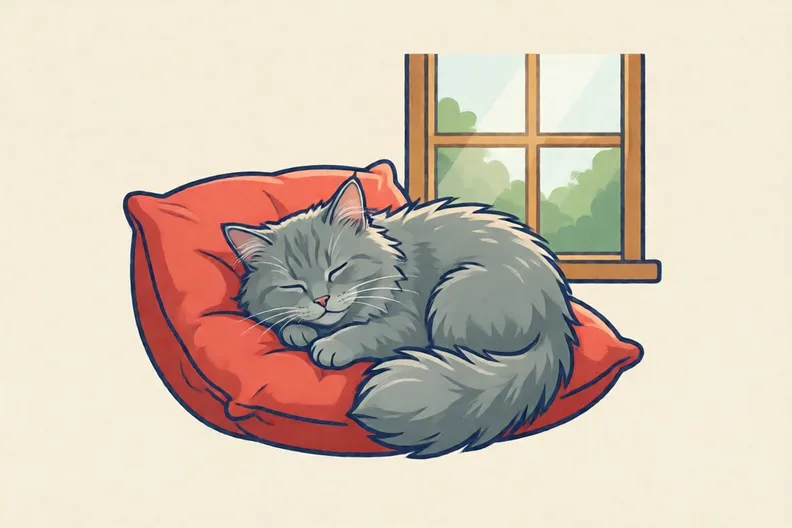
A fluffy grey cat sleeping on a red cushion by a window
Watch me

Un means one, so un chat means a cat.

Je and ai run together, so je becomes j'ai.

J'ai un chat means I have a cat.

Now you
  1. 1.

    Which French phrase means 'I have'? Circle the answer.

    j'aitu asje suistu es
  2. 2.

    The dots show your dogs. Finish the sentence J'ai ___ chiens. Circle the French number.

    undeuxtroisquatre

C Your turn6 min

Sort, choose and count. Say each sentence aloud as you go.
A cat sitting beside a wooden chair in a sunny room
  1. 1.

    Sort each card into the right column.

    J'ai un chat.Tu as un chat.J'ai une chaise.Tu as une chaise.
    About me: j'aiTo one friend: tu as
  2. 2.

    Which one is a yes-or-no question, said with a rising voice? Circle the answer.

    Tu as un chat?Tu as un chat.Quel âge as-tu?
  3. 3.

    Circle the words that have a silent final e.

    cartecafétimidechat
  4. 4.

    The dots show your cats. Finish the sentence J'ai ___ chats. Circle the French number.

    deuxtroisquatrecinq

Say it out loud: Say each card out loud. Which word changes when the person changes, and which word stays the same?

D Spot the mistake3 min
A folded paper map lying open on a wooden table
Kit says: “Carte ends in e, so you say car-tuh.”
  1. 1.

    What should Kit say instead? Write it in one or two sentences.

E Think deeper3 min

J'ai or Tu asun or unea thing at home
  1. 1.

    Write one sentence starting J'ai and one starting Tu as, about things in your home. Use un or une.

How did it feel?

I can do it Nearly Not yet
StudyDen · Year 4 · French · People, places, things: adjective agreement, subject pronouns 'it'Answers are on the grown-up page

For the grown-up

What do you have? · 2 minutes to read

Answers, and what a wrong one tells you

A

1. un → one; deux → two; trois → three

2. rouge If they pick vert, that is green. Point to the red square and say the word for red aloud.

3. quatre If they pick cinq, that is five. Ask them to count the dots again, one at a time, then find the word.

B

1. j'ai If they pick tu as, that means you have, said to one person. Say that j'ai is the I form and tu as is the you form.

2. deux If they pick trois, that is three. Ask them to point to each dot and say one number for each.

C

1. About me: j'ai: J'ai un chat., J'ai une chaise. · To one friend: tu as: Tu as un chat., Tu as une chaise. If cards are in the wrong column, ask who the sentence is about: me, or one person they know.

2. Tu as un chat? If they pick Tu as un chat. with a full stop, that is a statement. Ask them to lift their voice at the end. If they pick Quel âge as-tu?, that asks how old you are, so the answer is a number, not yes or no.

3. carte, timide If they circle café, the final é with an accent is said. A plain e at the end of words like carte and timide is silent.

4. quatre If they pick cinq, that is five. Ask them to count the dots one by one and say each number aloud.

D

1. Look for: The final e in carte is silent, so the word is said kart, not car-tuh. Kit thinks the e is said because it is written. Tell your child that a plain e at the end of words like carte is silent, then say kart together.

E

1. Look for: One sentence starting J'ai and one starting Tu as, each with un or une and a noun.

Words to use

Say“Say the French words aloud first. StudyDen plays the words aloud in the app, so listen and repeat with your child.”
Instead of“Read the answers out and tell them what to write.”

After the sheet

Line up four things from the kitchen, like a cup and a spoon. Take turns: say what you have with j'ai, then ask tu as with a rising voice.

Tick what your child got right in StudyDen. Anything missed comes back in a later Look back box, so there's no need to redo the sheet.

The rest of this unit

8 more sheets come with a StudyDen plan, in teaching order:

  1. Describing words move(with a plan)
  2. Describing what I have(with a plan)
  3. Describing what I have(with a plan)
  4. Il or elle: meaning 'it'(with a plan)
  5. Mon, ma, ton and ta(with a plan)
  6. Zoo animals: il or elle?(with a plan)
  7. Mon animal préféré(with a plan)
  8. Who is it? Using être and avoir(with a plan)

Every Year 4 French worksheet

The worksheets plan opens a printable sheet for every lesson in Years 1 to 6, each with its answers on a separate page for you. It costs £6.99 a month or £59 a year for the whole family, with no free trial.

The full StudyDen plan adds the lessons themselves, marked as your child works, with the worksheets included. It is 7 days free, then £29.99 a month.

Both start with a free account; you choose the plan when you sign up.