← Year 4 French worksheets

Year 4 What I and others like doing: 2-verb phrases worksheet

“School activities in French” is free to print, with no account. It is the first sheet in the Year 4 French unit “What I and others like doing: 2-verb phrases”, for children aged 8 to 9, and takes about 20 minutes.

Print it on A4. The child's pages come first; the answers, and what each wrong answer tells you, are on the grown-up page that follows. Weeks 28 to 31 of the year, 4 sheets in the unit.

Free sample · answers on the last page

School activities in French

Name: ____________ · Date: ____________
Year 4 · French · about 20 minutes
Answers are on the grown-up page

Today I can use j'aime, j'adore or je déteste with an infinitive to say what I like doing at school.

A Look back3 min

Remember these from earlier French. Circle the right word.

  1. 1.

    How many dots? Circle the French number.

    deuxtroisquatrecinq
  2. 2.

    What colour is this? Circle the French word.

    rougebleuvertjaune
  3. 3.

    How many dots? Circle the French number.

    huitneufdixsept

B Watch me, then you4 min

Lou has a football and a book on his school desk. Read how Lou says what he likes doing.

Watch me
j'aime = I likejouer = to playJ'aime jouer

j'aime = I like. This is the finite verb.

jouer = to play. It stays in its infinitive form, ending -er.

J'aime jouer = I like to play. Two verbs, one sentence.

Now you
  1. 1.

    Je déteste ___ (to work). Circle the missing word.

    Je déteste
    travaillertravailletravaillonstravailles

C Your turn6 min

Circle the French sentence that matches the English. Each row changes one thing.
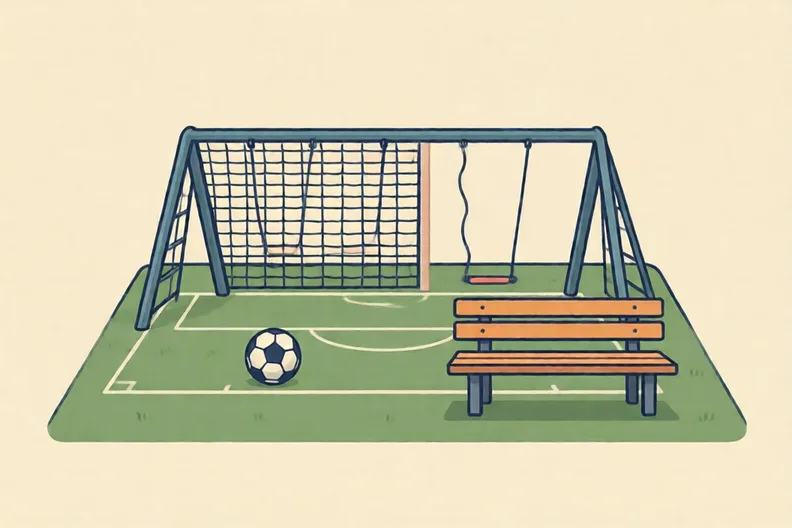
A school playground with a football and a bench
  1. 1.

    I like to play.

    J'aime jouerJ'aime joueJe jouer aimeJ'aime jouez
  2. 2.

    I love to sing.

    J'adore chanterJ'aime chanterJ'adore chanteJe chanter adore
  3. 3.

    I hate to draw.

    Je déteste dessinerJe déteste dessineJe détester dessinerJe déteste dessinons
  4. 4.

    I dance. This sentence has only one verb.

    Je danseJ'aime danserJe aime danséDanser je

Say it out loud: What word comes straight after j'aime, j'adore or je déteste? What ending does it have?

D Spot the mistake3 min

In French, the letters -tion at the end of a word say syohn, with an s sound.

A school bell on a wooden shelf
Mia says: “Attention is said ah-tahn-shun, like in English.”
  1. 1.

    Is Mia right? Circle how attention sounds in French.

    ah-tahn-syohnah-tahn-shun

E Think deeper3 min

  1. 1.

    Make up two French sentences about school. Use j'aime, j'adore or je déteste, then an -er verb. Write the English under each.

    finite verbinfinitive

How did it feel?

I can do it Nearly Not yet
StudyDen · Year 4 · French · What I and others like doing: 2-verb phrasesAnswers are on the grown-up page

For the grown-up

School activities in French · 2 minutes to read

Answers, and what a wrong one tells you

A

1. quatre If they circle a number word next to the right one, ask them to count the dots again slowly, one finger per dot.

2. rouge If they circle bleu, they have matched the wrong colour. Ask them to say the colour of a fire engine, then find the French word.

3. neuf If they circle dix, they have counted one dot too many. Ask them to touch each dot once and say the number out loud.

B

1. travailler If they circle travaille, that is the finite form for one person. After déteste, the verb stays in its infinitive, ending -er.

C

1. J'aime jouer If they circle J'aime joue, the second verb has changed. After j'aime, keep the infinitive ending in -er.

2. J'adore chanter If they circle J'aime chanter, that means like, not love. Ask them which word in the English means love, then find adorer.

3. Je déteste dessiner If they circle Je déteste dessine, the verb has changed into the finite form. After déteste, the verb stays as an infinitive.

4. Je danse If they circle J'aime danser, that means I like to dance. I dance needs one verb only: Je danse.

D

1. ah-tahn-syohn If they circle ah-tahn-shun, they used the English sound. In French, -tion says syohn, so attention is ah-tahn-syohn.

E

1. Look for: Two French sentences, each with j'aime, j'adore or je déteste followed by an -er verb, with English meanings under them.

Words to use

Say“StudyDen plays the French words aloud in the app. Here, ask: which word comes straight after j'aime, and what ending does it have?”
Instead of“Read out the French answer for them and move on without asking why.”

After the sheet

Pick an activity at home, such as dancing or singing. Take turns saying it with j'aime, j'adore and je déteste, such as j'adore chanter.

Tick what your child got right in StudyDen. Anything missed comes back in a later Look back box, so there's no need to redo the sheet.

The rest of this unit

3 more sheets come with a StudyDen plan, in teaching order:

  1. Saying what I love(with a plan)
  2. All about me in French(with a plan)
  3. Writing to a French friend(with a plan)

Every Year 4 French worksheet

The worksheets plan opens a printable sheet for every lesson in Years 1 to 6, each with its answers on a separate page for you. It costs £6.99 a month or £59 a year for the whole family, with no free trial.

The full StudyDen plan adds the lessons themselves, marked as your child works, with the worksheets included. It is 7 days free, then £29.99 a month.

Both start with a free account; you choose the plan when you sign up.