← Year 1 PE worksheets

Year 1 Ball skills: pushing and striking worksheet

“Gentle pushes with a bat” is free to print, with no account. It is the first sheet in the Year 1 PE unit “Ball skills: pushing and striking”, for children aged 5 to 6, and takes about 22 minutes.

Print it on A4. The child's pages come first; the answers, and what each wrong answer tells you, are on the grown-up page that follows. Weeks 34 to 36 of the year, 6 sheets in the unit.

Free sample · answers on the last page

Gentle pushes with a bat

Name: ____________ · Date: ____________
Year 1 · PE · about 22 minutes
Answers are on the grown-up page

Today I can push a ball with a bat or racket, gently and in control.

A Look back3 min

Think back to earlier movement learning. Circle or write your answer.

  1. 1.

    Throw underarm: step forward, , let go. Circle the missing middle step.

    step forwardlet go
    swing armsit downclose your eyes
  2. 2.

    Jump: bend your knees, jump up, . How should you land? Circle one.

    bend kneesjump up
    softly on bent kneesstiff on straight legswith a bump on straight legs
  3. 3.

    Catching: watch the ball, , hands give. Circle the missing middle step.

    watch the ballhands give
    hands reachlook at the skystand on one leg

B Watch me, then you4 min

Ola wants her ball to land on the towel.

Watch me
Stand, feet apartFirm gripPush gentlyFollow through

Feet a little apart, knees bent a little.

Hold the bat firmly, so it does not wobble.

Push gently, then keep the arm moving forward.

Now you
  1. 1.

    Ola holds the bat. Which grip should she use? Circle one.

    push gentlykeep following
    firm, so it does not wobbleloose, so it flapswith one finger only
  2. 2.

    Ola's feet need to be steady. What helps? Circle one.

    knees bendarm follows
    feet a little apartfeet close together and stiffone foot in the air

C Your turn8 min

Clear a space away from windows. Use a soft ball and a folded towel as the target. A grown-up watches.
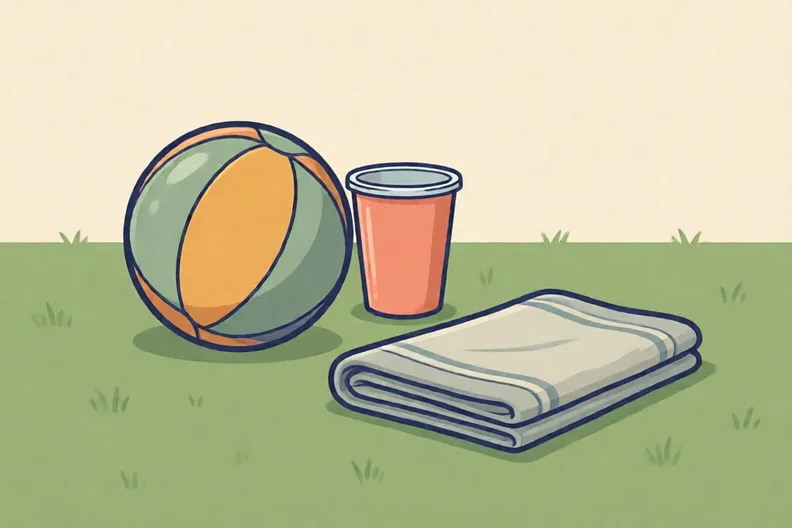
Soft ball and plastic cup on a lawn beside a folded towel target.
  1. 1.

    Number these pushing steps 1 to 4, in the order Ola uses them.

    1. Push the ball gently
    2. Keep the arm moving forward
    3. Stand with feet a little apart
    4. Hold the bat with a firm grip
  2. 2.

    Join each word to its coaching point.

    gripbalancedwatchfollow through
    keep the arm moving forward after the pushhold the handle firmly, so it does not wobblefeet a little aparteyes on the ball
  3. 3.

    Push the ball gently to the towel 3 times. Mark each try that stops on the towel. How many stopped on the towel?

    Try 1Try 2Try 3
  4. 4.

    Ola's push sent the ball past the towel. What should she do next time? Circle one.

    push more gentlyhit it hardershut her eyes

Say it out loud: What did you do the same each time? What changed when it went where you wanted?

D Spot the mistake3 min
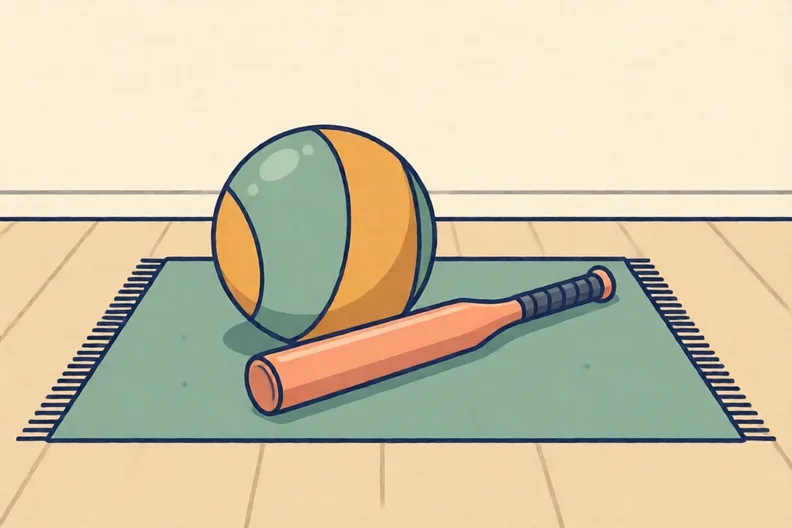
A soft ball and a plastic bat lie on a rug, clear of furniture
Kit says: “Watch your feet, not the ball.”
  1. 1.

    Is Kit right? Why? Write one reason.

E Think deeper4 min
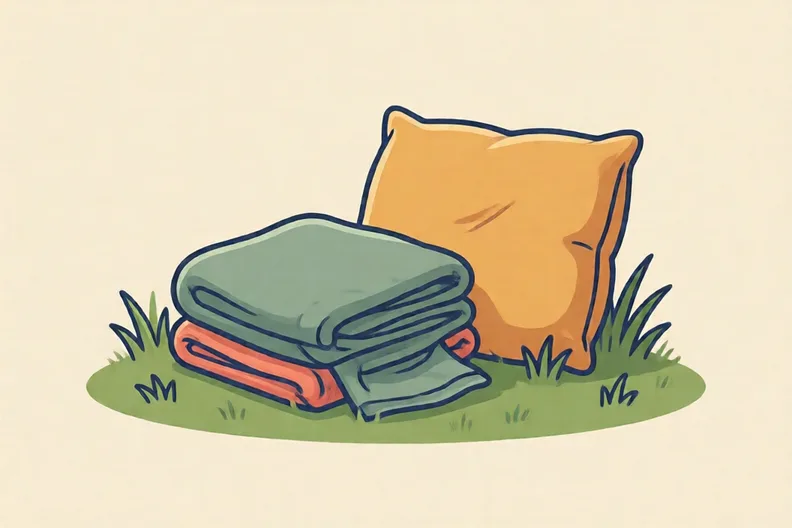
A folded towel and a cushion set on the grass as targets
  1. 1.

    Write two ways to push a ball so it stays in control. Say why each one helps.

How did it feel?

I can do it Nearly Not yet
StudyDen · Year 1 · PE · Ball skills: pushing and strikingAnswers are on the grown-up page

For the grown-up

Gentle pushes with a bat · 2 minutes to read

Answers, and what a wrong one tells you

A

1. swing arm If they pick sit down, ask which step comes between stepping and letting go. Say: swing the arm, then let go.

2. softly on bent knees If they pick stiff legs, ask what bent knees do when you land. Say: bent knees soak up the landing.

3. hands reach If they pick look at the sky, say: your eyes stay on the ball, and your hands reach to meet it.

B

1. firm, so it does not wobble If they pick loose, ask: does a loose bat wobble? Point to Firm grip in the Watch me picture.

2. feet a little apart If they pick one foot in the air, say: standing on one foot makes you wobble. Feet apart keeps you steady.

C

1. 1 Stand with feet a little apart · 2 Hold the bat with a firm grip · 3 Push the ball gently · 4 Keep the arm moving forward If the follow through comes first, they are thinking of the end of a push. Say: stand, grip, push, then follow through.

2. grip → hold the handle firmly, so it does not wobble; balanced → feet a little apart; watch → eyes on the ball; follow through → keep the arm moving forward after the push If your child mixes up grip and balanced, read each coaching point aloud. Ask which part of the body it talks about.

3. Look for: A number from 0 to 3 that matches the marks the child made on the tally.

4. push more gently If they pick hit it harder, say: a hard hit is harder to control. Ask which push is gentle.

D

1. Look for: Says Kit is wrong because the eyes must watch the ball to know where it goes. If they say feet are fine, ask where your eyes should be. Say: watching the ball tells you where it will go.

E

1. Look for: Two ideas from gentle push, eyes on the ball, feet apart, firm grip or follow through, each with a reason.

Words to use

Say“Show me where your eyes go when you push. Which part felt steady?”
Instead of“Push harder next time, you will get it.”

After the sheet

Set up a folded towel on the floor as a target. Roll or push a soft ball to it, gently, with a book. Clear space, away from windows, and you watching.

Tick what your child got right in StudyDen. Anything missed comes back in a later Look back box, so there's no need to redo the sheet.

The rest of this unit

5 more sheets come with a StudyDen plan, in teaching order:

  1. Gentle pushes with a bat(with a plan)
  2. Pushing into space(with a plan)
  3. Hitting to a target(with a plan)
  4. Hitting with power(with a plan)
  5. Hitting with a racket(with a plan)

Every Year 1 PE worksheet

The worksheets plan opens a printable sheet for every lesson in Years 1 to 6, each with its answers on a separate page for you. It costs £6.99 a month or £59 a year for the whole family, with no free trial.

The full StudyDen plan adds the lessons themselves, marked as your child works, with the worksheets included. It is 7 days free, then £29.99 a month.

Both start with a free account; you choose the plan when you sign up.