← Year 1 PE worksheets

Year 1 Ball skills: sending, receiving and dribbling worksheet

“Bouncing with one hand” is free to print, with no account. It is the first sheet in the Year 1 PE unit “Ball skills: sending, receiving and dribbling”, for children aged 5 to 6, and takes about 20 minutes.

Print it on A4. The child's pages come first; the answers, and what each wrong answer tells you, are on the grown-up page that follows. Weeks 13 to 18 of the year, 12 sheets in the unit.

Free sample · answers on the last page

Bouncing with one hand

Name: ____________ · Date: ____________
Year 1 · PE · about 20 minutes
Answers are on the grown-up page

Today I can bounce a ball with one hand and keep it under control.

A Look back3 min

  1. 1.

    Which body part do you use to catch a ball?

    Ball comes to youReach outCatch it
    handskneesears
  2. 2.

    How should you get ready before you run off? Circle one.

    Get readyGoRun
    on your feet, readylying on your backsitting down
  3. 3.

    Number these steps 1, 2 and 3 for a safe game.

    1. Play the game
    2. Clear the space
    3. Warm up

B Watch me, then you4 min

Ali is learning to dribble. He starts by bouncing with one hand.

Watch me
Stand stillWalk slowlySwap hands

First, stand still and bounce with one hand.

When that feels easy, walk slowly and keep the bounce going.

Then swap to your other hand and try again.

Now you
  1. 1.

    Ali's first hand is his right hand. Which hand should he try next?

    Right hand
    left handright handfeet

C Your turn8 min

Clear a space and use a soft ball. Keep away from windows. A grown-up watches from the side.
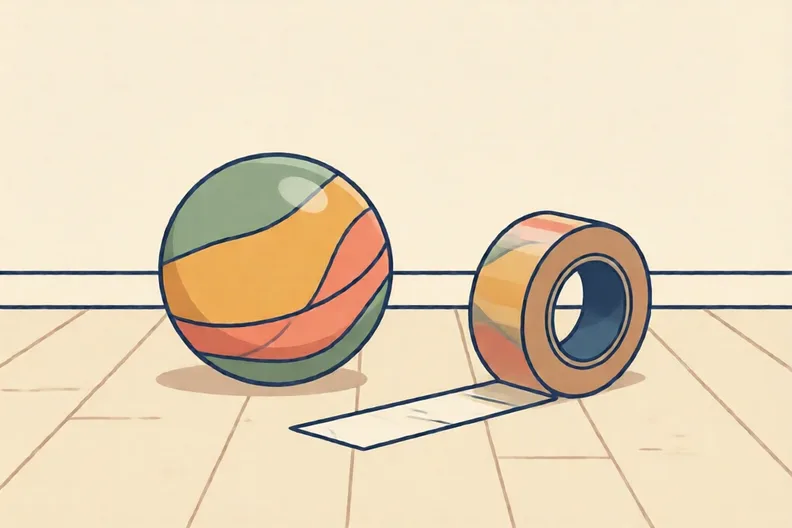
A clear floor space with a soft ball and a line of tape on the floor
  1. 1.

    Which part of your hand should push the ball down?

    Hand on ballPush downBall comes up
    fingerswhole palmfist
  2. 2.

    Join each action to why it helps.

    Bend your kneesWatch aheadPush with your fingers
    Keeps you in controlHelps you balanceLets you move without looking down
  3. 3.

    Number these steps 1, 2 and 3 in the right order.

    1. Swap to your other hand
    2. Stand still and bounce with one hand
    3. Walk slowly and keep the bounce going
  4. 4.

    Bounce with one hand. Make a tally mark for each bounce before the ball gets away. Do three tries.

    Try 1Try 2Try 3

Say it out loud: Which hand felt easier? What helped you keep the ball under control?

D Spot the mistake3 min
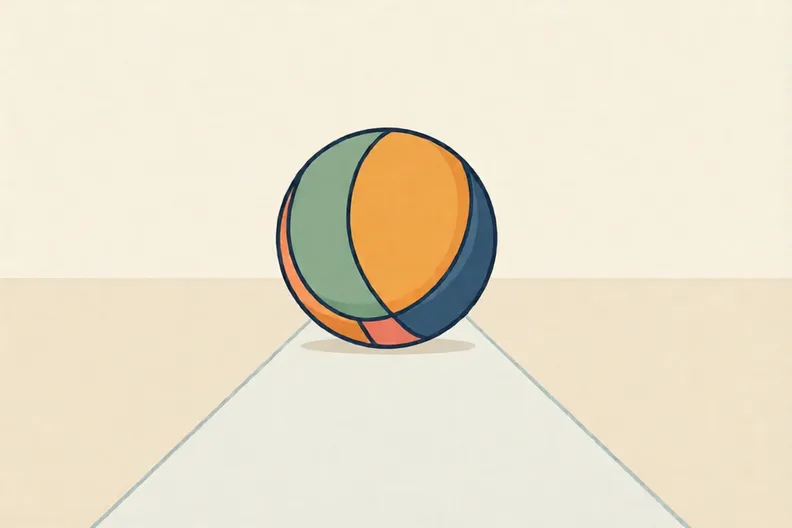
A soft ball on a plain floor with an open clear path ahead.
Kit says: “Watch the ball every second so you never lose it.”
  1. 1.

    What should Kit look at instead?

E Think deeper4 min

Think about your own bounce.
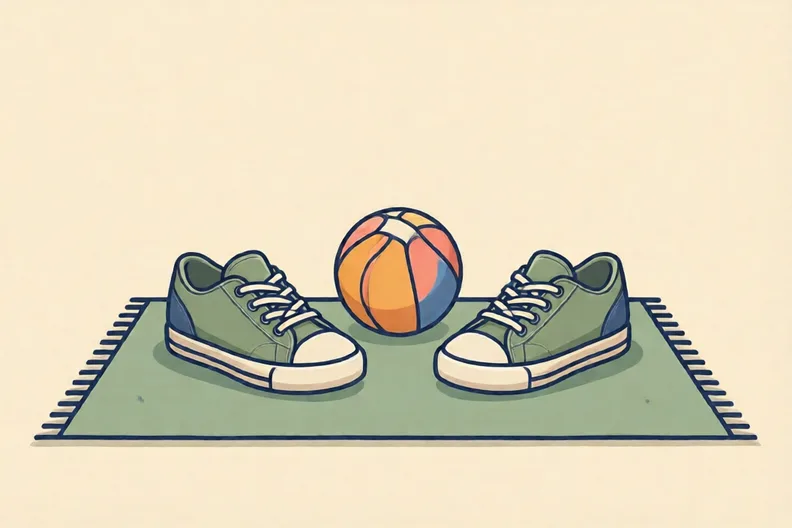
Two trainers placed apart on a rug with a soft ball between them
  1. 1.

    Say what made your bounce steady. Write one reason.

How did it feel?

I can do it Nearly Not yet
StudyDen · Year 1 · PE · Ball skills: sending, receiving and dribblingAnswers are on the grown-up page

For the grown-up

Bouncing with one hand · 2 minutes to read

Answers, and what a wrong one tells you

A

1. hands If they choose knees, ask them to show you how they hold their hands to catch.

2. on your feet, ready If they choose lying down, ask them to stand up and show you the start of a race. Then ask which is quicker.

3. 1 Clear the space · 2 Warm up · 3 Play the game If they put play first, ask what might bump into something. Clear the space before you start anything.

B

1. left hand If they choose right hand, they have already used it. Ask which hand is left and try it on the bounce.

C

1. fingers If they choose whole palm, the ball is slapped and gets away. Ask them to push with just the fingertips.

2. Bend your knees → Helps you balance; Watch ahead → Lets you move without looking down; Push with your fingers → Keeps you in control If they join knees to control, ask what their knees do when they bounce. Bent knees help you balance.

3. 1 Stand still and bounce with one hand · 2 Walk slowly and keep the bounce going · 3 Swap to your other hand If they put swap first, ask whether the ball is steady yet. Start still, then walk, then swap.

4. Look for: Three tries, each with one tally mark for every bounce made.

D

1. Look for: A good answer says to look ahead at where you are going, not at the ball all the time. If they say the ball is still right, ask them to bounce while looking at the wall. Then ask how they would dodge someone.

E

1. Look for: A reason such as pushing with fingers, bent knees, or watching ahead.

Words to use

Say“Which hand felt easier, and what did your fingers do when the ball came back up?”
Instead of“Tell them to bounce faster and stop looking so carefully.”

After the sheet

In a clear space indoors, bounce a soft ball with one hand for ten bounces, then the other hand. Ask which felt steadier and why, and keep a grown-up watching from the side.

Tick what your child got right in StudyDen. Anything missed comes back in a later Look back box, so there's no need to redo the sheet.

The rest of this unit

11 more sheets come with a StudyDen plan, in teaching order:

  1. Fingertip dribbling and sending(with a plan)
  2. Tapping with Our Feet(with a plan)
  3. Dribbling with your feet(with a plan)
  4. Dribbling past the cushions(with a plan)
  5. Passing with the inside foot(with a plan)
  6. Rolling and stopping(with a plan)
  7. Rolling and stopping play(with a plan)
  8. Throwing underarm(with a plan)
  9. Throw, catch, watch the ball(with a plan)
  10. Rolling and stopping(with a plan)
  11. Aim for the Target(with a plan)

Every Year 1 PE worksheet

The worksheets plan opens a printable sheet for every lesson in Years 1 to 6, each with its answers on a separate page for you. It costs £6.99 a month or £59 a year for the whole family, with no free trial.

The full StudyDen plan adds the lessons themselves, marked as your child works, with the worksheets included. It is 7 days free, then £29.99 a month.

Both start with a free account; you choose the plan when you sign up.