← Year 2 geography worksheets

Year 2 Cold places: what is it like at the North and South Poles? worksheet

“Winter and summer together” is free to print, with no account. It is the first sheet in the Year 2 geography unit “Cold places: what is it like at the North and South Poles?”, for children aged 6 to 7, and takes about 20 minutes.

Print it on A4. The child's pages come first; the answers, and what each wrong answer tells you, are on the grown-up page that follows. Weeks 13 to 20 of the year, 8 sheets in the unit.

Free sample · answers on the last page

Winter and summer together

Name: ____________ · Date: ____________
Year 2 · Geography · about 20 minutes
Answers are on the grown-up page

Today I can explain why winter and summer happen at different times in each half of the Earth.

A Look back3 min

  1. 1.

    On a map, north is at the top. Circle the direction opposite north.

    NNEESESWWNW
    southeastwest
  2. 2.

    In the UK, which season is usually the coldest? Circle it.

    -10°C0°C10°C20°C30°C
    springsummerautumnwinter
  3. 3.

    Circle the symbol that shows where people live.

    ABC123~N
    housetreepond

B Watch me, then you4 min

In December, the north part of the Earth leans away from the sun. What season is the south part having at the same time?

Watch me
SpringSummerAutumnWinter

The north part of the Earth leans away from the sun. That is winter there.

At the same time, the south part leans towards the sun.

So the South Pole is having summer.

Now you
  1. 1.

    In June, the north part of the Earth leans towards the sun. What season is the South Pole having? Circle it.

    springsummerautumnwinter

C Your turn5 min

Use the seasons wheel. Circle the season in the other half of the Earth.

SpringSummerAutumnWinter
  1. 1.

    When it is summer in the North, what season is it in the South? Circle it.

    springsummerautumnwinter
  2. 2.

    When it is winter in the North, what season is it in the South? Circle it.

    springsummerautumnwinter
  3. 3.

    When it is spring in the North, what season is it in the South? Circle it.

    springsummerautumnwinter
  4. 4.

    When it is summer in the South, what season is it in the North? Circle it.

    springsummerautumnwinter

Say it out loud: What stayed the same in each question, and what changed? Which half is opposite?

D Spot the mistake3 min
A snowy, icy coastline under a pale sky
Kit says: “When it is winter in the UK, it is winter everywhere on Earth.”
  1. 1.

    Is Kit right? Write why.

E Think deeper4 min
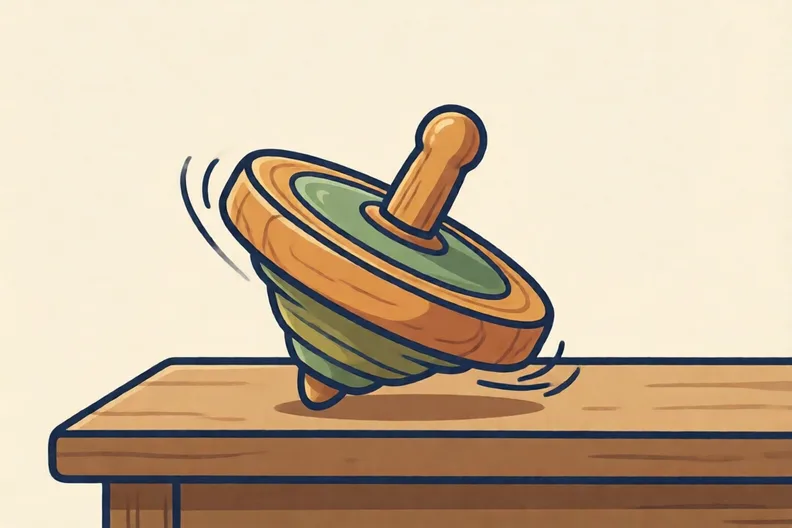
A spinning top leaning to one side on a table
  1. 1.

    Explain why the North Pole has winter when the South Pole has summer. Use the word lean.

How did it feel?

I can do it Nearly Not yet
StudyDen · Year 2 · Geography · Cold places: what is it like at the North and South Poles?Answers are on the grown-up page

For the grown-up

Winter and summer together · 2 minutes to read

Answers, and what a wrong one tells you

A

1. south your child may have chosen a side direction. Point to north on the compass, then point straight across the middle to the bottom.

2. winter

3. house

B

1. winter

C

1. winter your child may have said summer. Seasons are opposite in the two halves, so ask which half is leaning towards the sun now.

2. summer

3. autumn your child may have chosen spring. Go round the wheel from spring to the season that comes half way round.

4. winter

D

1. Look for: Says Kit is wrong because when it is winter in one half of the Earth it is summer in the other half, so it is not winter everywhere. your child may think the whole planet has the same season at once. Ask which half of the Earth is leaning towards the sun now.

E

1. Look for: Says the Earth leans, so one half leans away from the sun while the other half leans towards it. If your child thinks the Earth is closer to the sun in winter, say it is the tilt that matters, not the distance.

Words to use

Say“Which half of the Earth is leaning towards the sun now? Which half is having winter?”
Instead of“Winter is the same everywhere in the world, isn't it?”

After the sheet

Put a lamp on the kitchen table. Stick a pencil into a lump of playdough and tilt it. Walk slowly round the lamp, keeping the pencil leaning the same way, and talk about which side gets more light.

Tick what your child got right in StudyDen. Anything missed comes back in a later Look back box, so there's no need to redo the sheet.

The rest of this unit

7 more sheets come with a StudyDen plan, in teaching order:

  1. Finding the Poles(with a plan)
  2. The Arctic is more than one spot(with a plan)
  3. Antarctica: the cold continent(with a plan)
  4. Arctic wildlife(with a plan)
  5. Animals of the Antarctic(with a plan)
  6. Life in Greenland(with a plan)
  7. Antarctica: a shared place(with a plan)

Every Year 2 geography worksheet

The worksheets plan opens a printable sheet for every lesson in Years 1 to 6, each with its answers on a separate page for you. It costs £6.99 a month or £59 a year for the whole family, with no free trial.

The full StudyDen plan adds the lessons themselves, marked as your child works, with the worksheets included. It is 7 days free, then £29.99 a month.

Both start with a free account; you choose the plan when you sign up.