← Year 2 science worksheets

Year 2 New life worksheet

“Young animals and their parents” is free to print, with no account. It is the first sheet in the Year 2 science unit “New life”, for children aged 6 to 7, and takes about 20 minutes.

Print it on A4. The child's pages come first; the answers, and what each wrong answer tells you, are on the grown-up page that follows. Weeks 14 to 18 of the year, 5 sheets in the unit.

Free sample · answers on the last page

Young animals and their parents

Name: ____________ · Date: ____________
Year 2 · Science · about 20 minutes
Answers are on the grown-up page

Today I can match a baby animal to the grown-up it came from by looking closely.

A Look back3 min

  1. 1.

    Look at the tally. How many more birds than frogs were counted?

    birdsfrogs
  2. 2.

    Spring comes first. Which season comes next? Circle it.

    springautumnwinter
    summerautumnwinter
  3. 3.

    How many pets are there altogether?

    Pets in our class0123456catsdogsrabbits

B Watch me, then you4 min

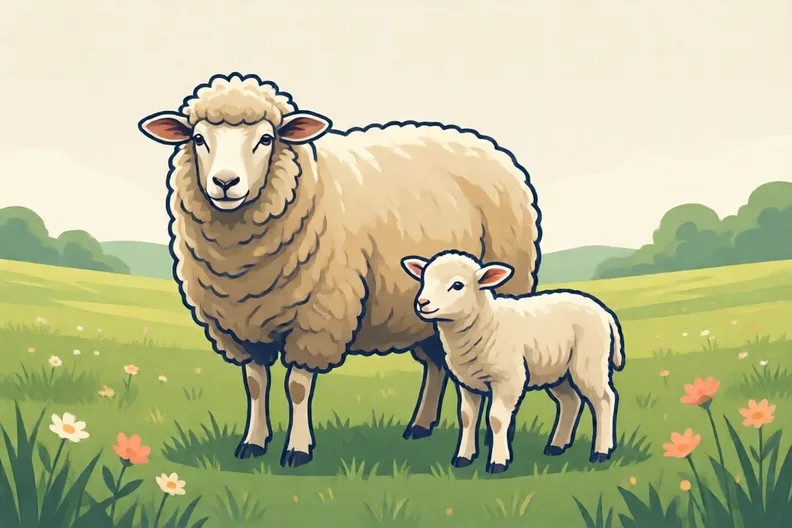
A lamb is an offspring. Look at the picture and find the parent.
Watch me
A woolly sheep standing beside its small lamb in a green field

The lamb is the young of the sheep.

So the sheep is the parent.

The lamb is the offspring.

Now you
  1. 1.

    Circle the parent of a pet puppy.

    dogfoxwolf

C Your turn7 min

Read each row. Circle, sort or join your answer.
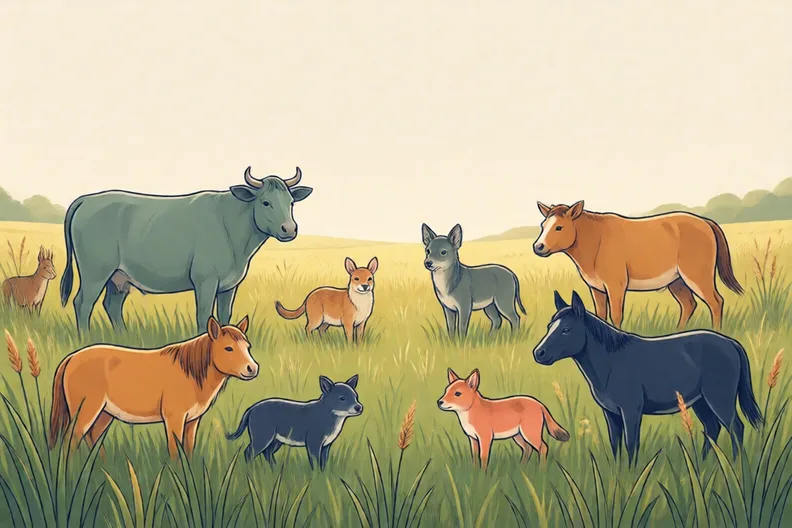
A sunny meadow with several young and adult animals in long grass
  1. 1.

    A kitten is the offspring of which animal? Circle it.

    catcowhen
  2. 2.

    A duckling is the offspring of which bird? Circle it.

    duckgoosehen
  3. 3.

    Sort each pair into the right column. Does the baby look similar to its parent, or different?

    cat and kittenelephant and calffrog and tadpolebutterfly and caterpillar
    Looks similarLooks different
  4. 4.

    Join each parent to its offspring.

    henfrogdog
    puppytadpolechick

Say it out loud: Which baby looked most like its parent? Which looked least like it? How did you decide?

D Spot the mistake3 min
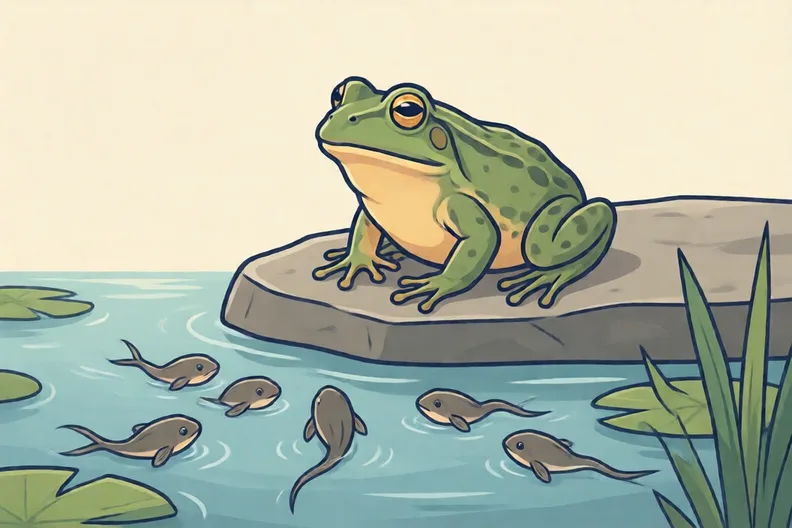
A frog sitting on a stone beside a pond with tadpoles swimming in the water
Kit says: “All baby animals look just like their mum or dad.”
  1. 1.

    Is Kit right? Write one animal whose baby looks very different from it.

E Think deeper4 min
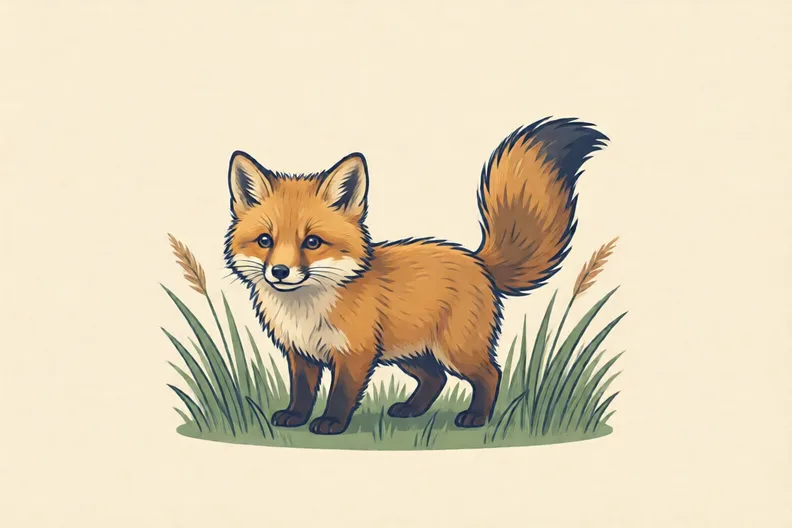
A small furry young animal with four legs and a bushy tail in long grass
  1. 1.

    The young animal is small, furry, has four legs and a bushy tail. Its parent is not in the picture. Name one animal it could be. Say how you know.

How did it feel?

I can do it Nearly Not yet
StudyDen · Year 2 · Science · New lifeAnswers are on the grown-up page

For the grown-up

Young animals and their parents · 2 minutes to read

Answers, and what a wrong one tells you

A

1. 3 If your child wrote 7, they added 5 and 2. Ask: are we finding how many more, or how many altogether?

2. summer If your child circled autumn, ask what comes straight after spring. Turn the cycle one step at a time.

3. 11 If your child wrote 9, the rabbits were left out. Add every bar, not just two.

B

1. dog If your child circled fox, ask: which animal is the puppy's mum or dad? The parent is the animal the baby came from.

C

1. cat If your child circled cow, ask: which grown-up animal has kittens? Find the parent first, then the baby.

2. duck If your child circled goose, ask whether a duckling is the young of a goose or a duck. Look for the name in the word.

3. Looks similar: cat and kitten, elephant and calf · Looks different: frog and tadpole, butterfly and caterpillar If your child put the frog and tadpole with the similar pairs, ask: does a tadpole have legs like a frog? Look at its body and tail.

4. hen → chick; frog → tadpole; dog → puppy If your child joined the frog to the chick, ask which animal the tadpole came from. Think about where each baby comes from.

D

1. Look for: Says Kit is wrong and gives one pair, such as frog and tadpole or butterfly and caterpillar, where the baby looks different from its parent. If your child agrees with Kit, ask: does a tadpole look like a frog? Does a caterpillar look like a butterfly?

E

1. Look for: Names a furry four-legged animal with a bushy tail, such as a fox, and explains the reasoning using the legs, fur or tail.

Words to use

Say“Which animal is the parent? How do you know? Which part of the baby looks like it?”
Instead of“Tell them the answer straight away, before they have looked closely.”

After the sheet

Use toy animals or pictures from a magazine. Pair each parent with its young, say one way they match and one way they are different, then swap.

Tick what your child got right in StudyDen. Anything missed comes back in a later Look back box, so there's no need to redo the sheet.

The rest of this unit

4 more sheets come with a StudyDen plan, in teaching order:

  1. Baby animals grow up(with a plan)
  2. Animal life cycles(with a plan)
  3. Animal life cycles change(with a plan)
  4. What animals need(with a plan)

Every Year 2 science worksheet

The worksheets plan opens a printable sheet for every lesson in Years 1 to 6, each with its answers on a separate page for you. It costs £6.99 a month or £59 a year for the whole family, with no free trial.

The full StudyDen plan adds the lessons themselves, marked as your child works, with the worksheets included. It is 7 days free, then £29.99 a month.

Both start with a free account; you choose the plan when you sign up.