← Year 2 science worksheets

Year 2 Uses of everyday materials worksheet

“Materials and their uses” is free to print, with no account. It is the first sheet in the Year 2 science unit “Uses of everyday materials”, for children aged 6 to 7, and takes about 20 minutes.

Print it on A4. The child's pages come first; the answers, and what each wrong answer tells you, are on the grown-up page that follows. Weeks 1 to 5 of the year, 7 sheets in the unit.

Free sample · answers on the last page

Materials and their uses

Name: ____________ · Date: ____________
Year 2 · Science · about 20 minutes
Answers are on the grown-up page

Today I can tell which material an object is made from and why that material suits its job.

A Look back3 min

A quick check on shapes from last year.

  1. 1.

    How many corners does this cube have?

  2. 2.

    Does a cylinder have a curved face? Circle yes or no.

    yesno
  3. 3.

    How many sides does this triangle have?

B Watch me, then you4 min

A kitchen drawer has 6 objects. Mia sorts them by what they are made from.

Watch me
woodmetalplastic

Mia picks up a fork. It is hard, cold and shiny.

These clues tell her the fork is made of metal.

So she adds it to the metal row of her tally.

Now you
  1. 1.

    Next Mia picks up a ruler. It is not shiny and has thin lines like the inside of a tree trunk. Which row of her tally does it go in?

    woodmetalplastic

C Your turn8 min

Read each one, then do the task.
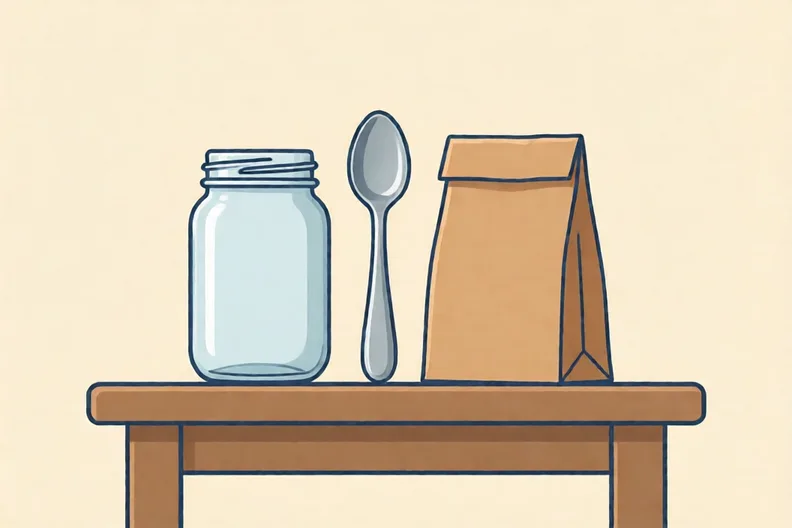
A kitchen table with a glass jar, a metal spoon and a paper bag in a row
  1. 1.

    Join each object to the material it is made from.

    A jam jarA metal spoonA paper bag
    metalpaperglass
  2. 2.

    Which material is used for the most objects? Circle one.

    Objects in a shed0123456woodmetalplastic
    woodmetalplastic
  3. 3.

    Write each object under the material it is made from.

    a wooden rulera metal tina glass vasea wooden chaira metal spoon
    woodmetalglass
  4. 4.

    Why is glass used for a window and not wood? Write one reason.

Say it out loud: What did each row ask you to do? Which words told you the material?

D Spot the mistake3 min
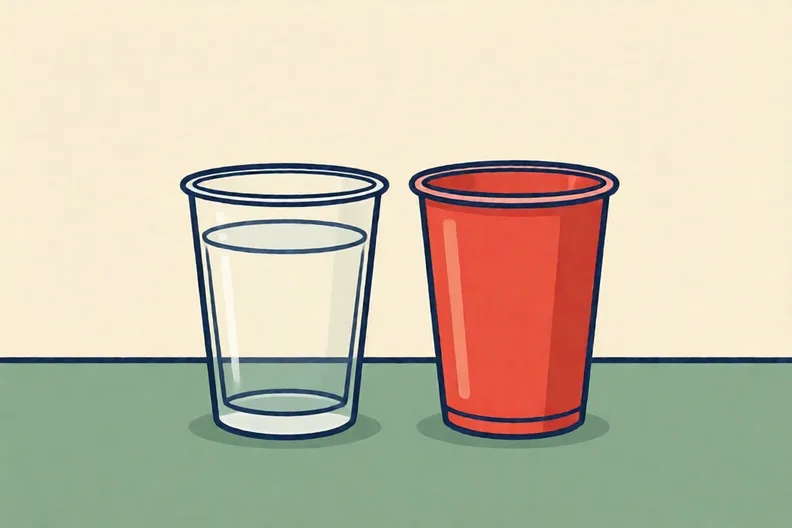
Two cups on a table, one clear and one red and opaque
Kit says: “Both of these cups hold drinks, so they are made from the same material.”
  1. 1.

    Are they made from the same material? Circle yes or no.

    yesno

E Think deeper4 min
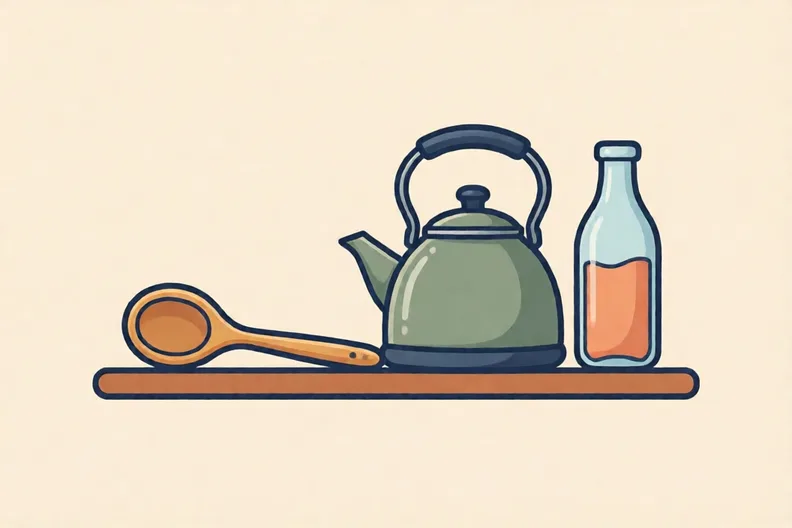
A wooden spoon, a metal kettle and a glass bottle on a kitchen shelf
  1. 1.

    Find one object at home made from wood or metal. Tell your grown-up what it is made from and why that material suits it.

How did it feel?

I can do it Nearly Not yet
StudyDen · Year 2 · Science · Uses of everyday materialsAnswers are on the grown-up page

For the grown-up

Materials and their uses · 2 minutes to read

Answers, and what a wrong one tells you

A

1. 8 If your child gets a different number, ask them to touch each corner as they count it.

2. yes Ask your child to run a finger around the side of the cylinder. Is the side flat or curved?

3. 3

B

1. Look for: Writes wood, using a clue such as the tree-trunk lines or that the ruler is not shiny. If your child writes metal or plastic, ask which material comes from a tree.

C

1. A jam jar → glass; A metal spoon → metal; A paper bag → paper If your child joins the jar to paper, ask them what the jar is made from. Can they see through it?

2. metal Ask your child to put a finger on the tallest bar and read its label out loud.

3. wood: a wooden ruler, a wooden chair · glass: a glass vase · metal: a metal tin, a metal spoon If your child puts the vase under wood, ask them what they can see through in the vase.

4. Look for: A reason that glass lets light through so you can see outside, and wood does not.

D

1. no If your child circles yes, point to each cup and ask what it is made from. One is glass and one is plastic.

E

1. Look for: An object made from wood or metal, with a reason that names a property such as hard, strong or waterproof.

Words to use

Say“What is it made from, and why is that material good for the job?”
Instead of“Tell them the answer straight away.”

After the sheet

Go on a hunt in one room. Find a wooden, a metal and a plastic object. Ask what each is made from and why that material was chosen.

Tick what your child got right in StudyDen. Anything missed comes back in a later Look back box, so there's no need to redo the sheet.

The rest of this unit

6 more sheets come with a StudyDen plan, in teaching order:

  1. Right material for the job(with a plan)
  2. Where materials come from(with a plan)
  3. Which materials soak up water?(with a plan)
  4. Stretchy or not?(with a plan)
  5. Squash, bend, twist and stretch(with a plan)
  6. Does it go back?(with a plan)

Every Year 2 science worksheet

The worksheets plan opens a printable sheet for every lesson in Years 1 to 6, each with its answers on a separate page for you. It costs £6.99 a month or £59 a year for the whole family, with no free trial.

The full StudyDen plan adds the lessons themselves, marked as your child works, with the worksheets included. It is 7 days free, then £29.99 a month.

Both start with a free account; you choose the plan when you sign up.