← Year 5 art worksheets

Year 5 Art for change: visual voices worksheet

“Unweaving and wrapping” is free to print, with no account. It is the first sheet in the Year 5 art unit “Art for change: visual voices”, for children aged 9 to 10, and takes about 22 minutes.

Print it on A4. The child's pages come first; the answers, and what each wrong answer tells you, are on the grown-up page that follows. Weeks 33 to 36 of the year, 4 sheets in the unit.

Free sample · answers on the last page

Unweaving and wrapping

Name: ____________ · Date: ____________
Year 5 · Art & design · about 22 minutes
Answers are on the grown-up page

Today I can explain how unweaving changes a piece of fabric and why materials carry meaning.

A Look back3 min

  1. 1.

    Which of these is NOT a primary colour? Circle one.

    redorangeblue
    RedOrangeBlue
  2. 2.

    On this tone ladder, which step is the middle tone? Circle one.

    lightestdarkest
    Step 1Step 3Step 5
  3. 3.

    Which 3D shape is a tube with a flat round top and bottom? Circle one.

    CylinderConeSphereCube

B Watch me, then you4 min

Ola has a square of hessian. She wants to make a gap in the middle of it.

Watch me

The threads that run left to right are the weft.

Ola gently pulls out one weft thread from the middle.

A band of open space appears. It runs left to right.

Now you
  1. 1.

    Ola takes a new piece of hessian. She pulls out three warp threads from the middle. Which way does the gap run? Circle your answer.

    Up and downLeft to right

C Your turn6 min

Look at the square of hessian in the picture. Each row changes one thing. Answer each one.
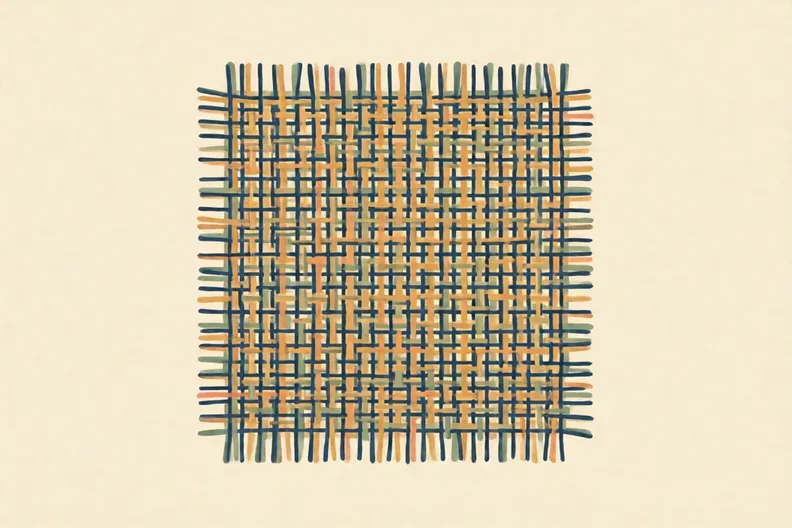
A close-up square of rough open-weave hessian with no gaps
  1. 1.

    Which kind of thread runs left to right across the square? Circle one.

    WarpWeftWrap
  2. 2.

    Ola pulls out one weft thread from the middle. Which way does the gap run? Circle one.

    Left to rightUp and down
  3. 3.

    Now Ola pulls out one warp thread from the middle instead. Which way does the gap run? Circle one.

    Left to rightUp and down
  4. 4.

    Ola pulls out five weft threads from the middle. Describe what the square looks like now.

Say it out loud: What changed between the last row and this one? Did the gap change direction, or did the words change?

D Spot the mistake3 min
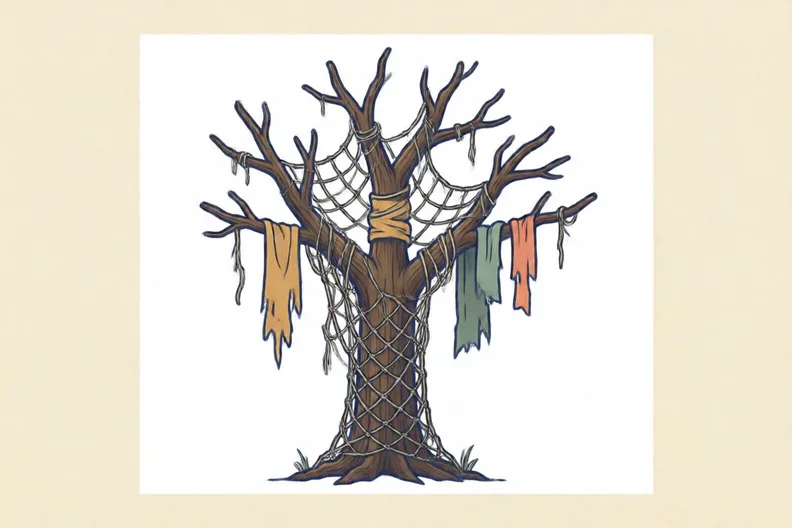
A bare branch wrapped in old netting and torn, faded fabric strips
Kit says: “Old netting and cloth scraps are just rubbish, so a sculpture made from them can't say anything important.”
  1. 1.

    Is Kit right? Look at the sculpture and write one reason.

E Think deeper4 min
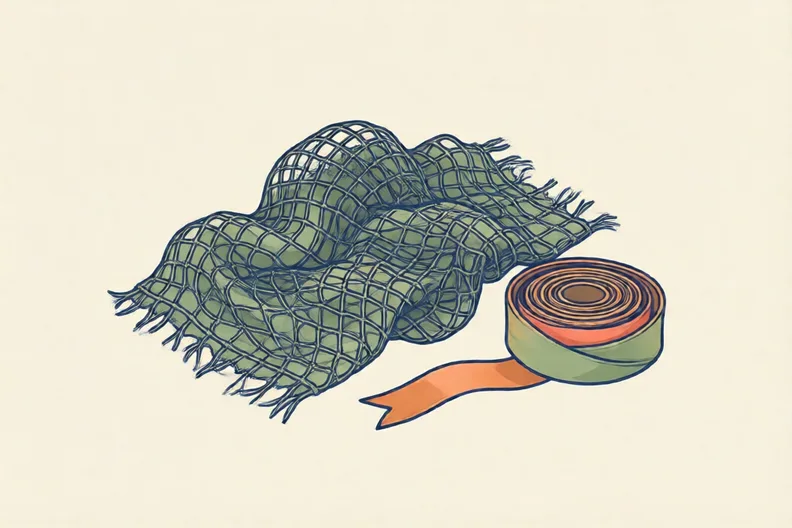
A frayed piece of old netting beside a length of smooth ribbon
  1. 1.

    Which strip would you use to carry a story in your sculpture, the old netting or the new ribbon? Say why.

How did it feel?

I can do it Nearly Not yet
StudyDen · Year 5 · Art & design · Art for change: visual voicesAnswers are on the grown-up page

For the grown-up

Unweaving and wrapping · 2 minutes to read

Answers, and what a wrong one tells you

A

1. Orange If your child circles red or blue, they may have mixed up the words. Primary colours are the ones that cannot be made by mixing other colours. Point to each swatch and say it aloud.

2. Step 3 If your child circles Step 1 or Step 5, they have picked one end of the ladder. Ask them to count the steps and find the one in the middle.

3. Cylinder If your child circles cone, they are thinking of a point at the top. A cylinder has flat round ends, like a tin or a tube of ribbon.

B

1. Up and down If your child circles left to right, they have pulled weft threads instead. Warp threads run up and down, so the gap runs up and down.

C

1. Weft If your child circles Warp, they have swapped the two names. Warp runs up and down the cloth. Weft runs across it, left to right.

2. Left to right If your child says up and down, they have pulled a warp thread. Weft threads run left to right, so the gap runs left to right.

3. Up and down If your child says left to right, they are still thinking of weft threads. Warp threads run up and down, so the gap runs up and down.

4. Look for: Says a band or gap runs left to right and that the warp threads running up and down remain. If your child writes that the whole square has holes everywhere, they have pulled threads from many places. Ask which threads Ola pulled, and where.

D

1. Look for: Says Kit is wrong and gives a reason linked to the history, story or message that old materials carry. If your child agrees with Kit, ask where the old netting might have been before. Then ask what story it could tell in a sculpture.

E

1. Look for: Names one strip and gives a reason linked to its history, texture or use.

Words to use

Say“Which threads did Ola pull out, and which way does the gap run? Show me with your finger.”
Instead of“That's right, well done. Now just write the answer neatly so we can move on.”

After the sheet

Take an old tea towel or a loose cloth. Gently pull out five threads from one edge, then describe the gap to someone at home, using the words warp and weft.

Tick what your child got right in StudyDen. Anything missed comes back in a later Look back box, so there's no need to redo the sheet.

The rest of this unit

3 more sheets come with a StudyDen plan, in teaching order:

  1. Simple Signs That Speak(with a plan)
  2. Set the scene with objects(with a plan)
  3. Shadow Stories(with a plan)

Every Year 5 art worksheet

The worksheets plan opens a printable sheet for every lesson in Years 1 to 6, each with its answers on a separate page for you. It costs £6.99 a month or £59 a year for the whole family, with no free trial.

The full StudyDen plan adds the lessons themselves, marked as your child works, with the worksheets included. It is 7 days free, then £29.99 a month.

Both start with a free account; you choose the plan when you sign up.