← Year 5 Islamic studies worksheets

Year 5 Islamic RE: Summer 1 worksheet

“Fasting: Who Makes Up What” is free to print, with no account. It is the first sheet in the Year 5 Islamic studies unit “Islamic RE: Summer 1”, for children aged 9 to 10, and takes about 20 minutes.

Print it on A4. The child's pages come first; the answers, and what each wrong answer tells you, are on the grown-up page that follows. Weeks 25 to 30 of the year, 6 sheets in the unit.

Free sample · answers on the last page

Fasting: Who Makes Up What

Name: ____________ · Date: ____________
Year 5 · Islamic RE · about 20 minutes
Answers are on the grown-up page

Today I can decide which fasting ruling applies when a Muslim cannot fast in Ramadan.

A Look back3 min

  1. 1.

    Which Arabic word means passing on Allah's message to others? Circle one.

    Receivesthe messagePasses it onOthers follow
    SidqTablighAmanah
  2. 2.

    Which people did Prophet Shu'ayb (as) warn about cheating in trade? Circle one.

    Trade and weighingCheating customersShu'ayb (as) warns
    People of MadyanPeople of AdPeople of Thamud
  3. 3.

    What is the name for praying together in a group? Circle one.

    Imam stands in frontRows form behindAll pray together
    Jama'ahZakahHajj

B Watch me, then you4 min

Sara is ill for two days in Ramadan. She gets better before the next Ramadan. What must she do?

Watch me
Ill in RamadanMisses 2 daysMakes up 2 fasts

Illness is a genuine reason to miss a fast.

Sara misses 2 days, so she must make them up.

Making up missed fasts later is qada.

Now you
  1. 1.

    Tariq is on a long journey in Ramadan and misses 4 days. Which ruling applies? Circle one.

    Travels inRamadanMisses4 days
    QadaFidyahKaffarahNothing

C Your turn8 min

Each row changes one thing. Read it, then circle the ruling.

  1. 1.

    A man is ill for 2 days in Ramadan and then recovers before the next Ramadan. Which ruling applies? Circle one.

    Ill inRamadanMisses2 days
    QadaFidyahKaffarah
  2. 2.

    An old man has a long-term illness that will never get better. He cannot fast at all. Which ruling applies? Circle one.

    Long-termillnessCannot fastat all
    QadaFidyahKaffarah
  3. 3.

    Adam eats on purpose during a Ramadan day, with no valid reason. In the Hanafi school, he makes up the day and also owes a heavier penalty. Circle the heavier penalty.

    Eats onpurposeNo validreason
    QadaFidyahKaffarah
  4. 4.

    Yusuf is 8 and has not reached puberty. He does not fast in Ramadan. Does he owe qada, fidyah, kaffarah or nothing? Write your answer and one reason.

    Yusuf is 8Does notfast

Say it out loud: Which one thing changed from the row before? What did that change do to the ruling?

D Spot the mistake3 min

Kit says: “Ali forgot he was fasting and ate lunch. So he must pay kaffarah.”
ForgetsfastingEats bymistake
  1. 1.

    Does Ali have to pay kaffarah? Write yes or no, then one reason.

E Think deeper4 min
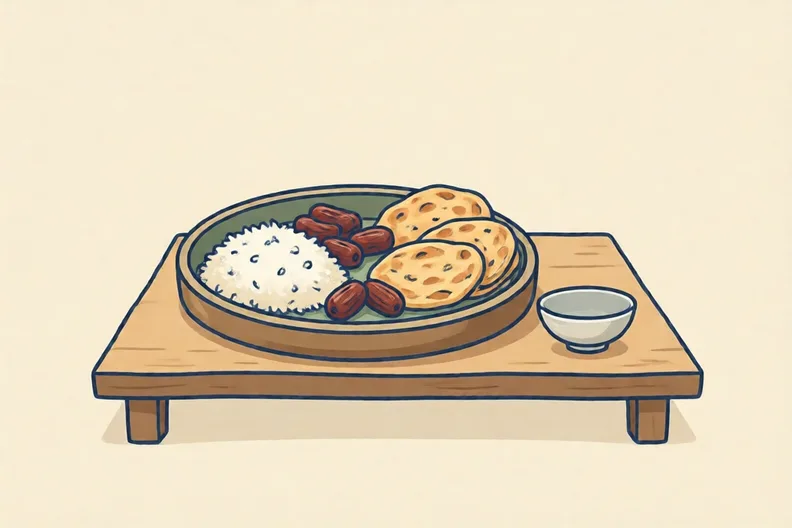
A tray of rice, dates and bread set out on a low table, ready to share
  1. 1.

    Both fidyah and kaffarah involve feeding poor people. Why do you think Islam links these rulings to the community? Write a short answer for your grown-up.

How did it feel?1 min

I can do it Nearly Not yet
StudyDen · Year 5 · Islamic RE · Year Five Islamic StudiesAnswers are on the grown-up page

For the grown-up

Fasting: Who Makes Up What · 2 minutes to read

Answers, and what a wrong one tells you

A

1. Tabligh

2. People of Madyan

3. Jama'ah

B

1. Qada Fidyah is for someone who can never make up the fasts. Tariq can make them up later, so the answer is qada. Ask your child whether the fasts can still be made up.

C

1. Qada Fidyah is for someone who will never be able to make up the fasts. Ask your child whether this man gets better before the next Ramadan.

2. Fidyah Qada needs a chance to fast later. This man will never be able to fast, so he gives fidyah. Ask your child what would change if the fasts could be made up later.

3. Kaffarah If your child circles Qada, explain that Adam does make up the day, but the Hanafi school adds kaffarah for breaking a fast on purpose. Ask what made Adam's case different.

4. Look for: Says he owes nothing, because children who have not reached puberty do not have to fast. If your child writes qada, ask: does Yusuf have to fast yet? Fasting becomes a duty at puberty, so a young child owes nothing.

D

1. Look for: Says no, and gives the reason that forgetting is not deliberate, so kaffarah does not apply. Kit thinks any broken fast needs kaffarah. Kaffarah is only for breaking a fast on purpose without a reason. Ask your child whether Ali chose to eat.

E

1. Look for: Says that feeding the poor connects the person with others in the community and shows care or shared responsibility.

Words to use

Say“Who is this person, and did they miss the fast for a reason, or choose to break it?”
Instead of“Just tell them the answer.”

After the sheet

Lay three cups on the table and label them Qada, Fidyah and Kaffarah. Read a made-up case aloud, such as a woman with flu for three days, and ask which cup it goes in.

Tick what your child got right in StudyDen. Anything missed comes back in a later Look back box, so there's no need to redo the sheet.

The rest of this unit

5 more sheets come with a StudyDen plan, in teaching order:

  1. The Night of Power(with a plan)
  2. Iman and Amal Together(with a plan)
  3. Al-Haya: Modesty From Within(with a plan)
  4. Good Opinion, Bad Opinion(with a plan)
  5. Acting Well in Real Life(with a plan)

Every Year 5 Islamic studies worksheet

The worksheets plan opens a printable sheet for every lesson in Years 1 to 6, each with its answers on a separate page for you. It costs £6.99 a month or £59 a year for the whole family, with no free trial.

The full StudyDen plan adds the lessons themselves, marked as your child works, with the worksheets included. It is 7 days free, then £29.99 a month.

Both start with a free account; you choose the plan when you sign up.