← Year 2 PE worksheets

Year 2 Ball skills: passing, dribbling and scoring worksheet

“Dribbling with control” is free to print, with no account. It is the first sheet in the Year 2 PE unit “Ball skills: passing, dribbling and scoring”, for children aged 6 to 7, and takes about 22 minutes.

Print it on A4. The child's pages come first; the answers, and what each wrong answer tells you, are on the grown-up page that follows. Weeks 13 to 18 of the year, 12 sheets in the unit.

Free sample · answers on the last page

Dribbling with control

Name: ____________ · Date: ____________
Year 2 · PE · about 22 minutes
Answers are on the grown-up page

Today I can dribble with control, using my fingertips and keeping my eyes up.

A Look back3 min

  1. 1.

    Catching has four steps. One step is missing. Circle the missing step.

    Watch the ballReach outHold it close
    Give with your handsThrow it back hardShut your eyes
  2. 2.

    A warm-up starts gently and gets faster. Which step comes first? Circle it.

    Jog gentlyRun faster
    Walk slowlySprint at onceStand still
  3. 3.

    Jump up, land, then stand tall. Which landing keeps your knees safe? Circle it.

    Jump upStand tall
    Land with bent kneesLand with straight, locked legsJump again straight away

B Watch me, then you4 min

Ola has a soft, bouncy ball and a flat patio. Clear the space, keep away from windows, and ask a grown-up to watch. Here is how she dribbles.
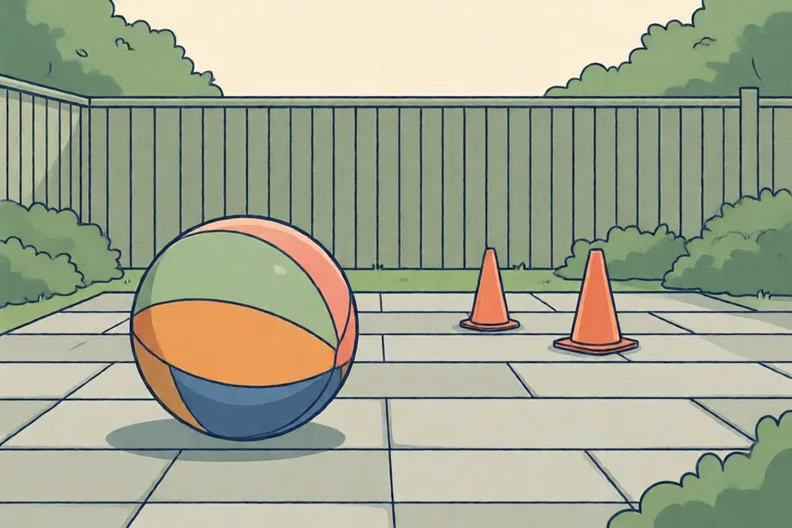
A bouncy ball resting on a flat paved patio beside two small cones, with a fence behind
Watch me
Bend knees a littlePush with fingertipsKeep eyes up

First, bend your knees a little.

Push the ball down with your fingertips.

Keep your eyes up so you can see.

That is good dribbling.

Now you
  1. 1.

    Put these steps for dribbling on the spot in order. Write 1, 2 or 3 in each box.

    1. Hold the ball at waist height
    2. Bounce it gently with your fingertips
    3. Stand with your feet apart

C Your turn8 min

Read each story and pick the best fix. Then match the words and try the bounce challenge.
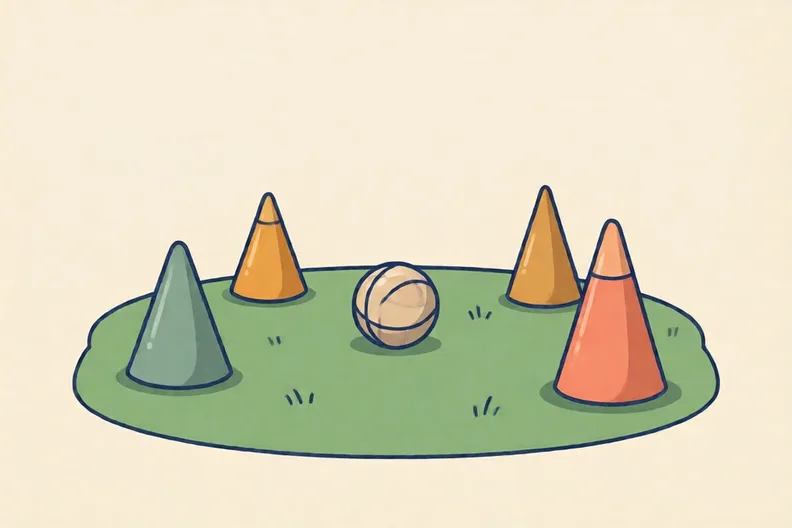
A lawn with cones spread out, clear space between them and a soft ball on the grass
  1. 1.

    Sam hits the ball with a flat palm, and it flies away each time. Which fix helps most? Circle the best fix.

    Hit it harder with your palmPush it softly with your fingertipsShut your eyes and try again
  2. 2.

    Mia keeps losing the ball to a defender. Where should the ball be? Circle the best answer.

    Up above your headClose to your body, around your middleRolling along the floor by your feet
  3. 3.

    Draw a line from each key word to what it means.

    DribblingPossessionControl
    Keeping the ball near you and going where you aimYour team holding the ballTravelling while tapping the ball down with your hands
  4. 4.

    Timed challenge: bounce for 20 seconds, three times. Count only the bounces you control with eyes up. Write each score: Try 1 Try 2 Try 3

    Try 1Try 2Try 3

Say it out loud: What do all the good fixes have in common? Say the pattern out loud to your grown-up.

D Spot the mistake3 min
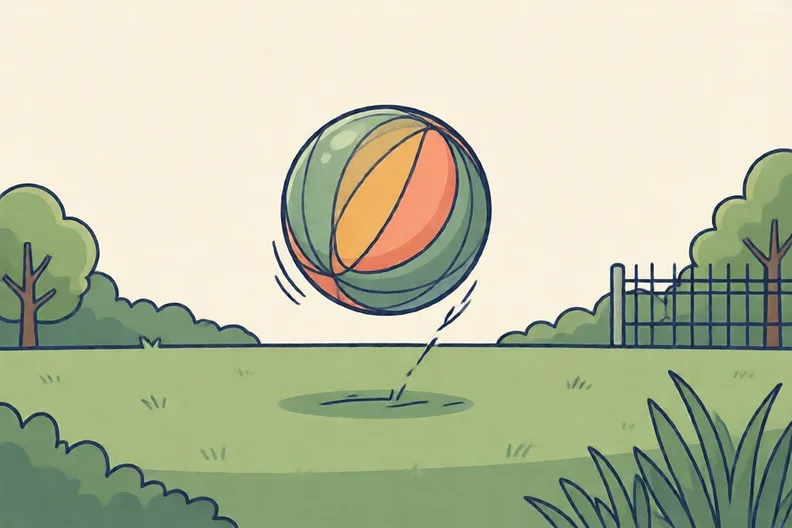
A soft ball bouncing high and away across a flat grass lawn
Ben says: “Slap it hard with your palm so it zooms high.”
  1. 1.

    What should Ben do instead? Write a sentence.

E Think deeper3 min

Look at the open space in the picture. Think about where you need to look.
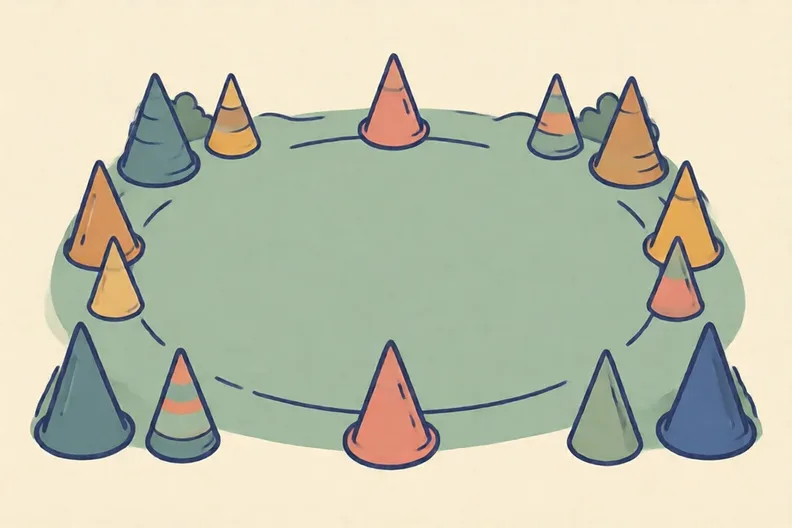
A clear yard with cones at the edges and an open space in the middle
  1. 1.

    Ola's team has the ball, but she keeps her head down while she dribbles. What can she not see, and why does it matter for her team? Explain in your own words.

How did it feel?

Think about your dribbling today. Did your eyes stay up? Did you count honestly? Tell your grown-up one thing you are proud of.

I can do it Nearly Not yet
StudyDen · Year 2 · PE · Ball skills: passing, dribbling and scoringAnswers are on the grown-up page

For the grown-up

Dribbling with control · 2 minutes to read

Answers, and what a wrong one tells you

A

1. Give with your hands If your child picks eyes shut, ask what they can see. Catching needs eyes open on the ball.

2. Walk slowly

3. Land with bent knees Locked legs jar the body. Ask your child to bend the knees and feel the soft landing.

B

1. 1 Stand with your feet apart · 2 Hold the ball at waist height · 3 Bounce it gently with your fingertips

C

1. Push it softly with your fingertips your child picked hitting harder. That is power, not control. Ask: does the ball stay close to you?

2. Close to your body, around your middle A ball high above your head or down by your feet is easy to steal. Fix: keep it close, around the middle.

3. Dribbling → Travelling while tapping the ball down with your hands; Possession → Your team holding the ball; Control → Keeping the ball near you and going where you aim

4. Look for: Three honest scores of controlled bounces, one for each try, written as numbers.

D

1. Look for: Push softly with fingertips so the ball stays under control. If your child writes hit it harder, they have the same mistake: power over control. Show them a soft push with the fingertips.

E

1. Look for: She cannot see teammates or defenders, so she may lose the ball and her team loses possession.

Words to use

Say“Show me where your eyes are while you bounce. Can you keep the ball close and soft?”
Instead of“Keep your eyes on the ball, not where you are going.”

After the sheet

In a clear hallway or on a patio, put three shoes or cushions in a line. Bounce a soft ball around them with your child, keeping eyes up. Count bounces honestly and swap turns.

Tick what your child got right in StudyDen. Anything missed comes back in a later Look back box, so there's no need to redo the sheet.

The rest of this unit

11 more sheets come with a StudyDen plan, in teaching order:

  1. Dribbling with your hands(with a plan)
  2. Passing with our hands(with a plan)
  3. Pass, receive and dribble(with a plan)
  4. Keep the ball close(with a plan)
  5. Pass and receive with feet(with a plan)
  6. Dribbling to score with your feet(with a plan)
  7. Pass or dribble?(with a plan)
  8. Aim and score underarm(with a plan)
  9. Aim to beat your opponent(with a plan)
  10. Throwing with your whole body(with a plan)
  11. Overarm throws that score(with a plan)

Every Year 2 PE worksheet

The worksheets plan opens a printable sheet for every lesson in Years 1 to 6, each with its answers on a separate page for you. It costs £6.99 a month or £59 a year for the whole family, with no free trial.

The full StudyDen plan adds the lessons themselves, marked as your child works, with the worksheets included. It is 7 days free, then £29.99 a month.

Both start with a free account; you choose the plan when you sign up.