← Year 3 geography worksheets

Year 3 Land use: how diverse are local and UK landscapes? worksheet

“Human or physical?” is free to print, with no account. It is the first sheet in the Year 3 geography unit “Land use: how diverse are local and UK landscapes?”, for children aged 7 to 8, and takes about 22 minutes.

Print it on A4. The child's pages come first; the answers, and what each wrong answer tells you, are on the grown-up page that follows. Weeks 1 to 4 of the year, 6 sheets in the unit.

Free sample · answers on the last page

Human or physical?

Name: ____________ · Date: ____________
Year 3 · Geography · about 22 minutes
Answers are on the grown-up page

Today I can tell human features from physical features and say why.

A Look back3 min

  1. 1.

    Which column letter is the school in? Circle one.

    ABCD123S~N
    ABCD
  2. 2.

    Which compass point is opposite North? Circle one.

    NNEESESWWNW
    SouthEastWest
  3. 3.

    Which ocean lies to the west of the UK? Circle one.

    NNEESESSWNW
    Atlantic OceanIndian OceanPacific Ocean

B Watch me, then you4 min

Ola and her class are looking at a map of their town. Which features did people make, and which did nature make?

Watch me
ABCD123N

The castle was built by people, so it is a human feature.

The hill was made by nature, so it is a physical feature.

Ask yourself: who made it, people or nature?

Now you
  1. 1.

    Look at the shop on the map. Is it a human or a physical feature? Circle one.

    ABC123N
    human featurephysical feature

C Your turn6 min

Decide whether each feature was made by people or by nature.
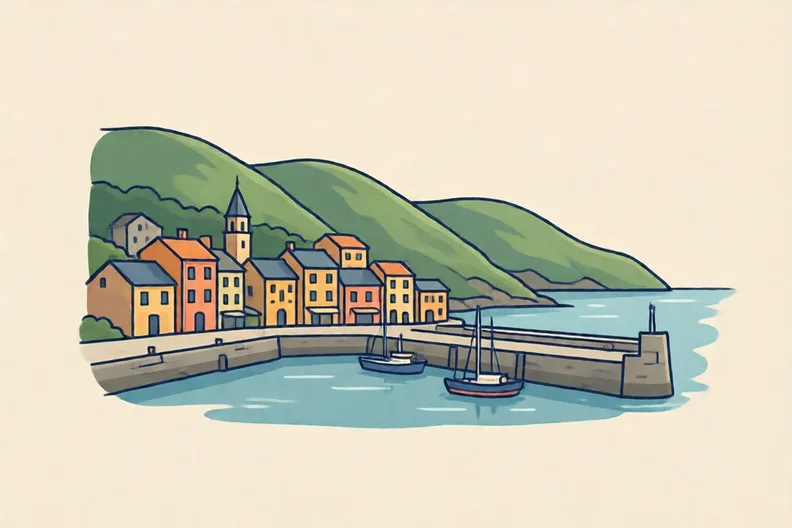
A small coastal town with a harbour wall and green hills behind it, with no people
  1. 1.

    Look at the church on the map. Is it a human or a physical feature? Circle one.

    ABC123N
    human featurephysical feature
  2. 2.

    Look at the hill on the map. Is it a human or a physical feature? Circle one.

    ABC123N
    human featurephysical feature
  3. 3.

    Write each word in the right column of the table.

    churchriverparkcoast
    Human featurePhysical feature
  4. 4.

    Write each word in the right column of the table.

    stone bridgewaterfallstadiumvalleyharbourmountain
    Human featurePhysical feature

Say it out loud: Which feature made you think hardest? How did asking who made it help you decide?

D Spot the mistake3 min
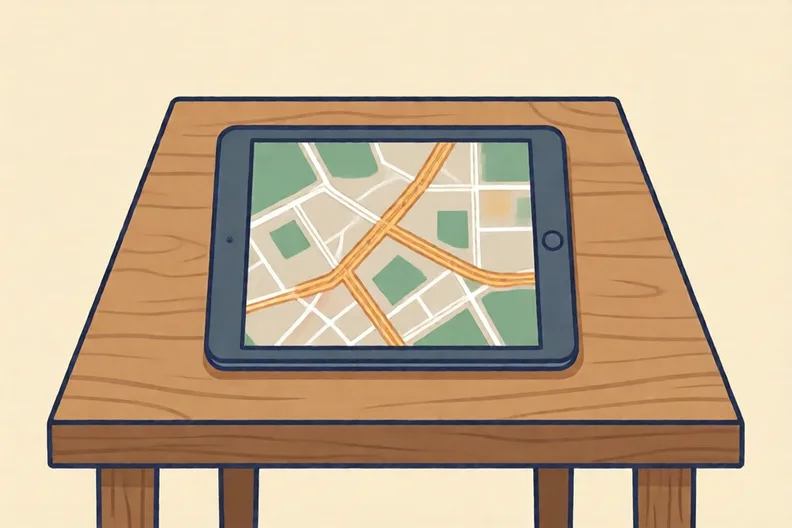
A tablet lying flat on a table showing a simple map of roads and green spaces.
Ali says: “When I zoom in on a digital map, I can see more of the town at once.”
  1. 1.

    Is Ali right? Explain in your own words.

E Think deeper4 min

Imagine you are walking along this river valley.
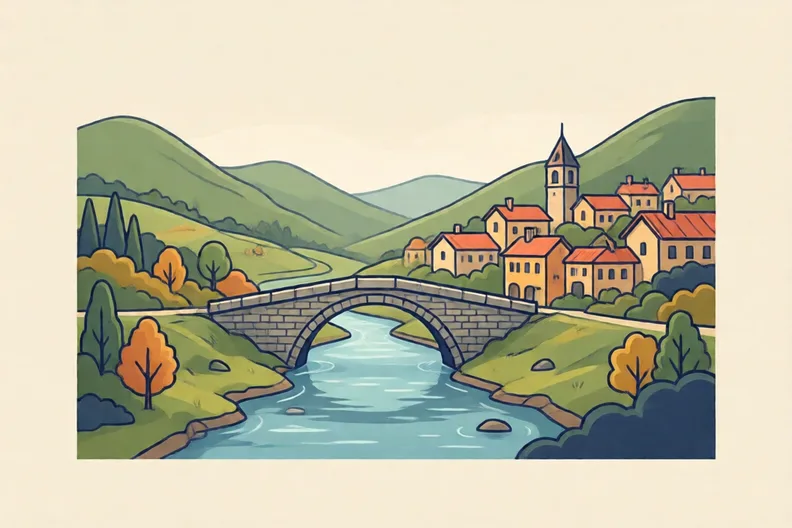
A river valley with a stone bridge and a town on the slope, with no people
  1. 1.

    Name one human feature and one physical feature you might see in a river valley. Explain how you know which is which.

How did it feel?

I can do it Nearly Not yet
StudyDen · Year 3 · Geography · Land use: how diverse are local and UK landscapes?Answers are on the grown-up page

For the grown-up

Human or physical? · 2 minutes to read

Answers, and what a wrong one tells you

A

1. C If your child circles B or D, they may have miscounted. Ask them to start at A on the left and count along the bottom to the school.

2. South

3. Atlantic Ocean

B

1. human feature If your child says physical, they think a feature is a human one only when it is big. Ask: did people build this?

C

1. human feature If your child says physical, they think it is natural because it is old. Ask: who built it?

2. physical feature

3. Human feature: church, park · Physical feature: river, coast If your child puts the park under physical, they think grass and trees are natural. Ask: who decided where the paths and benches go?

4. Human feature: stone bridge, stadium, harbour · Physical feature: waterfall, valley, mountain

D

1. Look for: Says zooming in shows less of the town in more detail, and zooming out shows more of it. If your child agrees with Ali, they think a bigger picture shows more. Ask: when you zoom in on one street, can you still see the whole town?

E

1. Look for: One named human feature built by people and one named physical feature made by nature, with a reason for each.

Words to use

Say“Who made this, people or nature? How do you know?”
Instead of“Tell them which is which, so they do not have to work it out.”

After the sheet

On a walk, spot one thing people made and one thing nature made. Ask your child to say which is which and why.

Tick what your child got right in StudyDen. Anything missed comes back in a later Look back box, so there's no need to redo the sheet.

The rest of this unit

5 more sheets come with a StudyDen plan, in teaching order:

  1. Land use around us(with a plan)
  2. Farming in the UK(with a plan)
  3. Land use across the UK(with a plan)
  4. Finding squares on a map(with a plan)
  5. Land use and wildlife(with a plan)

Every Year 3 geography worksheet

The worksheets plan opens a printable sheet for every lesson in Years 1 to 6, each with its answers on a separate page for you. It costs £6.99 a month or £59 a year for the whole family, with no free trial.

The full StudyDen plan adds the lessons themselves, marked as your child works, with the worksheets included. It is 7 days free, then £29.99 a month.

Both start with a free account; you choose the plan when you sign up.