← Year 3 PE worksheets

Year 3 Athletics: athletic challenges worksheet

“Stay loose and sprint” is free to print, with no account. It is the first sheet in the Year 3 PE unit “Athletics: athletic challenges”, for children aged 7 to 8, and takes about 20 minutes.

Print it on A4. The child's pages come first; the answers, and what each wrong answer tells you, are on the grown-up page that follows. Weeks 28 to 30 of the year, 6 sheets in the unit.

Free sample · answers on the last page

Stay loose and sprint

Name: ____________ · Date: ____________
Year 3 · PE · about 20 minutes
Answers are on the grown-up page

Today I can keep my body relaxed and pump my arms hip to lip when I sprint.

A Look back2 min

  1. 1.

    Write one way to relax your body before a sprint.

    Tight bodyLoose body
  2. 2.

    Before a race, you take three slow breaths. How does your body feel after them?

    Slow breathsReady to race
  3. 3.

    Your first sprint took 12 seconds. Your next sprint took 8 seconds. Which run was your personal best?

    128
    first sprintnext sprint

B Watch me, then you3 min

Mia wants to sprint faster. She thinks about three things, in this order, before she sets off.

Watch me
Hands looseArms hip to lipEyes ahead

Mia starts with her hands. She keeps them loose, not tight.

Next, she pumps her arms hip to lip.

Last, she looks ahead at the finish line.

Now you
  1. 1.

    Ali is about to sprint down the garden path. How should his hands be?

    Arms hip to lipEyes ahead
    loose handstight fistsclenched jaw

C Your turn8 min

Safety first: clear a 15 metre path, move the soft ball aside, stay away from windows, with a grown-up watching.
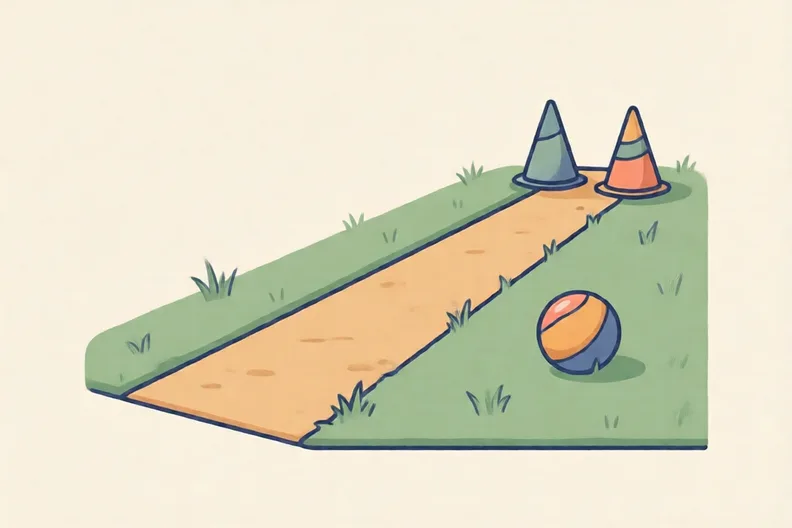
A straight garden path with two cones at one end and a soft ball on the grass
  1. 1.

    Which way should your arms pump when you sprint?

    hip to lipside to sidebehind your back
  2. 2.

    Join each body part to its coaching point. Draw a line from each left card to the right card.

    ArmsFeetHeadHands
    Look straight aheadStay loose and openBalls of the feetHip to lip pumping
  3. 3.

    Put these steps for a sprint in order. Number each step from 1 to 4.

    1. Slow down and walk back.
    2. Get ready behind the start cone.
    3. Run past the finish cone.
    4. Sprint with loose hands.
  4. 4.

    Time yourself on three sprints with your grown-up. Write each time in seconds in the chart: Run 1 tense, Run 2 loose, Run 3 hip to lip.

    My three sprints (seconds)01234567891011121314151617181920Run 1: tenseRun 2: looseRun 3: hip to lip

Say it out loud: What changed between the first sprint and the third sprint? Did your body feel more or less tight?

D Spot the mistake3 min

Kit says: “If I squeeze my fists and tense my face, I will sprint faster.”
Hands looseArms hip to lipEyes ahead
  1. 1.

    Write one reason why Kit is wrong.

E Think deeper3 min

  1. 1.

    Imagine one run was slower than the run before it. Write what you could say to yourself to keep going.

    Slower runKeep goingTry again

How did it feel?1 min

Which run felt fastest to you? Which run felt the most relaxed? Tell your grown-up why.

I can do it Nearly Not yet
StudyDen · Year 3 · PE · Athletics: athletic challengesAnswers are on the grown-up page

For the grown-up

Stay loose and sprint · 2 minutes to read

Answers, and what a wrong one tells you

A

1. Look for: A relaxing action such as shaking out hands, a slow breath or dropping the shoulders.

2. Look for: calm, relaxed, loose or ready

3. next sprint If your child picks the first sprint, explain that in a race the shorter time is the faster run.

B

1. loose hands If your child picks tight fists, ask them to shake their hands out and try the sprint again with loose hands.

C

1. hip to lip If your child picks side to side, the arms are not driving forward. Ask them to show hip to lip slowly, then try a short sprint.

2. Arms → Hip to lip pumping; Feet → Balls of the feet; Head → Look straight ahead; Hands → Stay loose and open If your child joins feet to look straight ahead, say the feet need the springy part behind the toes, and the head needs to face the finish.

3. 1 Get ready behind the start cone. · 2 Sprint with loose hands. · 3 Run past the finish cone. · 4 Slow down and walk back.

4. Look for: Three times in seconds, one for each run, with the bars drawn to match: Run 1 tense, Run 2 loose, Run 3 hip to lip.

D

1. Look for: A reason that tensing wastes energy or spoils running shape, so relaxing helps you go faster. If your child says tight muscles are strong, explain that tension wastes the energy the legs need. Ask them to run once loose and once tight and compare.

E

1. Look for: A positive phrase that keeps trying, such as I will try again or I can keep going and run loose.

Words to use

Say“Show me where you felt loose. What did your hands do on the fastest run?”
Instead of“You were not fast enough. Try harder and use your arms more.”

After the sheet

On a clear garden path about 15 metres long, away from windows, time one sprint with tight fists and two with loose hands. Use a phone timer and compare the times together.

Tick what your child got right in StudyDen. Anything missed comes back in a later Look back box, so there's no need to redo the sheet.

The rest of this unit

5 more sheets come with a StudyDen plan, in teaching order:

  1. Fast starts(with a plan)
  2. Running a relay changeover(with a plan)
  3. Running as a relay team(with a plan)
  4. Distance or accuracy?(with a plan)
  5. Jumping for distance(with a plan)

Every Year 3 PE worksheet

The worksheets plan opens a printable sheet for every lesson in Years 1 to 6, each with its answers on a separate page for you. It costs £6.99 a month or £59 a year for the whole family, with no free trial.

The full StudyDen plan adds the lessons themselves, marked as your child works, with the worksheets included. It is 7 days free, then £29.99 a month.

Both start with a free account; you choose the plan when you sign up.