← Year 3 science worksheets

Year 3 Introduction to the human skeleton and muscles worksheet

“Our Skeleton Holds Us Up” is free to print, with no account. It is the first sheet in the Year 3 science unit “Introduction to the human skeleton and muscles”, for children aged 7 to 8, and takes about 22 minutes.

Print it on A4. The child's pages come first; the answers, and what each wrong answer tells you, are on the grown-up page that follows. Weeks 6 to 11 of the year, 10 sheets in the unit.

Free sample · answers on the last page

Our Skeleton Holds Us Up

Name: ____________ · Date: ____________
Year 3 · Science · about 22 minutes
Answers are on the grown-up page

Today I can explain how a skeleton supports the body and why bones are joined together.

A Look back3 min

  1. 1.

    Which plant grew the most? Circle the answer.

    Plant growth in one week (cm)024681012BeanCressPea
    BeanCressPea
  2. 2.

    How many more children chose blue than green?

    RedBlueGreen
  3. 3.

    Write the sign: 28 19

    2819

B Watch me, then you4 min

In a made-up test, Mr Floppy is a bag of rice. Straws are slid inside to act as bones. The bars show how many seconds he stayed standing.

Watch me
Seconds Mr Floppy stood (made-up test)048121620No straws2 straws4 straws

With no straws he falls over at once, so 0 seconds.

With 4 straws he stood for 20 seconds.

20 − 8 = 12, so 4 straws gave 12 more seconds than 2 straws.

Now you
  1. 1.

    In a second made-up test, Mr Floppy stood for 6 seconds with 1 straw and 16 seconds with 3 straws. How many more seconds did 3 straws give?

    Seconds Mr Floppy stood (second made-up test)024681012141618201 straw3 straws

C Your turn8 min

Think about the rice bag and the bones inside your body. Answer each question.
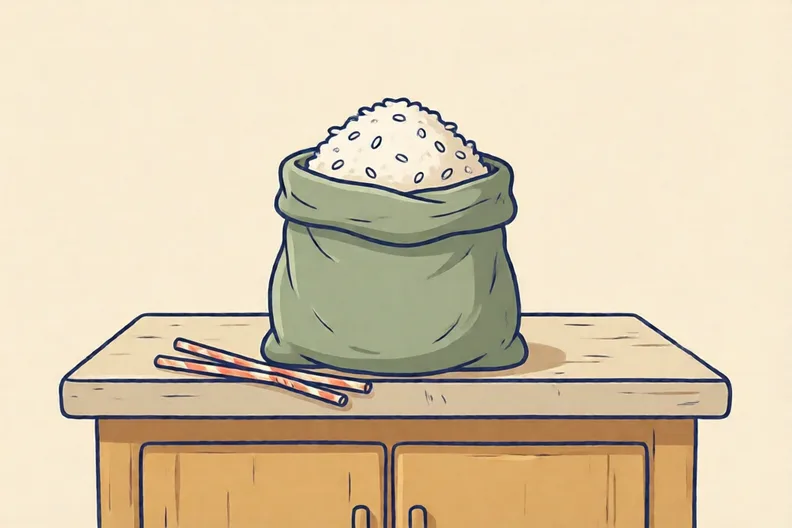
A cloth bag of rice standing on a kitchen table next to some drinking straws
  1. 1.

    Which would stand up better in the Mr Floppy test? Circle the answer.

    rice onlyrice with straws
  2. 2.

    Sort these jobs. Write each one in the right column.

    pumps blood round my bodykeeps me standingdigests my lunchlets me sit up straight
    Skeleton jobNot a skeleton job
  3. 3.

    Where do two bones meet in your body? Circle the answer.

    a jointa musclethe skin
  4. 4.

    Number these steps from 1 to 4 to show what happens in an X-ray.

    1. Bone blocks the rays, so it shows up bright white.
    2. The doctor looks at the picture for a break.
    3. The doctor puts the arm on the X-ray machine.
    4. X-rays pass through the skin and muscle.

Say it out loud: What does a skeleton do that a bag of rice alone cannot?

D Spot the mistake3 min
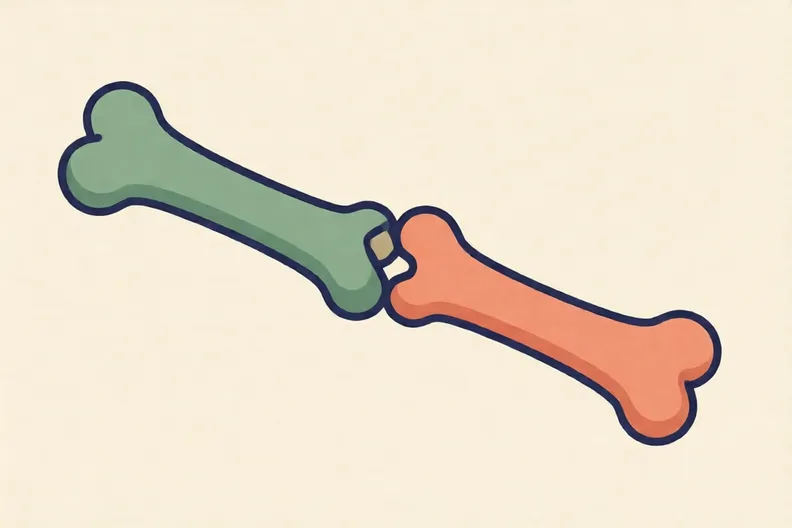
Two bones of a model arm joined together at a hinge
Kit says: “My bones are separate pieces, not joined together, so my skeleton is just loose bones.”
  1. 1.

    Is Kit right? Explain why in your own words. Use the word joint. Write your answer.

E Think deeper4 min
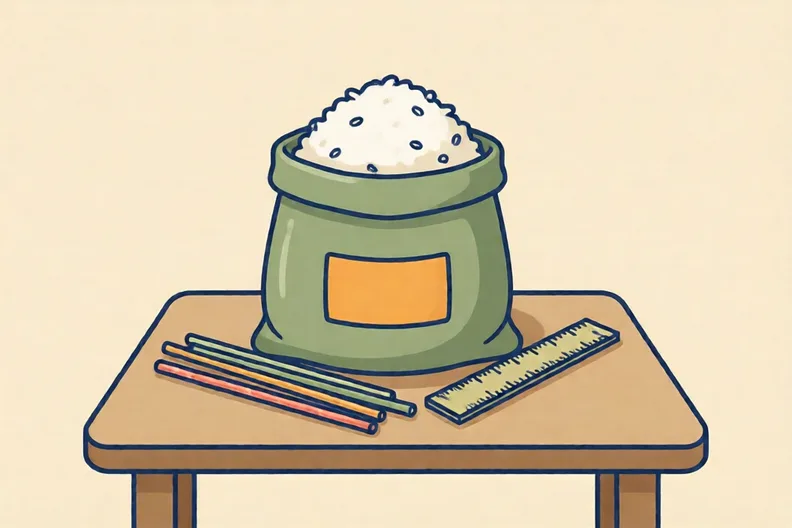
A bag of rice lying flat on a table with straws and a ruler beside it
  1. 1.

    Plan a fair test to see if straws help Mr Floppy stand. Write one thing you keep the same.

How did it feel?

I can do it Nearly Not yet
StudyDen · Year 3 · Science · Introduction to the human skeleton and musclesAnswers are on the grown-up page

For the grown-up

Our Skeleton Holds Us Up · 2 minutes to read

Answers, and what a wrong one tells you

A

1. Cress

2. 3 If they write 7, they added the two numbers. Ask them to find the gap between the blue and green marks.

3. >

B

1. 10 If they write 22, they added the two bars. Ask: how far is 6 from 16?

C

1. rice with straws If they pick rice only, ask them what the straws are doing. They act like bones and hold the bag up.

2. Skeleton job: keeps me standing, lets me sit up straight · Not a skeleton job: digests my lunch, pumps blood round my body

3. a joint

4. 1 The doctor puts the arm on the X-ray machine. · 2 X-rays pass through the skin and muscle. · 3 Bone blocks the rays, so it shows up bright white. · 4 The doctor looks at the picture for a break.

D

1. Look for: Says Kit is wrong because bones are joined at joints to make one strong frame. If they agree with Kit, ask them to bend their elbow or knee. Ask where they feel the two bones meet.

E

1. Look for: Names one thing kept the same, such as the bag, the rice or the way he is set up, and says the straws are what change.

Words to use

Say“Show me where two bones meet in your knee. What is that meeting place called?”
Instead of“Yes, your bones are separate pieces, that is right.”

After the sheet

Make a cardboard arm. A grown-up pokes a hole near one end of two cardboard tubes. Join the tubes with a paper fastener, then bend the elbow and talk about the joint.

Tick what your child got right in StudyDen. Anything missed comes back in a later Look back box, so there's no need to redo the sheet.

The rest of this unit

9 more sheets come with a StudyDen plan, in teaching order:

  1. How bones protect us(with a plan)
  2. Bones grow and change(with a plan)
  3. Bone length patterns(with a plan)
  4. Animals with a spine(with a plan)
  5. Animals without a spine(with a plan)
  6. Muscles in pairs(with a plan)
  7. Planning a strength test(with a plan)
  8. Testing Muscle Strength(with a plan)
  9. Making muscles stronger(with a plan)

Every Year 3 science worksheet

The worksheets plan opens a printable sheet for every lesson in Years 1 to 6, each with its answers on a separate page for you. It costs £6.99 a month or £59 a year for the whole family, with no free trial.

The full StudyDen plan adds the lessons themselves, marked as your child works, with the worksheets included. It is 7 days free, then £29.99 a month.

Both start with a free account; you choose the plan when you sign up.