← Year 4 art worksheets

Year 4 Hidden worlds: collage and mixed media worksheet

“Looking closely at tiny worlds” is free to print, with no account. It is the first sheet in the Year 4 art unit “Hidden worlds: collage and mixed media”, for children aged 8 to 9, and takes about 20 minutes.

Print it on A4. The child's pages come first; the answers, and what each wrong answer tells you, are on the grown-up page that follows. Weeks 22 to 27 of the year, 6 sheets in the unit.

Free sample · answers on the last page

Looking closely at tiny worlds

Name: ____________ · Date: ____________
Year 4 · Art & design · about 20 minutes
Answers are on the grown-up page

Today I can observe a small picture closely and respond to it with my own ideas.

A Look back3 min

  1. 1.

    Which of these is a primary colour? Circle it.

    orangeredgreenpurple
  2. 2.

    Write each colour in the correct column.

    redgreenyelloworangebluepurple
    Primary colourSecondary colour
  3. 3.

    Ali’s tile pattern repeats one shape again and again. How many sides does each shape have?

B Watch me, then you4 min

Ali looks at a close-up picture of a tiny living thing. Its edge is the darkest part, so he looks there first.
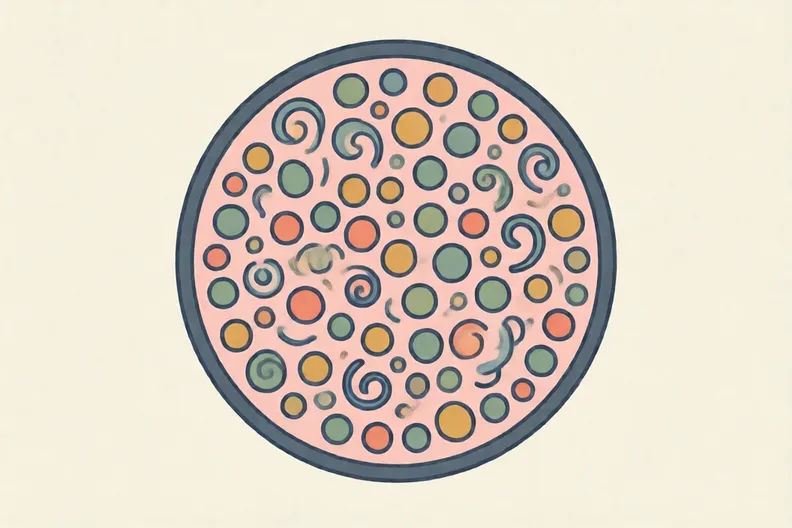
A close-up of a round, soft-edged cluster of tiny shapes on a pale background
Watch me
lightestdarkest

A tone ladder goes from pale at the top to dark at the bottom.

Ali’s dark edge matches the lowest step.

So he will paint the edge in his darkest tone.

Now you
  1. 1.

    Ali's picture has a pale middle. He wants his own version to feel stormy, so he paints the middle to match the bottom step. Is his middle darker or lighter than before? Circle the answer.

    lightestdarkest
    darkerlighter

C Your turn5 min

Each artist looks closely at a microscope picture, then copies it or changes one thing. Look at the swatch or ladder, then circle the answer.

  1. 1.

    The swatch shows the colour of a cell in Ali's microscope picture. Which colour would make his drawing an exact copy? Circle it.

    greenorangepurplebrown
  2. 2.

    The swatch shows the colour of a cell in Mia's microscope picture. She keeps that colour but draws the cell ten times bigger. Which colour does she use? Circle it.

    greenorangepurplebrown
  3. 3.

    The swatch shows the colour of a cell in Ravi's microscope picture. He keeps the round shape but changes the colour on purpose. Which colour can he NOT use? Circle it.

    greenorangepurplebrown
  4. 4.

    Ali's microscope picture has a dark grey edge. In his own version, he paints the edge to match the top step of the ladder. Is his edge lighter or darker than in the picture? Circle one.

    lightestdarkest
    lighterdarker

Say it out loud: Which artist made an exact copy? What did the other artists change to make their own response?

D Spot the mistake3 min
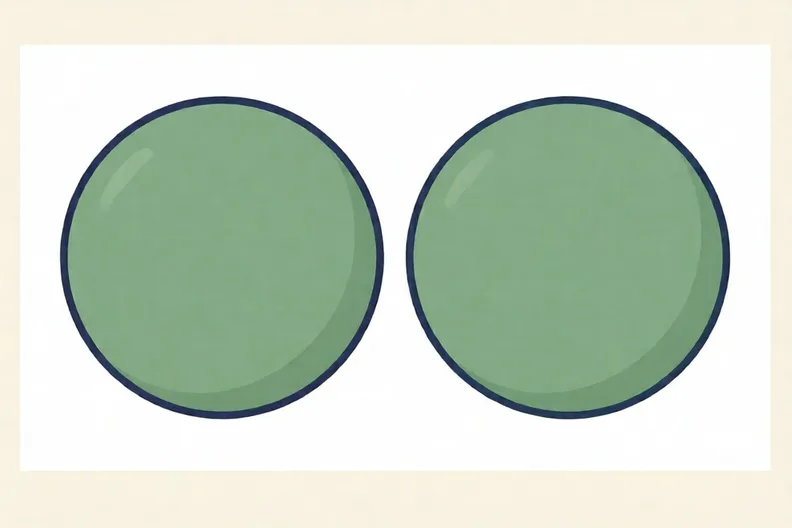
Two identical solid green circles side by side on a plain white background.
Mia says: “If I copy a microorganism picture exactly, I have responded to it.”
  1. 1.

    Write one reason Mia is wrong.

E Think deeper4 min

Pick a tiny corner from a microscope picture, roughly the width of a stamp. Sketch it on scrap paper at a huge scale, filling your page. Try to fit in one repeating mark, one curly line, or one dark patch.
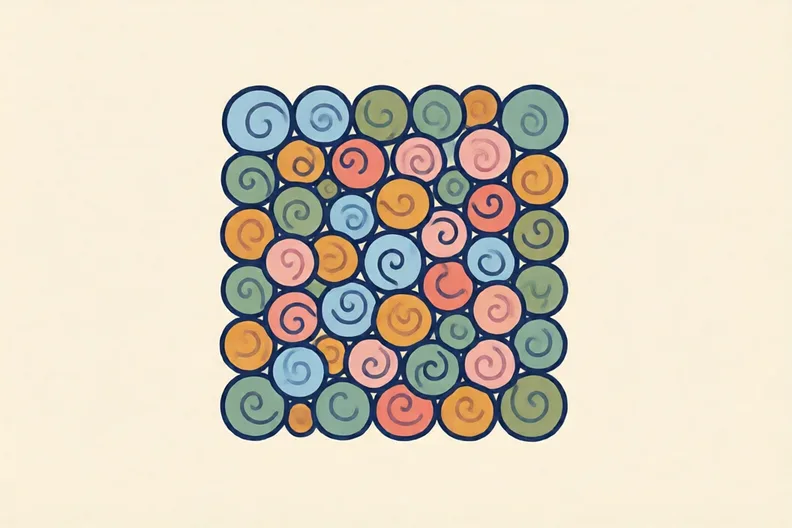
A small square cut from a soft close-up of tiny round shapes with curled lines
  1. 1.

    Write one sentence about one choice you made in your drawing.

How did it feel?1 min

I can do it Nearly Not yet
StudyDen · Year 4 · Art & design · Hidden worlds: collage and mixed mediaAnswers are on the grown-up page

For the grown-up

Looking closely at tiny worlds · 2 minutes to read

Answers, and what a wrong one tells you

A

1. red If they pick orange or purple, they may have mixed colours. Ask: can you make this colour by mixing two others? Primary colours cannot be made that way.

2. Primary colour: red, yellow, blue · Secondary colour: green, orange, purple If green or orange is in the primary column, ask them to say which two colours they mixed to get it.

3. 6 If they say 3, they may have missed some sides. Ask them to trace each side with a finger and count as they go.

B

1. darker If they say lighter, remind them the bottom step is the darkest. Ask what a stormy sky looks like.

C

1. green If they pick another colour, ask: would the drawing look the same as the picture? An exact copy keeps the same colour.

2. orange If they pick another colour, ask which part Mia keeps and which part she changes. She borrows the colour and changes the size.

3. purple If they pick green, orange or brown, ask whether that would be a new colour. It would, so Ravi can use it. Only the swatch colour would not be a change.

4. lighter If they say darker, remind them the top step is the palest. Ask whether Ali copied the edge or changed it on purpose.

D

1. Look for: Says that a response makes something new or borrows one idea, and that an exact copy is not a response. If they say copying is fine because it looks like the picture, ask: what did you choose to change or borrow for yourself?

E

1. Look for: A sentence that names one choice, such as a colour, line or tone, and gives a reason for it. If they only describe the picture, ask: why did you choose that colour or line for your own drawing?

Words to use

Say“What did you notice first? Which idea did you borrow, and what did you change?”
Instead of“That looks just like the picture, well done.”

After the sheet

Look closely at a leaf, a bread crust or a sponge with a magnifying glass or a torch. Draw a stamp-sized part much bigger on paper. Borrow one colour, then change one thing on purpose.

Tick what your child got right in StudyDen. Anything missed comes back in a later Look back box, so there's no need to redo the sheet.

The rest of this unit

5 more sheets come with a StudyDen plan, in teaching order:

  1. Tones in a Tiny World(with a plan)
  2. Dish Colours in Fabric(with a plan)
  3. Printing on a flat collage(with a plan)
  4. Printing with textures(with a plan)
  5. Changing my mind(with a plan)

Every Year 4 art worksheet

The worksheets plan opens a printable sheet for every lesson in Years 1 to 6, each with its answers on a separate page for you. It costs £6.99 a month or £59 a year for the whole family, with no free trial.

The full StudyDen plan adds the lessons themselves, marked as your child works, with the worksheets included. It is 7 days free, then £29.99 a month.

Both start with a free account; you choose the plan when you sign up.