← Year 4 art worksheets

Year 4 Recording, noticing, and caring: responding to nature and the planet worksheet

“Simple Shapes, New Pictures” is free to print, with no account. It is the first sheet in the Year 4 art unit “Recording, noticing, and caring: responding to nature and the planet”, for children aged 8 to 9, and takes about 22 minutes.

Print it on A4. The child's pages come first; the answers, and what each wrong answer tells you, are on the grown-up page that follows. Weeks 28 to 32 of the year, 5 sheets in the unit.

Free sample · answers on the last page

Simple Shapes, New Pictures

Name: ____________ · Date: ____________
Year 4 · Art & design · about 22 minutes
Answers are on the grown-up page

Today I can break a complex form into simple shapes and rearrange them into an abstract picture.

A Look back3 min

  1. 1.

    Which of these is NOT a primary colour in paint?

    redgreenblue
    redgreenblue
  2. 2.

    Red and yellow mixed together make

    redyellow
    orangepurplegreen
  3. 3.

    How many sides does this shape have?

B Watch me, then you4 min

A daisy has lots of petals. Look for the simple shapes hidden inside it.
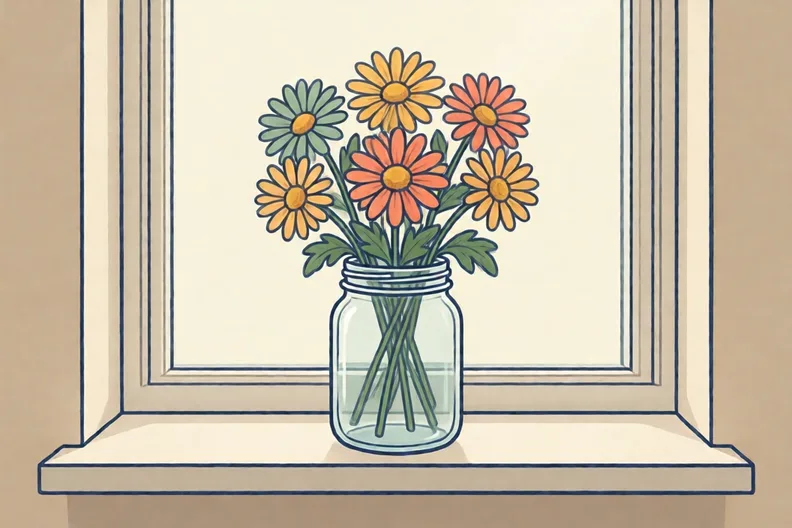
A small bunch of daisies in a jar on a windowsill, flat illustration
Watch me

A daisy looks busy at first.

Its middle is one simple shape: a circle.

Draw the circle first, then add the petals one at a time.

Now you
  1. 1.

    The daisy has a circle in the middle and lots of petals around it. Is the whole daisy a simple shape or a complex form?

    simple shapecomplex form

C Your turn8 min

Look for the simple shapes hidden inside each thing, then plan how to move them.

  1. 1.

    Look at the simple shape. Which of these has it hidden inside?

    a clock facea booka ladder
  2. 2.

    Look at the simple shape. Which fossil has this shape in its middle?

    a starfish fossila fern fossila fish bone fossil
  3. 3.

    Look at the simple shape. Which of these has this outline?

    a shark tooth fossila round pebblea book
  4. 4.

    Mo finds a circle and five lines in a fossil. Which plan turns them into an abstract picture?

    move the lines and put the circle in a cornercopy the fossil exactly as it lookstrace round a photo of the fossil

Say it out loud: Which simple shapes did you find? Where would you move one of them in your own picture?

D Spot the mistake3 min
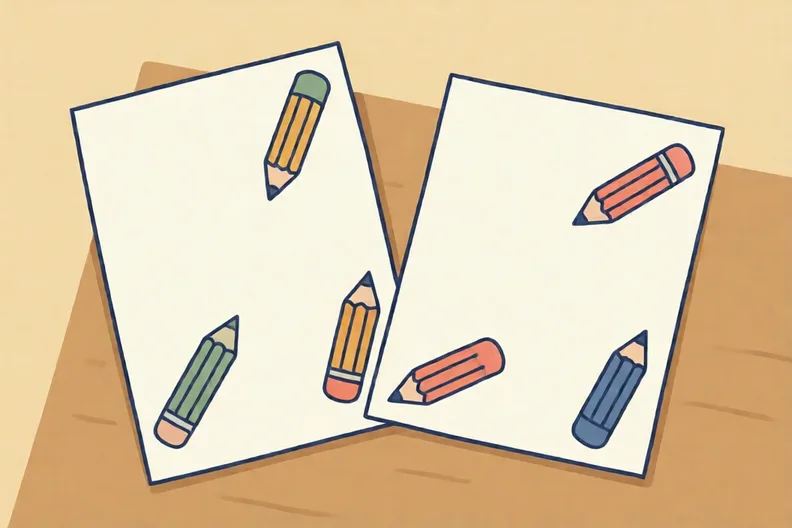
Two sheets of plain paper with pencil shapes in different places
Ravi says: “In an abstract picture there is only one right place to put a spiral.”
  1. 1.

    Is Ravi right? Say why in your own words.

E Think deeper4 min

Pick something coiled or round near you. Look for its simple shapes, then arrange them your own way.
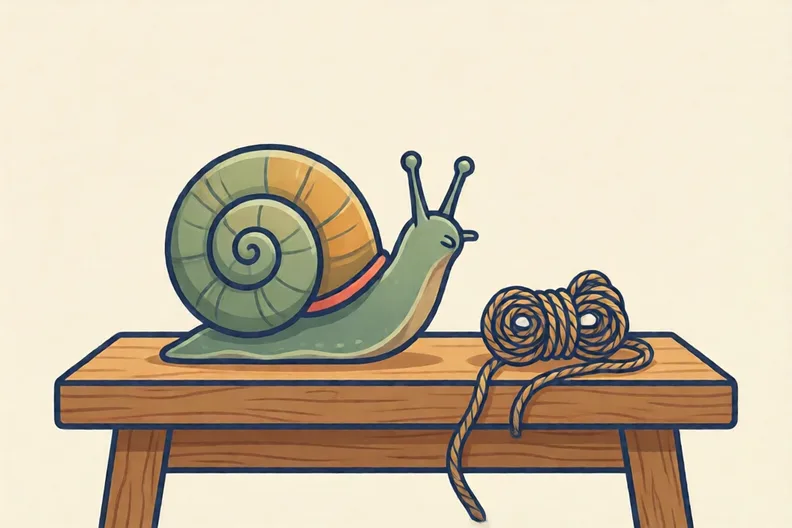
A coiled snail shell and a loose piece of string on a table
  1. 1.

    Name the object you chose and three simple shapes you found in it. Then write where you would move one shape in your own picture.

How did it feel?

I can do it Nearly Not yet
StudyDen · Year 4 · Art & design · Recording, noticing, and caring: responding to nature and the planetAnswers are on the grown-up page

For the grown-up

Simple Shapes, New Pictures · 2 minutes to read

Answers, and what a wrong one tells you

A

1. green If they choose red or blue, remind them these are primary colours. Green is mixed from blue and yellow, so it is not a primary.

2. orange If they choose purple, they may be mixing red and blue. Ask: which two colours are in the picture? Those two make orange.

3. 5 If they say 6, they may have counted one side twice. Ask them to count the sides with a finger, one at a time.

B

1. complex form If they say simple shape, ask how many shapes make up the daisy. A circle and many petals together make a complex form.

C

1. a clock face If they choose the book or the ladder, ask them to trace the shape with a finger. A circle has no corners, just like a clock face.

2. a starfish fossil If they choose the fern or the fish bone, ask what shapes those make: long lines. A starfish has five arms, so its middle has five sides.

3. a shark tooth fossil If they choose the pebble or the book, count the sides of the shape together. A shark tooth has three edges and a sharp point.

4. move the lines and put the circle in a corner If they choose copying or tracing, ask whether the picture would look new. Abstract art moves the simple shapes into a new arrangement the artist chooses.

D

1. Look for: Says Ravi is not right, and explains that the artist chooses where shapes go, so there is no single correct place. If they say Ravi is right, ask: could two artists put the same shapes in different places and both make good art?

E

1. Look for: Names a real object, lists three simple shapes or lines from it, and says where one shape would go in a new picture. Any new place is fine.

Words to use

Say“Which simple shapes can you see inside it? Where would you put that one on your new page?”
Instead of“That looks like a snail, so just draw the snail exactly as it is.”

After the sheet

Find a snail shell, a button or a coil of string. Draw its simple shapes on one page, then move them into a new arrangement on a second page.

Tick what your child got right in StudyDen. Anything missed comes back in a later Look back box, so there's no need to redo the sheet.

The rest of this unit

4 more sheets come with a StudyDen plan, in teaching order:

  1. Art from Rubbish(with a plan)
  2. Textures Near Us(with a plan)
  3. Art That Fades Away(with a plan)
  4. Imagining a Better Future(with a plan)

Every Year 4 art worksheet

The worksheets plan opens a printable sheet for every lesson in Years 1 to 6, each with its answers on a separate page for you. It costs £6.99 a month or £59 a year for the whole family, with no free trial.

The full StudyDen plan adds the lessons themselves, marked as your child works, with the worksheets included. It is 7 days free, then £29.99 a month.

Both start with a free account; you choose the plan when you sign up.