← Year 4 art worksheets

Year 4 Views of a local landmark: ceramics worksheet

“Photograph your landmark” is free to print, with no account. It is the first sheet in the Year 4 art unit “Views of a local landmark: ceramics”, for children aged 8 to 9, and takes about 20 minutes.

Print it on A4. The child's pages come first; the answers, and what each wrong answer tells you, are on the grown-up page that follows. Weeks 4 to 9 of the year, 6 sheets in the unit.

Free sample · answers on the last page

Photograph your landmark

Name: ____________ · Date: ____________
Year 4 · Art & design · about 20 minutes
Answers are on the grown-up page

Today I can choose where to place a landmark in a photo and where the light comes from.

A Look back3 min

Quick warm-up from earlier learning.

  1. 1.

    Ring the primary colours.

    redorangeyellowgreenblue
  2. 2.

    Photos are often this shape. Name one place near your home that people know well and use to find their way.

  3. 3.

    Mia splits her photo into three equal strips, top to bottom. The sky fills the shaded strip. How much of the photo is sky? Ring one.

    1/31/22/3

B Watch me, then you4 min

Mia wants to photograph the old village church. She stands with the sun behind her and checks where the church sits in the frame.
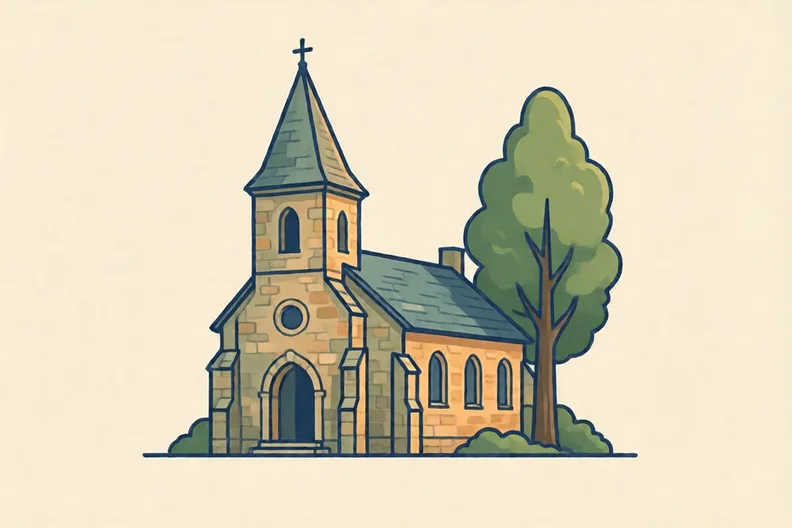
A small stone village church with a tall tree beside it, under a clear sky
Watch me
123123N

Imagine the photo split into nine equal boxes.

Mia puts the church in the top right box, near where the lines cross.

The church is off-centre, so the photo feels balanced.

Now you
  1. 1.

    A church is your subject, and it sits in the middle box. Ring the boxes where it could go to follow the rule of thirds.

    123123N
    the middle boxthe top left boxthe bottom right box

C Your turn6 min

Look at each photo plan. Change one thing at a time and think about what changes.
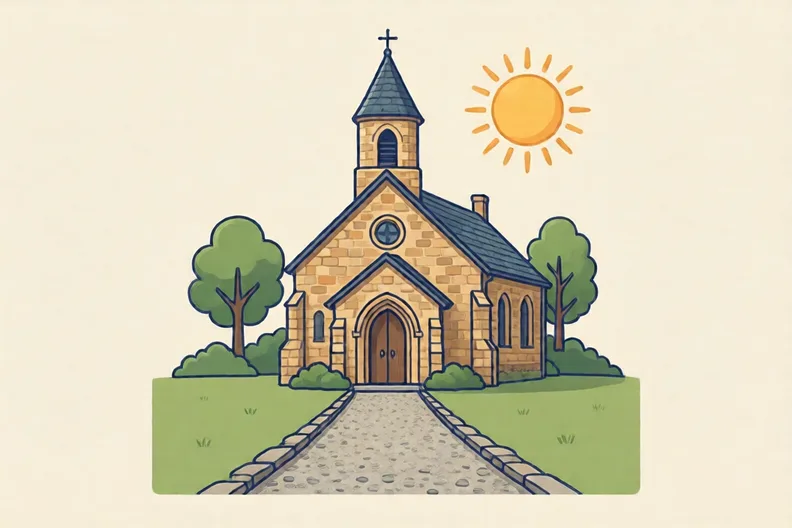
A stone village church with a gravel path leading towards it on a sunny day
  1. 1.

    The tree is in the middle box. Does this follow the rule of thirds? Ring yes or no.

    123123N
    yesno
  2. 2.

    The tree is in the top right box. Does this follow the rule of thirds? Ring yes or no.

    123123N
    yesno
  3. 3.

    You want your landmark bright and clear. Where should the sun be? Ring one.

    behind mein my face
  4. 4.

    Which one is a natural landmark? Ring one.

    a rocky cliffa stone churcha bus shelter

Say it out loud: What changed between the first two grids? Where did the tree move, and did the rule still hold?

D Spot the mistake3 min
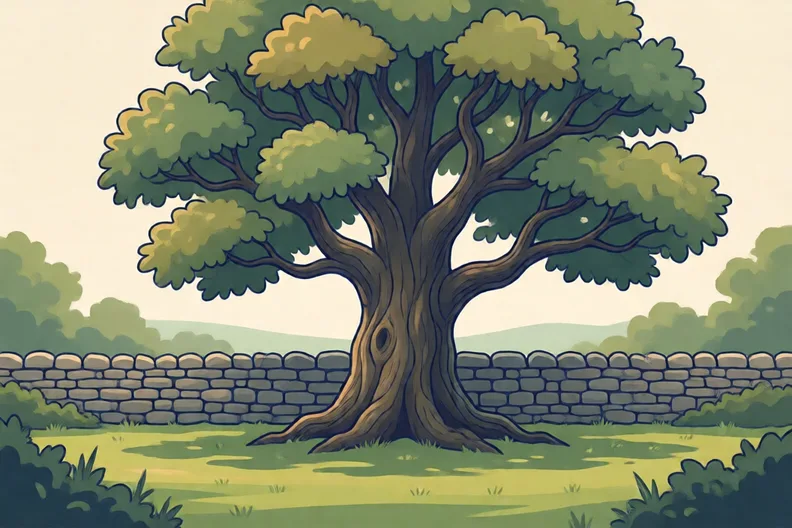
A large old oak tree standing on a village green beside a low stone wall
Kit says: “A landmark must be a famous building, so an old oak tree can’t be one.”
  1. 1.

    Why is Kit wrong? Write one sentence.

E Think deeper4 min

Look at the bridge in the picture. Sketch a nine-box grid on paper and plan your own photo of a landmark near you, then answer.
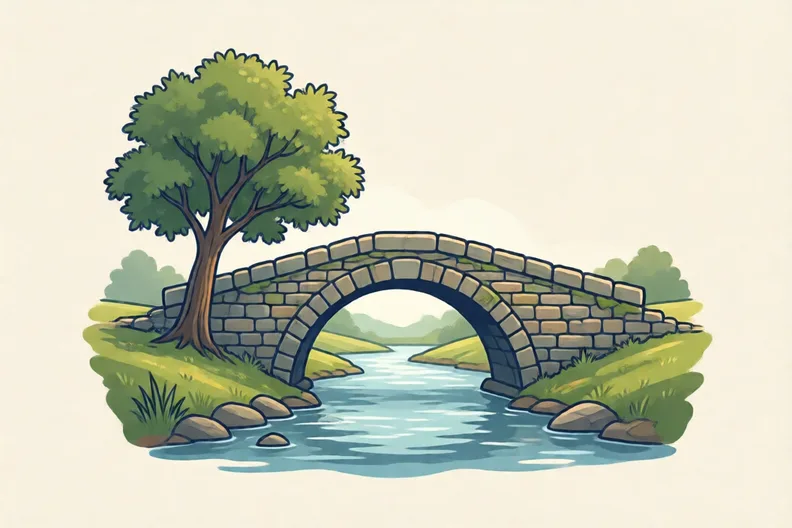
A small stone bridge over a slow river, with a tree on the bank
  1. 1.

    Look at your nine-box plan. Write two sentences: which box your landmark sits in, and where the sun will be.

How did it feel?

I can do it Nearly Not yet
StudyDen · Year 4 · Art & design · Views of a local landmark: ceramicsAnswers are on the grown-up page

For the grown-up

Photograph your landmark · 2 minutes to read

Answers, and what a wrong one tells you

A

1. red, yellow, blue

2. Look for: Names a place or object that people nearby know well, either built or natural.

3. 1/3

B

1. the top left box, the bottom right box If they ring the middle box, the subject is dead centre. Say the rule asks for a box near a line or where two lines cross.

C

1. no If they ring yes, they think dead centre is fine. Ask: is the tree on a line or where two lines cross?

2. yes If they ring no, point to the top right box. It sits near where the lines cross, so it follows the rule.

3. behind me If they ring in my face, the landmark turns dark. Ask them to turn so the sun is over their shoulder.

4. a rocky cliff If they ring the church, remind them it is built by people. Ask what makes a landmark natural, not built.

D

1. Look for: Says a tree can be a landmark because landmarks can be natural, or because they only need to matter to people nearby, not be famous buildings. If they agree with Kit, ask: does a landmark have to be built by people? Point to the oak and ask whether people know it.

E

1. Look for: Names an off-centre box for the landmark, near where lines cross, and says the sun will be behind the photographer.

Words to use

Say“Where did you put your landmark in the frame, and where was the light coming from?”
Instead of“That photo looks fine, just take another one.”

After the sheet

Put a cup on the kitchen table. Take three photos, moving the cup to a different box of an imagined grid each time. Look at them together and say which one feels balanced.

Tick what your child got right in StudyDen. Anything missed comes back in a later Look back box, so there's no need to redo the sheet.

The rest of this unit

5 more sheets come with a StudyDen plan, in teaching order:

  1. Research and Respond(with a plan)
  2. Design a Landmark Tile(with a plan)
  3. Trace and prepare your tile(with a plan)
  4. Carve a Raised Tile(with a plan)
  5. Decorate and Check Your Tile(with a plan)

Every Year 4 art worksheet

The worksheets plan opens a printable sheet for every lesson in Years 1 to 6, each with its answers on a separate page for you. It costs £6.99 a month or £59 a year for the whole family, with no free trial.

The full StudyDen plan adds the lessons themselves, marked as your child works, with the worksheets included. It is 7 days free, then £29.99 a month.

Both start with a free account; you choose the plan when you sign up.