← Year 4 science worksheets

Year 4 Introduction to sound worksheet

“How sounds are made” is free to print, with no account. It is the first sheet in the Year 4 science unit “Introduction to sound”, for children aged 8 to 9, and takes about 20 minutes.

Print it on A4. The child's pages come first; the answers, and what each wrong answer tells you, are on the grown-up page that follows. Weeks 16 to 22 of the year, 12 sheets in the unit.

Free sample · answers on the last page

How sounds are made

Name: ____________ · Date: ____________
Year 4 · Science · about 20 minutes
Answers are on the grown-up page

Today I can explain how sounds are made by things that vibrate.

A Look back3 min

  1. 1.

    In this food chain, which animal eats the rabbit? Circle it.

    GrassRabbit
    FoxGrassRabbit
  2. 2.

    Which stage comes straight after frog spawn? Circle it.

    Frog spawnYoung frogAdult frog
    Adult frogTadpoleFrog spawn
  3. 3.

    The tally shows leaves found on a walk. Which tree had the most leaves? Write its name.

    OakAshHolly

B Watch me, then you4 min

Ali taps a drum with a stick. Follow the chain to see how the sound reaches his ear.
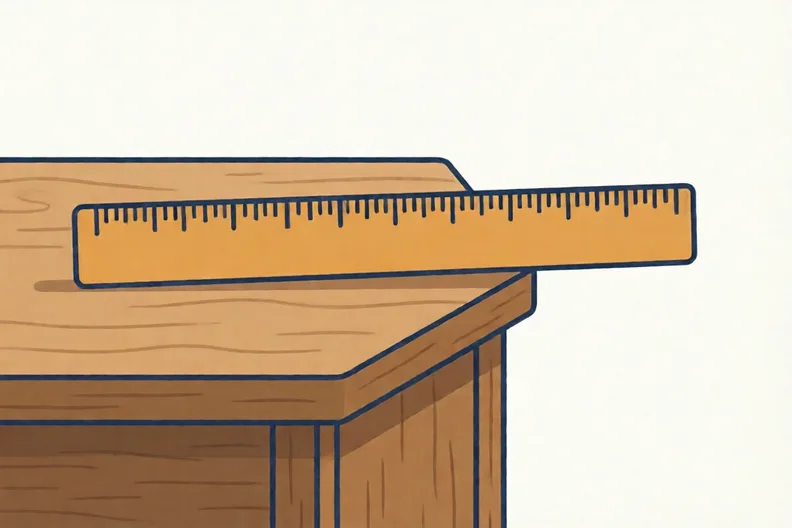
A wooden ruler on a desk, with one end sticking out past the edge.
Watch me
Drum tappedDrum skin vibratesAir vibratesEar hears sound

The drum skin moves quickly backwards and forwards.

That vibration moves through the air to the ear.

The ear hears the sound, so something was vibrating.

Now you
  1. 1.

    A bell is struck. Which box comes next in the chain? Circle it.

    Bell struckAir vibratesEar hears sound
    Bell vibratesBell stopsBell freezes
  2. 2.

    The ruler twangs over the edge of the desk. What is vibrating to make the sound? Circle it.

    the rulerthe deskthe pencil

C Your turn8 min

Look at the instruments. Answer each question.
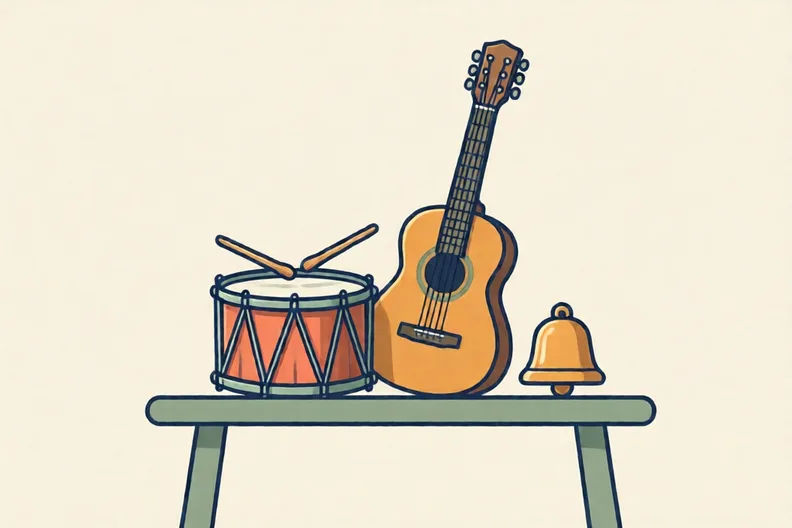
A drum, a guitar and a small bell on a table
  1. 1.

    A guitar string makes a sound. Which part is vibrating? Circle it.

    the guitar stringthe guitar casethe chair under it
  2. 2.

    A drum makes a sound. Which part is vibrating? Circle it.

    the drum skinthe metal standthe wooden table
  3. 3.

    You hum. Which part of your body is vibrating? Circle it.

    your vocal cordsyour earsyour knees
  4. 4.

    Write each card in the column where it belongs.

    A drum being hitA bell that has stopped ringingA guitar string still wobblingA table standing still
    Making soundNot making sound

Say it out loud: What do all the vibrating things have in common? Say it out loud to your grown-up.

D Spot the mistake3 min
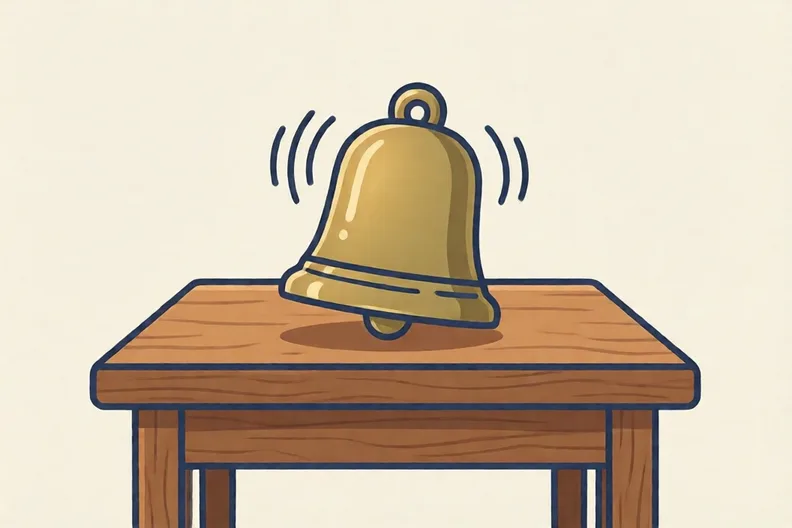
A small bell on a desk, drawn with wobble lines to show it shaking as it rings
Ola says: “Shouting can make a sound even if nothing is vibrating.”
  1. 1.

    Is Ola right? Circle it.

    Ola is rightOla is wrong

E Think deeper4 min
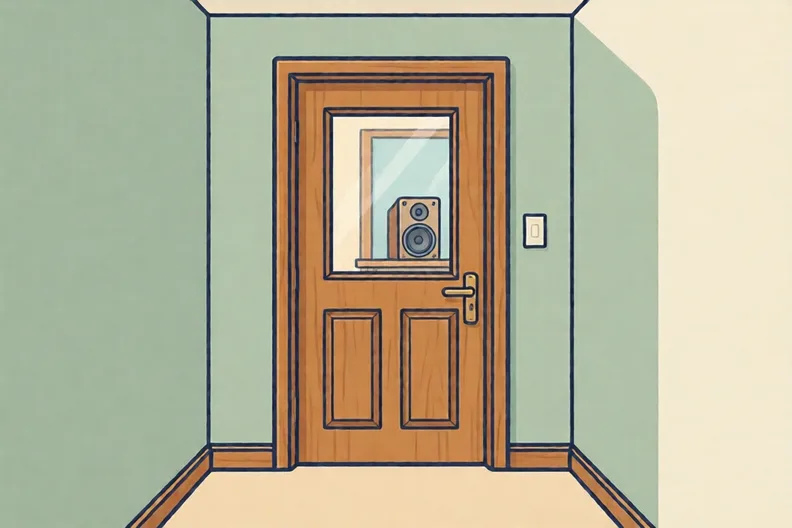
A closed wooden door in a hallway with a speaker on a shelf behind it
  1. 1.

    Sam hears music through a closed door. Explain how the sound reached Sam's ear. Write two or three sentences.

How did it feel?

I can do it Nearly Not yet
StudyDen · Year 4 · Science · Introduction to soundAnswers are on the grown-up page

For the grown-up

How sounds are made · 2 minutes to read

Answers, and what a wrong one tells you

A

1. Fox If your child circles Grass, they have found the food, not the eater. Ask which animal the arrow points to.

2. Tadpole If your child circles Frog spawn, they have named the stage they already see. Ask what comes next round the cycle.

3. Look for: Says oak, because its tally has the most marks. If your child writes Holly, ask them to count the marks for Oak and Holly, then compare.

B

1. Bell vibrates If your child circles Bell stops, they think the sound comes from stopping. Ask what must happen first to make a sound.

2. the ruler If your child circles the desk, ask which thing you can see wobbling when the end is twanged.

C

1. the guitar string If your child circles the case, ask what moved to make the sound when the string was plucked.

2. the drum skin If your child circles the stand, ask which part wobbles when the drum is hit.

3. your vocal cords If your child circles ears, ask them to put two fingers on the front of the throat and hum.

4. Making sound: A drum being hit, A guitar string still wobbling · Not making sound: A bell that has stopped ringing, A table standing still If your child puts the still bell in Making sound, ask whether anything is wobbling now.

D

1. Ola is wrong If your child circles Ola is right, ask what moves inside the throat when you shout. Sound always needs something vibrating.

E

1. Look for: Something vibrated, and the vibrations travelled through the door or the air to Sam's ear.

Words to use

Say“What is wobbling when you hear that sound? Can you see it, or only feel it?”
Instead of“Sounds just happen, so there is no need to look for anything moving.”

After the sheet

Stretch an elastic band over an open box. Pluck it, then press a finger on it and pluck again. Ask what stopped the sound.

Tick what your child got right in StudyDen. Anything missed comes back in a later Look back box, so there's no need to redo the sheet.

The rest of this unit

11 more sheets come with a StudyDen plan, in teaching order:

  1. How sound travels(with a plan)
  2. Sound through a string(with a plan)
  3. Loud and quiet sounds(with a plan)
  4. Measuring how loud sounds are(with a plan)
  5. Which materials block sound?(with a plan)
  6. Noise or just a sound?(with a plan)
  7. Planning a fair test(with a plan)
  8. Sound and distance(with a plan)
  9. Higher and lower sounds(with a plan)
  10. Shorter straws, higher sounds(with a plan)
  11. Pitch and vibrating parts(with a plan)

Every Year 4 science worksheet

The worksheets plan opens a printable sheet for every lesson in Years 1 to 6, each with its answers on a separate page for you. It costs £6.99 a month or £59 a year for the whole family, with no free trial.

The full StudyDen plan adds the lessons themselves, marked as your child works, with the worksheets included. It is 7 days free, then £29.99 a month.

Both start with a free account; you choose the plan when you sign up.