← Year 4 science worksheets

Year 4 Introduction to the human digestive system worksheet

“Types of teeth” is free to print, with no account. It is the first sheet in the Year 4 science unit “Introduction to the human digestive system”, for children aged 8 to 9, and takes about 20 minutes.

Print it on A4. The child's pages come first; the answers, and what each wrong answer tells you, are on the grown-up page that follows. Weeks 1 to 4 of the year, 10 sheets in the unit.

Free sample · answers on the last page

Types of teeth

Name: ____________ · Date: ____________
Year 4 · Science · about 20 minutes
Answers are on the grown-up page

Today I can name incisors, canines and molars, and say what each one is for.

A Look back3 min

  1. 1.

    Which animal is there the fewest of in the pond?

    Animals in a pond012345678snailsfrogsnewts
  2. 2.

    Plants grow in steps. Look at the chain. Circle the word that goes in the gap, straight after the seed.

    seedyoung plant
    sproutpetalcloud
  3. 3.

    The water in a cup is 14 °C. It warms up by 2 degrees. What is the new temperature?

    0°C2°C4°C6°C8°C10°C12°C14°C16°C18°C20°C

B Watch me, then you4 min

Nell looks at a young child's full set of baby teeth. She names each type by its place and shape.

Watch me
incisorscaninesmolars

The flat teeth at the very front are incisors. They cut food.

The pointed teeth just beside them are canines. They tear food.

The wide, bumpy teeth at the back are molars. They grind food.

Now you
  1. 1.

    Nell finds a pointed tooth beside the front teeth. Write its name and the job it does.

C Your turn6 min

The chain shows the teeth in a row, from the front of the mouth to the back. Use it to help you.

flat front teethpointed side teethwide back teeth
  1. 1.

    Circle the teeth that are flat and smooth, at the very front.

    incisorscaninesmolars
  2. 2.

    Circle the teeth that are pointed, just beside the front teeth.

    incisorscaninesmolars
  3. 3.

    Circle the teeth that are wide and bumpy, at the back of the jaw.

    incisorscaninesmolars
  4. 4.

    Sort each job into the tooth that does it. Write each job under the right tooth.

    grind foodcut foodtear food
    IncisorsCaninesMolars

Say it out loud: Each tooth shape matches one job. What pattern do you notice between the shape and the job?

D Spot the mistake3 min

Ali says: “My teeth only started to form after I was born. Before that, my jaw had no teeth in it.”
teeth form in jawbaby is bornteeth push through
  1. 1.

    Is Ali right? Use the chain to explain. Write two lines.

E Think deeper3 min
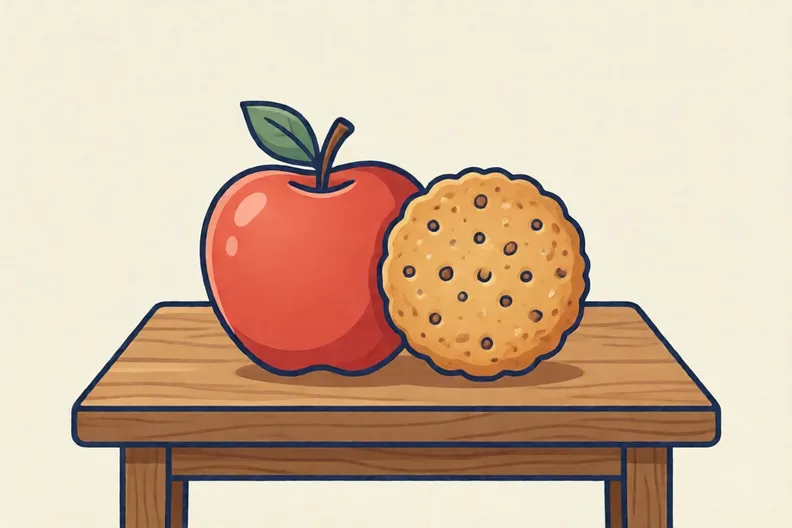
A red apple and a dry biscuit side by side on a table
  1. 1.

    Which teeth would you use to bite into the apple, and which to crush the biscuit? Explain how you know.

How did it feel?

I can do it Nearly Not yet
StudyDen · Year 4 · Science · Introduction to the human digestive systemAnswers are on the grown-up page

For the grown-up

Types of teeth · 2 minutes to read

Answers, and what a wrong one tells you

A

1. Look for: Writes frogs. If your child wrote snails, they picked the tallest bar. Ask them to find the shortest bar and read its label.

2. sprout If your child circled petal, they are thinking of the flower. Ask what comes straight after the seed.

3. 16 If your child wrote 12, they took 2 away. Warmer means the number goes up, so add.

B

1. Look for: Names canine and says it tears food. If your child writes incisor, ask whether the tooth is flat or pointed. Pointed teeth beside the front ones are canines, and they tear.

C

1. incisors

2. canines

3. molars

4. Molars: grind food · Canines: tear food · Incisors: cut food

D

1. Look for: Says no, because baby teeth are already inside the jaw before the baby is born. If your child says yes, ask: in the chain, which comes first, the teeth forming or the baby being born?

E

1. Look for: Names incisors for biting the apple and molars for crushing the biscuit, with a reason linked to tooth shape.

Words to use

Say“Which tooth shape would do that job best, and why?”
Instead of“Just tell them the names of the teeth so they don't have to think.”

After the sheet

Use a mirror at home to look at your front teeth and your back teeth. Draw the two shapes and say which one bites and which one grinds.

Tick what your child got right in StudyDen. Anything missed comes back in a later Look back box, so there's no need to redo the sheet.

The rest of this unit

9 more sheets come with a StudyDen plan, in teaching order:

  1. Which tooth does the job?(with a plan)
  2. Teeth and Food Teams(with a plan)
  3. Teeth for different diets(with a plan)
  4. Planning a Tooth Test(with a plan)
  5. Sugar and Our Teeth(with a plan)
  6. Comparing toothpaste(with a plan)
  7. Mouth to stomach journey(with a plan)
  8. Following food on its journey(with a plan)
  9. Sharing the digestive system(with a plan)

Every Year 4 science worksheet

The worksheets plan opens a printable sheet for every lesson in Years 1 to 6, each with its answers on a separate page for you. It costs £6.99 a month or £59 a year for the whole family, with no free trial.

The full StudyDen plan adds the lessons themselves, marked as your child works, with the worksheets included. It is 7 days free, then £29.99 a month.

Both start with a free account; you choose the plan when you sign up.