← Year 4 science worksheets

Year 4 Living things and the environment worksheet

“Sorting by what we see” is free to print, with no account. It is the first sheet in the Year 4 science unit “Living things and the environment”, for children aged 8 to 9, and takes about 20 minutes.

Print it on A4. The child's pages come first; the answers, and what each wrong answer tells you, are on the grown-up page that follows. Weeks 22 to 31 of the year, 19 sheets in the unit.

Free sample · answers on the last page

Sorting by what we see

Name: ____________ · Date: ____________
Year 4 · Science · about 20 minutes
Answers are on the grown-up page

Today I can sort living things by what I can observe on them, not where they live.

A Look back3 min

  1. 1.

    Which animal eats the rabbit? Circle it.

    grassrabbit
    foxgrassrabbit
  2. 2.

    Which animal eats the leaf? Circle it.

    leafblue tit
    blue titcaterpillarleaf
  3. 3.

    Which stage comes straight after the seed? Circle it.

    seedplant withflowersfruit withseeds
    fruit with seedsseedlingplant with flowers

B Watch me, then you4 min

Ravi sorts five creatures from a jar: a bee, a snail, a ladybird, a worm and a moth. He sorts them by whether they have wings.

Watch me
has wingsno wings

The bee, the ladybird and the moth have wings.

The snail and the worm have no wings.

Ravi can see wings on the body, so he does not need to know where each one lives.

Now you
  1. 1.

    Mia sorts 7 leaves into two groups. Every leaf in one group has little points all round it. What part of the leaf did she look at?

    group 1group 2

C Your turn8 min

Look at the minibeasts in the garden picture. Sort them by what you can see on each one.
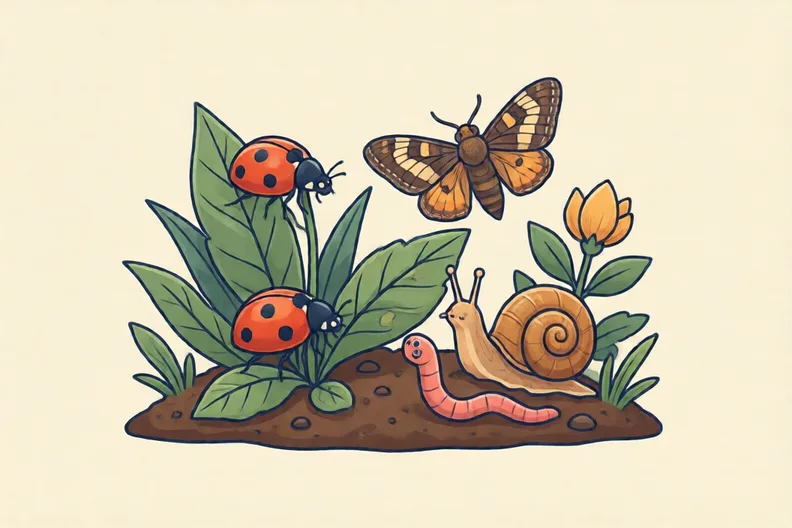
A garden patch with a ladybird, a moth, a snail and an earthworm on soil and leaves
  1. 1.

    Write each name in the right column.

    ladybirdmothsnailearthworm
    Has legsNo legs
  2. 2.

    Now sort the same minibeasts by shell. Write each name in the right column.

    ladybirdmothsnailearthworm
    Has a shellNo shell
  3. 3.

    Circle the one you could see on a snail with your eyes.

    its colourits nameits favourite food
  4. 4.

    Pick one minibeast in the picture. Write two things you can see about it.

Say it out loud: Which feature did you look at first, and could you see it without touching the animal?

D Spot the mistake3 min
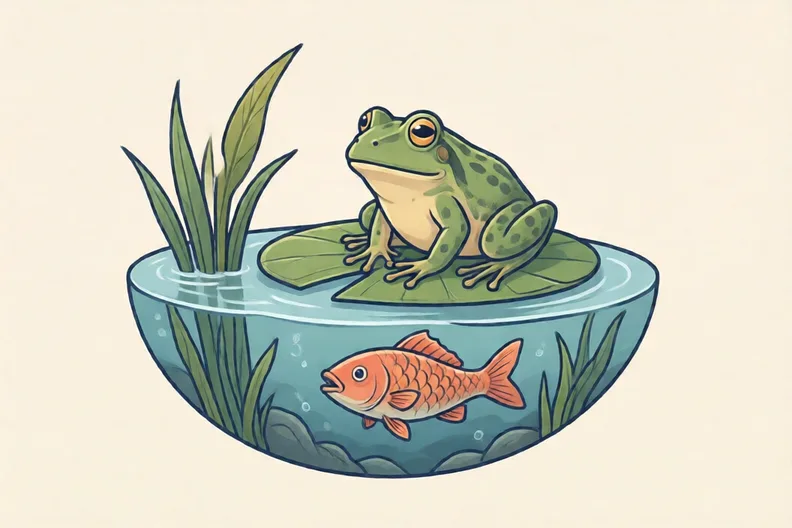
A pond with a frog on a lily pad and a fish swimming under the water
Dan says: “A frog and a fish are in the same group, because they both live in a pond.”
  1. 1.

    Write one thing Dan should look at on the animals to group them correctly.

E Think deeper3 min
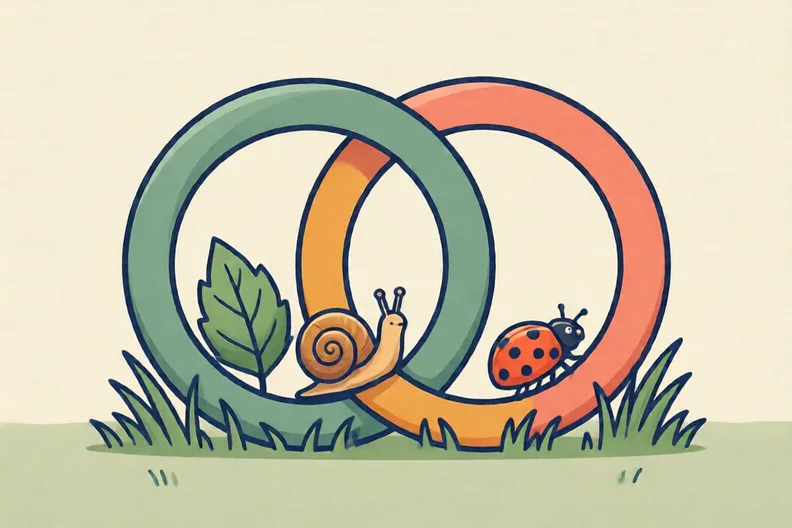
Two overlapping hoops on a lawn with a leaf, a snail and a ladybird inside them
  1. 1.

    Choose two observable characteristics. Name one living thing that fits both. Explain why it goes in the middle of a Venn diagram.

How did it feel?

Tell your grown-up one thing you noticed when you sorted by what you could see.

I can do it Nearly Not yet
StudyDen · Year 4 · Science · Living things and the environmentAnswers are on the grown-up page

For the grown-up

Sorting by what we see · 2 minutes to read

Answers, and what a wrong one tells you

A

1. fox If your child circles grass, they may think the first thing in the chain is the eater. The arrows point to the eater. Ask: which animal does the rabbit feed?

2. caterpillar If your child circles leaf, the leaf is the food, not the eater. Ask: which living thing eats the leaf?

3. seedling If your child circles plant with flowers, they have skipped a stage. Ask: what grows out of the seed first?

B

1. Look for: Names the leaf edges, or whether each leaf is smooth or spiky, as the feature Mia could see. If your child gives a number, they have counted instead of looking. Ask: what can you see on a leaf that puts it in the spiky group?

C

1. No legs: snail, earthworm · Has legs: ladybird, moth If your child puts the snail under Has legs, they may think its foot counts as legs. A snail has a flat foot and no legs. Look again.

2. No shell: ladybird, moth, earthworm · Has a shell: snail If your child puts the ladybird under Has a shell, they may think its hard wing cases are a shell. The cases open so it can fly. A snail can pull its whole body into its shell.

3. its colour If your child circles name, remind them a name is not something you can see on the snail. Ask: can you see it with your eyes or touch it?

4. Look for: Two observable features of one minibeast, such as colour, shape, number of legs, wings or size.

D

1. Look for: Looks at the animal itself, such as its legs, skin, fins or body shape, not just the pond. If your child repeats the pond, they hold the same misconception. Ask: what can you see on the frog that is different from the fish?

E

1. Look for: A named living thing with both chosen features, and an explanation that it belongs to both groups so it goes where the circles overlap.

Words to use

Say“Which feature did you look at first, and could you see it without touching the animal?”
Instead of“That's a bug, they're all the same, just tell them the answer.”

After the sheet

Gather five small objects, like a pen, a leaf, a coin, a button and a stone. Pick two features, draw two overlapping hoops on paper, and sort the objects together.

Tick what your child got right in StudyDen. Anything missed comes back in a later Look back box, so there's no need to redo the sheet.

The rest of this unit

18 more sheets come with a StudyDen plan, in teaching order:

  1. Grouping animals by covering(with a plan)
  2. Flowering or not?(with a plan)
  3. Asking yes or no questions(with a plan)
  4. Following a classification key(with a plan)
  5. Keys that name animals(with a plan)
  6. Following a plant key(with a plan)
  7. Environments and the seasons(with a plan)
  8. Floods and Waterlogged Soil(with a plan)
  9. Hot days and wildfires(with a plan)
  10. Clearing Land, Changing Homes(with a plan)
  11. How people change environments(with a plan)
  12. Animals in danger(with a plan)
  13. Helping UK animals(with a plan)
  14. Plants in danger too(with a plan)
  15. Wildlife in Our Towns(with a plan)
  16. Helping the Planet(with a plan)
  17. Helpful or harmful changes(with a plan)
  18. Sharing science with everyone(with a plan)

Every Year 4 science worksheet

The worksheets plan opens a printable sheet for every lesson in Years 1 to 6, each with its answers on a separate page for you. It costs £6.99 a month or £59 a year for the whole family, with no free trial.

The full StudyDen plan adds the lessons themselves, marked as your child works, with the worksheets included. It is 7 days free, then £29.99 a month.

Both start with a free account; you choose the plan when you sign up.