← Year 4 science worksheets

Year 4 Introduction to states of matter and changing states worksheet

“Solids, liquids and gases” is free to print, with no account. It is the first sheet in the Year 4 science unit “Introduction to states of matter and changing states”, for children aged 8 to 9, and takes about 20 minutes.

Print it on A4. The child's pages come first; the answers, and what each wrong answer tells you, are on the grown-up page that follows. Weeks 4 to 11 of the year, 16 sheets in the unit.

Free sample · answers on the last page

Solids, liquids and gases

Name: ____________ · Date: ____________
Year 4 · Science · about 20 minutes
Answers are on the grown-up page

Today I can sort materials into solids, liquids and gases by their properties.

A Look back3 min

  1. 1.

    Sam sorted some kitchen things by state. Which state has the tallest bar? Name one thing that could be in that group.

    Kitchen things Sam sorted012345678SolidLiquidGas
  2. 2.

    Ola has 200 ml of juice in a jug. She pours 150 ml into one cup and the rest into another. Has the amount of juice changed? Explain why.

    20015050
  3. 3.

    The blocks show 34 ml of water in a short cup. Ola pours it all into a tall jar. Does the jar hold more, less or the same amount of water?

    morelessthe same

B Watch me, then you4 min

Sam puts three things on a table: an ice cube, a glass of water and a balloon full of air. Which state is each one in?
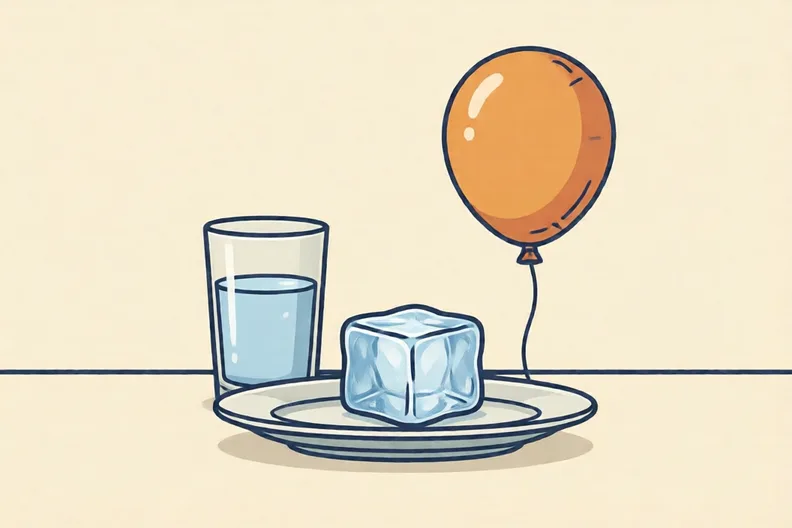
Watch me
An ice cube, a glass of water and an inflated balloon on a table

The ice cube keeps its shape, so it is a solid.

The water flows and takes the shape of its glass, so it is a liquid.

The air spreads out to fill the balloon, so it is a gas.

Now you
  1. 1.

    Ola has a brick, a puddle and the air in a room. Join each one to its state with a line.

    brickpuddleair in the room
    gassolidliquid
  2. 2.

    Which state spreads out to fill any container it is in?

    solidliquidgas

C Your turn8 min

Look at the things on the table. Then answer each question.
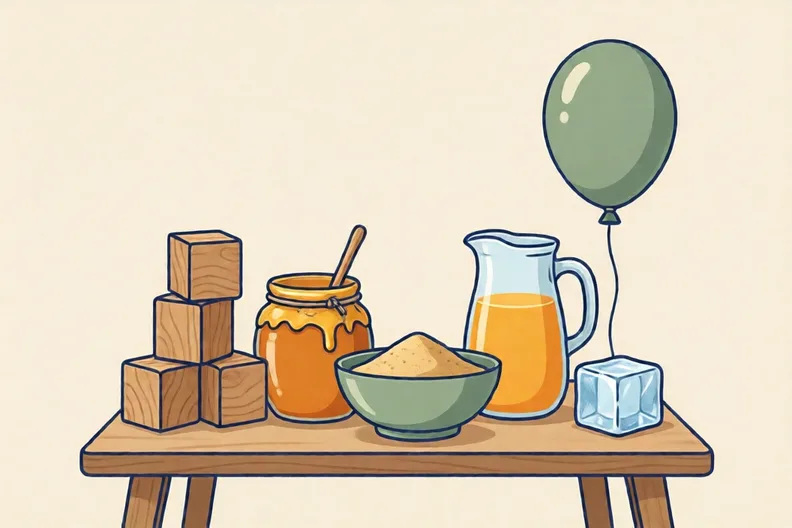
A wooden block, a jar of honey, a bowl of sand, a jug of orange juice, a balloon and an ice cube on a table
  1. 1.

    Write each one in the right column: wooden block, orange juice, air in a balloon.

    wooden blockorange juiceair in a balloon
    SolidLiquidGas
  2. 2.

    Write each one in the right column: sand, honey, air in a bike tyre, ice cube.

    sandhoneyair in a bike tyreice cube
    SolidLiquidGas
  3. 3.

    Which state takes the shape of the bottom of its container but keeps the same amount of space?

    solidliquidgas
  4. 4.

    Join each property to its state with a line.

    fixed shapefixed volume but no fixed shapeno fixed shape or volume
    gassolidliquid

Say it out loud: What did the solids have in common? What did the liquids do that the solids did not?

D Spot the mistake3 min

Zara says: “Air is nothing, so a balloon full of air weighs nothing.”
Made-up test: mass of two balloons0123456789101112Empty balloonFull balloon
  1. 1.

    Is Zara right? Use the chart and explain why in one or two sentences.

E Think deeper4 min
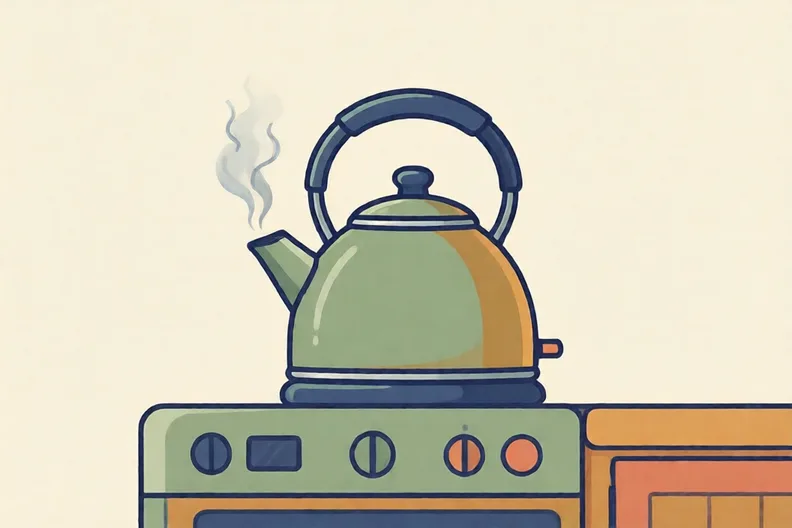
A kettle on a kitchen counter with steam from its spout
  1. 1.

    Water can be ice, liquid water and steam. Explain how you know all three are the same material.

How did it feel?

I can do it Nearly Not yet
StudyDen · Year 4 · Science · Introduction to states of matter and changing statesAnswers are on the grown-up page

For the grown-up

Solids, liquids and gases · 2 minutes to read

Answers, and what a wrong one tells you

A

1. Look for: Says solid, and names a solid such as a spoon, a cup or a plate. If they name liquid or gas, ask them to find the tallest bar and read the word under it.

2. Look for: Says the amount has not changed, because a liquid keeps the same amount when it changes shape. If they say it changed, ask whether any juice was added or spilled. A liquid changes shape, but the amount stays the same.

3. the same If they say more, they may think a taller water level means more water. Ask whether any water was added or spilled.

B

1. brick → solid; puddle → liquid; air in the room → gas If the puddle is joined to solid, ask whether a puddle keeps its shape or spreads out flat.

2. gas

C

1. Gas: air in a balloon · Solid: wooden block · Liquid: orange juice

2. Gas: air in a bike tyre · Solid: sand, ice cube · Liquid: honey

3. liquid If they chose solid, remind them that a solid keeps its own shape, even in a box or a jar.

4. fixed shape → solid; fixed volume but no fixed shape → liquid; no fixed shape or volume → gas

D

1. Look for: Says Zara is wrong because air has mass and takes up space, so a full balloon weighs more than an empty one. If they agree with Zara, ask them to squeeze a bag full of air and say what pushes back. Air is a gas. It takes up space and has a small mass.

E

1. Look for: Says the ice, water and steam are the same material, and only the temperature or state has changed, so it can change back.

Words to use

Say“Which of these keeps its shape, which takes the shape of its container, and which spreads out to fill it?”
Instead of“Tell them solids are hard, liquids are wet and gases are nothing, then move on.”

After the sheet

Pour a cup of water into a bowl, then into a tall jar. Ask whether the amount or the shape changed, then squeeze a bag full of air and talk about what you feel.

Tick what your child got right in StudyDen. Anything missed comes back in a later Look back box, so there's no need to redo the sheet.

The rest of this unit

15 more sheets come with a StudyDen plan, in teaching order:

  1. Solid, liquid or gas?(with a plan)
  2. Ice melts without a stove(with a plan)
  3. Liquid to solid(with a plan)
  4. Melting ice and sea level(with a plan)
  5. Melting and setting again(with a plan)
  6. Thermometers and data loggers(with a plan)
  7. Planning a Melting Test(with a plan)
  8. Testing when things melt(with a plan)
  9. Checking melting temperatures(with a plan)
  10. Where the puddle went(with a plan)
  11. Gas to liquid(with a plan)
  12. Evaporation or condensation?(with a plan)
  13. The water cycle(with a plan)
  14. Planning a fair test(with a plan)
  15. Temperature and evaporation(with a plan)

Every Year 4 science worksheet

The worksheets plan opens a printable sheet for every lesson in Years 1 to 6, each with its answers on a separate page for you. It costs £6.99 a month or £59 a year for the whole family, with no free trial.

The full StudyDen plan adds the lessons themselves, marked as your child works, with the worksheets included. It is 7 days free, then £29.99 a month.

Both start with a free account; you choose the plan when you sign up.