← Year 5 science worksheets

Year 5 Earth, Sun and Moon worksheet

“The Round Earth” is free to print, with no account. It is the first sheet in the Year 5 science unit “Earth, Sun and Moon”, for children aged 9 to 10, and takes about 20 minutes.

Print it on A4. The child's pages come first; the answers, and what each wrong answer tells you, are on the grown-up page that follows. Weeks 15 to 21 of the year, 12 sheets in the unit.

Free sample · answers on the last page

The Round Earth

Name: ____________ · Date: ____________
Year 5 · Science · about 20 minutes
Answers are on the grown-up page

Today I can explain how what we see at the horizon shows that Earth is round.

A Look back3 min

  1. 1.

    In a food chain, the arrows point to the eater. Which animal eats the mouse?

    grassmouse
    grassmouseowl
  2. 2.

    At what temperature does water freeze?

    0°C10°C20°C30°C40°C50°C60°C70°C80°C90°C100°C
    0 °C50 °C100 °C
  3. 3.

    Look at the cube. Does it have any curved faces? Circle yes or no.

    yesno

B Watch me, then you4 min

Ola watches a ship sail far away from a beach. Watch which part of the ship goes out of sight first.

Watch me
Hull hides firstMast stays longerEarth is curved

Ola watches the ship sail away from the beach.

The hull, the bottom part, goes out of sight first.

The top of the mast stays visible a little longer.

The curve of the round Earth hides the bottom of the ship first.

Now you
  1. 1.

    Ola sails away from a tall lighthouse on the shore. Will the bottom of the lighthouse go out of sight before the top? Circle yes or no.

    yesno

C Your turn6 min

Use what you know about round and flat shapes to answer each question.
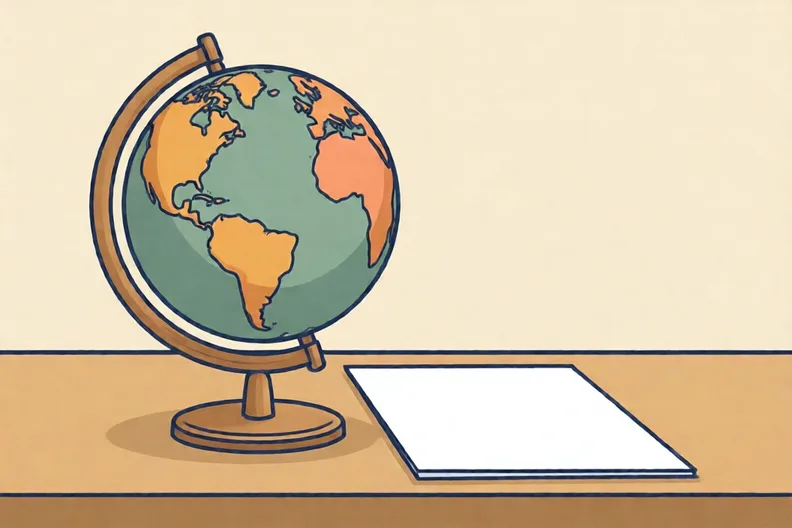
A classroom globe on a wooden stand beside a sheet of paper
  1. 1.

    A far-away ship sails out to the horizon. What would you see happen if Earth is round? Circle your answer.

    hull firstall at once
  2. 2.

    Some objects are round like a ball. Others are flat circles, like a disc. Write each object in the correct column of the table.

    footballcoinglobeplatetennis ball
    Round like a ballFlat with flat faces
  3. 3.

    Join each word to its meaning.

    sphericalglobehorizonevidence
    information that helps decide what is truethe line where the sky meets the land or seaa round model of Earth with countries on itround like a ball
  4. 4.

    Magellan's ship kept sailing west and came back to the port it left. What does this support? Circle your answer.

    the Earth is roundthe Earth is flatthe sea is calm

Say it out loud: Which clue on this page best shows that Earth is round? Say why you chose it.

D Spot the mistake3 min
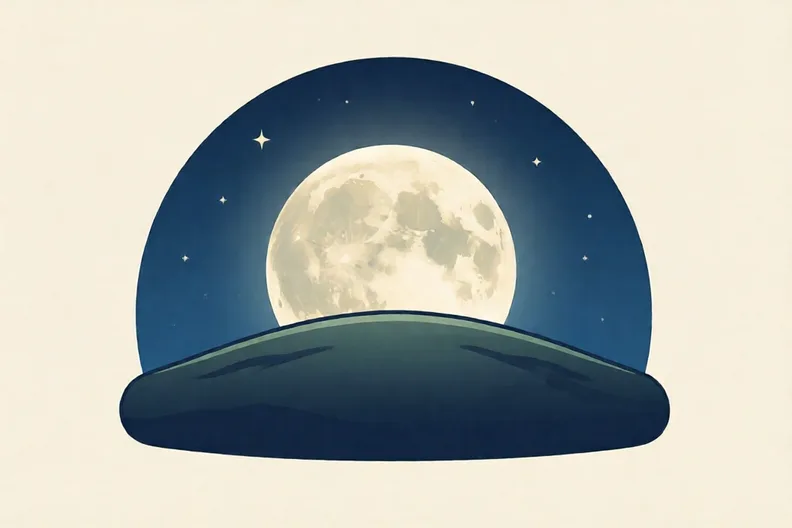
A round full Moon above a dark hill at night
Kit says: “The Moon is a flat disc, because it looks like a flat circle in the sky.”
  1. 1.

    Is Kit right? Circle yes or no. Then tell a grown-up why.

    YesNo

E Think deeper3 min
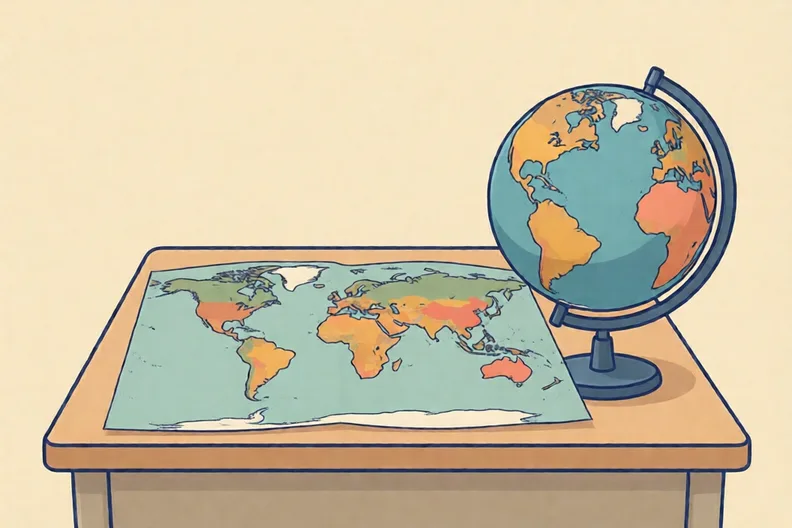
A flat paper map lying beside a round globe
  1. 1.

    Could one ship going out of sight prove that Earth is round? Explain what it shows, and say what stronger evidence you could use. Use the lines.

How did it feel?

I can do it Nearly Not yet
StudyDen · Year 5 · Science · Earth, Sun and MoonAnswers are on the grown-up page

For the grown-up

The Round Earth · 2 minutes to read

Answers, and what a wrong one tells you

A

1. owl your child may have picked the mouse, which is the animal being eaten. Ask which animal is at the end of the arrow.

2. 0 °C your child may have chosen 100 °C, which is where water boils. Point to the freezing end of the scale and read it again.

3. no your child may be thinking of a round shape. Count the faces of the cube and check each one is flat.

B

1. yes your child may think the whole lighthouse shrinks at once. Remind them the boat's hull went first, because the curve of the sea hides the bottom first.

C

1. hull first your child may have pictured a flat table where the whole ship shrinks evenly. Ask which part of the ship goes out of sight first.

2. Round like a ball: football, globe, tennis ball · Flat with flat faces: coin, plate your child may have put the plate with the balls. Ask whether a plate looks round from every side, the way a ball does.

3. spherical → round like a ball; globe → a round model of Earth with countries on it; horizon → the line where the sky meets the land or sea; evidence → information that helps decide what is true your child may have joined globe and horizon. Read each meaning slowly and ask which one describes a round model.

4. the Earth is round your child may have chosen the flat Earth. Ask how a ship could keep sailing the same way and still reach home if Earth were flat.

D

1. No your child may think anything that looks like a circle must be flat. Ask whether a ball is flat just because it looks like a circle from where you stand.

E

1. Look for: A good answer says the hull vanishes first, which fits a curved surface, and that a round trip back to the start gives stronger evidence.

Words to use

Say“Which part of the ship goes out of sight first? What would a flat Earth do instead?”
Instead of“Just tell them the Earth is round and move on.”

After the sheet

Next time you are by the sea on a clear day, watch a big ship far out together, with binoculars if you have them. Say which part goes out of sight first.

Tick what your child got right in StudyDen. Anything missed comes back in a later Look back box, so there's no need to redo the sheet.

The rest of this unit

11 more sheets come with a StudyDen plan, in teaching order:

  1. Round Like a Ball(with a plan)
  2. The Moon's changing light(with a plan)
  3. Comparing sizes in space(with a plan)
  4. The Sun is a star(with a plan)
  5. Why We Have Day and Night(with a plan)
  6. Why the Sun seems to move(with a plan)
  7. Our Solar System(with a plan)
  8. Planets on their journeys(with a plan)
  9. Theories change with evidence(with a plan)
  10. Where Moonlight Comes From(with a plan)
  11. How the Moon moves(with a plan)

Every Year 5 science worksheet

The worksheets plan opens a printable sheet for every lesson in Years 1 to 6, each with its answers on a separate page for you. It costs £6.99 a month or £59 a year for the whole family, with no free trial.

The full StudyDen plan adds the lessons themselves, marked as your child works, with the worksheets included. It is 7 days free, then £29.99 a month.

Both start with a free account; you choose the plan when you sign up.