← Year 5 science worksheets

Year 5 Forces including simple machines worksheet

“Gravity pulls things down” is free to print, with no account. It is the first sheet in the Year 5 science unit “Forces including simple machines”, for children aged 9 to 10, and takes about 22 minutes.

Print it on A4. The child's pages come first; the answers, and what each wrong answer tells you, are on the grown-up page that follows. Weeks 9 to 15 of the year, 13 sheets in the unit.

Free sample · answers on the last page

Gravity pulls things down

Name: ____________ · Date: ____________
Year 5 · Science · about 22 minutes
Answers are on the grown-up page

Today I can explain that unsupported objects fall towards Earth because of gravity.

A Look back3 min

  1. 1.

    Water warms up and turns into vapour. What is this change called? Circle one.

    PuddleVapour risesCloud formsRain falls
    evaporationcondensationmelting
  2. 2.

    Water freezes at 0 °C and boils at 100 °C. At 20 °C, is water a solid, a liquid or a gas? Circle one.

    0°C10°C20°C30°C40°C50°C60°C70°C80°C90°C100°C
    solidliquidgas
  3. 3.

    This food chain has a hidden middle box. Circle the animal that eats grass and is eaten by a fox.

    GrassFox
    rabbitfoxworm

B Watch me, then you4 min

In a made-up test, Ola drops a heavy ball and a light ball from the same height. Both balls are the same shape. Here are the landing times.

Watch me
Made-up drop test: time to land (seconds)01234Heavy ballLight ball

Both balls are the same shape.

Both took 3 seconds to land.

So the heavy ball did not fall faster.

Now you
  1. 1.

    In another made-up test, the heavy ball took 4 seconds. The light ball is the same shape and dropped from the same height. Predict its time in seconds.

    Made-up drop test: time to land (seconds)012345Heavy ballLight ball

C Your turn8 min

Read each question. Circle one answer. Notice what changes from one row to the next.
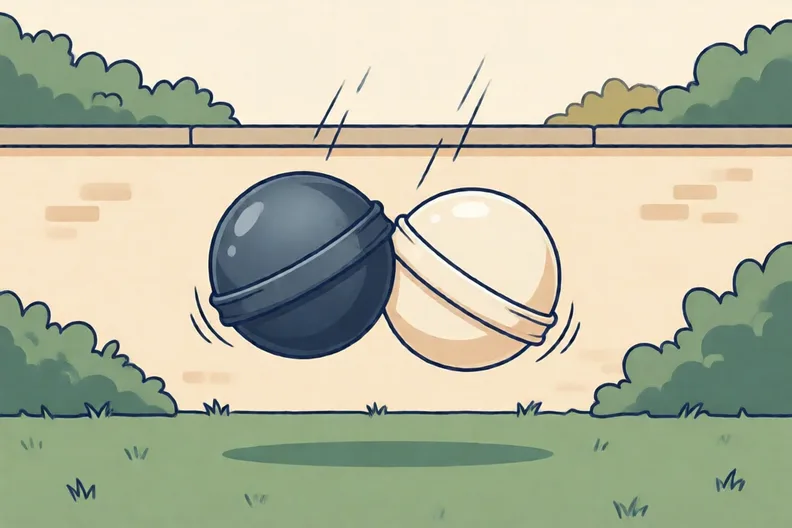
Two same-size balls, one metal and one plastic, falling side by side beside a garden wall
  1. 1.

    Two balls are the same size and shape. One is heavy and one is light. They are dropped together from the same height. Which lands first? Circle one.

    the heavy ballthe light ballboth at the same time
  2. 2.

    Now the heavy ball is much heavier, but it is still the same size and shape. They are dropped together from the same height. Which lands first? Circle one.

    the heavy ballthe light ballboth at the same time
  3. 3.

    A pencil is let go and falls to the floor. Which force pulls it down? Circle one.

    gravityfrictionmagnetism

Say it out loud: What stayed the same in every row, and what changed? Which change made a difference to the answer?

D Spot the mistake3 min

Sana says: “Dropped together from the same height, the heavy ball lands first because it falls faster.”
  1. 1.

    Which ball really lands first if both are the same size and shape and dropped together? Circle one.

    the heavy ballthe light ballneither, they land at the same time

E Think deeper4 min

  1. 1.

    A bowling ball and a tennis ball are dropped from the same height. Explain why they land at almost the same time. Use the word gravity.

How did it feel?

I can do it Nearly Not yet
StudyDen · Year 5 · Science · Forces including simple machinesAnswers are on the grown-up page

For the grown-up

Gravity pulls things down · 2 minutes to read

Answers, and what a wrong one tells you

A

1. evaporation If your child circles condensation, that is vapour turning back into tiny water drops. Ask what the water is doing as it rises.

2. liquid If your child circles solid, they may be thinking of ice. Ask your child where 20 °C sits compared with 0 °C on the thermometer.

3. rabbit If your child circles fox, ask which way the arrows point. The arrow points to the eater, so the fox is at the end.

B

1. 4 If your child writes a bigger number, they may think light things fall more slowly. Ask what Ola's test showed about the two balls.

C

1. both at the same time If your child circles the heavy ball, they are repeating the old idea. Ask what shape both balls are, then what changed between them.

2. both at the same time

3. gravity If your child circles friction, ask whether anything is rubbing against the pencil while it falls through the air.

D

1. neither, they land at the same time If your child circles the heavy ball, they are repeating Sana's idea. Ask your child to drop two same-shaped things and watch closely.

E

1. Look for: Mentions gravity pulling both balls towards Earth, and that heavy and light objects fall at the same rate when air resistance is small, so the difference in mass barely changes the landing time.

Words to use

Say“What is pulling it down? Which shape were both balls, and what did you see happen?”
Instead of“Yes, heavy things always fall faster, that is why the heavy one lands first.”

After the sheet

Fill one plastic bottle with water and leave the other empty. Drop both from the same height onto a cushion, and watch whether they land together.

Tick what your child got right in StudyDen. Anything missed comes back in a later Look back box, so there's no need to redo the sheet.

The rest of this unit

12 more sheets come with a StudyDen plan, in teaching order:

  1. Measuring pushes and pulls(with a plan)
  2. Planning a fair test(with a plan)
  3. Friction: results and conclusions(with a plan)
  4. Planning a fair air test(with a plan)
  5. Parachutes and anomalies(with a plan)
  6. Fair tests in water(with a plan)
  7. Shapes in water(with a plan)
  8. Levers and the pivot(with a plan)
  9. How pulleys help us(with a plan)
  10. How gears change speed(with a plan)
  11. Six machines, no engines(with a plan)
  12. Scientists, engineers and teams(with a plan)

Every Year 5 science worksheet

The worksheets plan opens a printable sheet for every lesson in Years 1 to 6, each with its answers on a separate page for you. It costs £6.99 a month or £59 a year for the whole family, with no free trial.

The full StudyDen plan adds the lessons themselves, marked as your child works, with the worksheets included. It is 7 days free, then £29.99 a month.

Both start with a free account; you choose the plan when you sign up.