← Year 5 science worksheets

Year 5 Reproduction and life cycles: plants worksheet

“Copies from one parent” is free to print, with no account. It is the first sheet in the Year 5 science unit “Reproduction and life cycles: plants”, for children aged 9 to 10, and takes about 20 minutes.

Print it on A4. The child's pages come first; the answers, and what each wrong answer tells you, are on the grown-up page that follows. Weeks 21 to 25 of the year, 9 sheets in the unit.

Free sample · answers on the last page

Copies from one parent

Name: ____________ · Date: ____________
Year 5 · Science · about 20 minutes
Answers are on the grown-up page

Today I can explain how some plants make new plants without seeds.

A Look back3 min

  1. 1.

    This made-up bar chart shows a bean plant's height. How much taller was it on Day 4 than on Day 2? cm

    Made-up bean plant height (cm)012345678910Day 2Day 4Day 6
  2. 2.

    Which animal eats the rabbit? Circle one.

    grassrabbit
    foxgrassworm
  3. 3.

    In a plant's life cycle, which stage comes straight after the seed? Circle one.

    seedflowering plantseed
    young plantflowering plantpollen

B Watch me, then you4 min

Ola plants a potato in a pot. Several small eyes sit on it. Watch what happens to one eye.
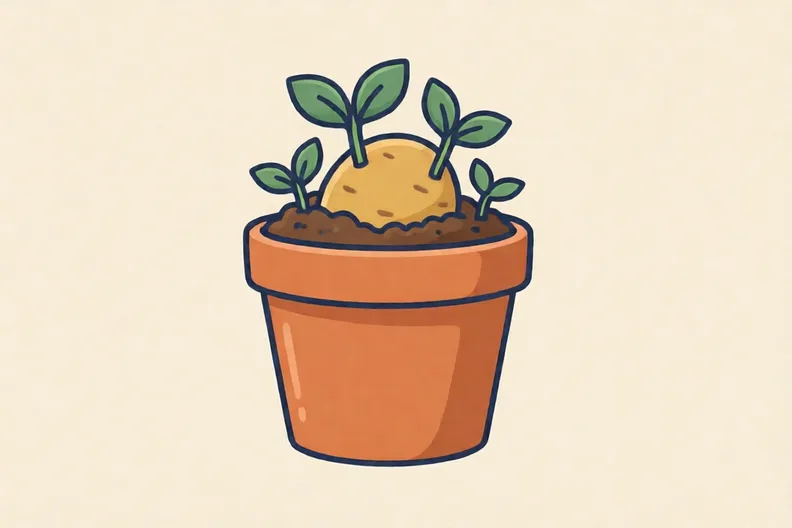
A pot of soil with a potato whose small eyes are sprouting thin green shoots
Watch me
Tuber in soilEye sproutsShootgrows upNew plant

An eye on the tuber sprouts into a shoot.

The shoot grows up into the air.

A new plant grows, with no seed. It is a clone of the parent potato.

Now you
  1. 1.

    In the story, which stage comes straight after “Eye sprouts”? Circle one.

    Tuber in soilEye sproutsNew plant
    Shoot grows upSeed forms in a flowerPollen moves to a flower
  2. 2.

    Is the new plant a clone or a mix of two parents? Circle one.

    clone of the parentmix of two parents

C Your turn6 min

Match, sort and order. Think about plants that grow from one parent with no seed.
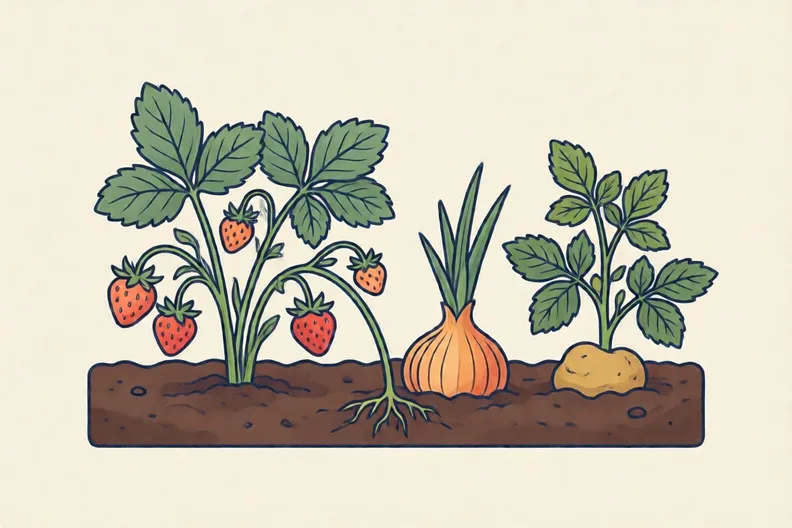
A garden bed with a strawberry plant sending a runner along the soil, beside an onion and a potato plant
  1. 1.

    Join each plant part to the words that describe it.

    runnerbulbtuber
    swollen underground stem or root with eyesunderground food store with layers, like an onionstem that creeps along the ground and roots
  2. 2.

    Sort these into the two columns.

    strawberry runner taking rootseed from a pea podpotato eye sproutingpollen joining a flower's female part
    AsexualSexual
  3. 3.

    Number these steps 1 to 4 to show how a potato plant grows from a tuber.

    1. A new plant grows its own roots and leaves
    2. A tuber is planted in damp soil
    3. Shoots push up into the air
    4. An eye on the tuber sprouts
  4. 4.

    Two strawberry plants grow from runners of one parent plant. What are they like? Circle one.

    exact copies of the parenta mix of two parentsall different from each other

Say it out loud: What do the runner, the bulb and the tuber have in common? Did any of them need a seed?

D Spot the mistake3 min
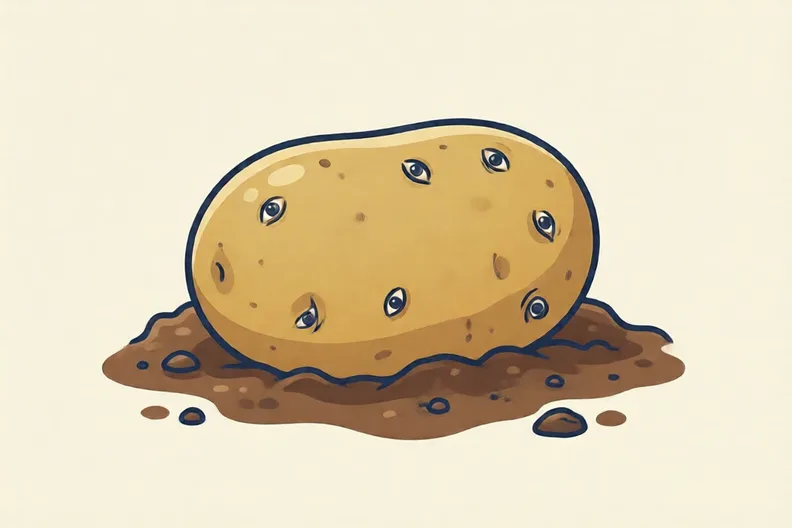
A single potato lying on damp soil with a few eyes, and no seeds nearby
Kit says: “A potato can only make a new plant if someone plants a seed.”
  1. 1.

    Write one sentence to tell Kit what is wrong.

E Think deeper4 min

The bars show a made-up test. One disease was put on each field.
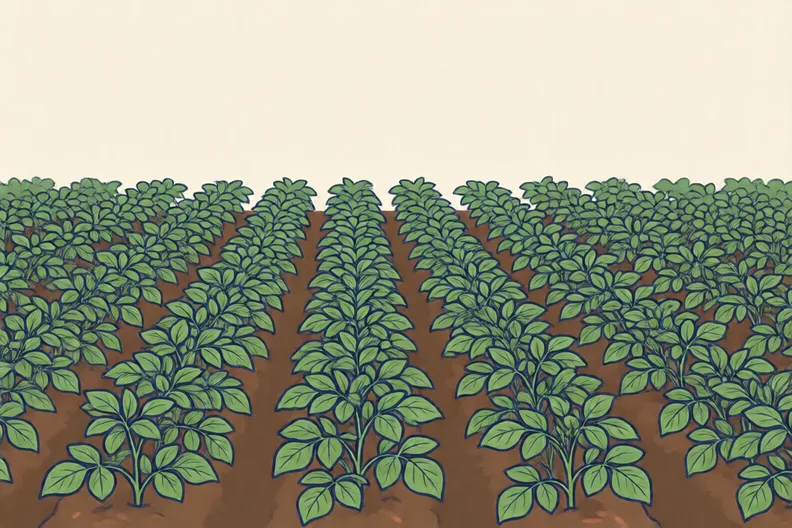
A neat field of identical green potato plants in rows under a sky
  1. 1.

    Explain in two or three sentences why the clone field lost more plants to the made-up disease.

    Made-up disease test: plants harmed012345678910Field of clonesSeed-grown field

How did it feel?

I can do it Nearly Not yet
StudyDen · Year 5 · Science · Reproduction and life cycles: plantsAnswers are on the grown-up page

For the grown-up

Copies from one parent · 2 minutes to read

Answers, and what a wrong one tells you

A

1. 3 If they write 7, they added 5 and 2. Ask them to count up from 2 to 5 on the bars.

2. fox If they circle grass, they have found the food, not the eater. Remind them the arrows point to the animal that eats.

3. young plant If they circle flowering plant, ask what a seed must do first. It must grow into a young plant before it can flower.

B

1. Shoot grows up If they circle the seed or pollen choice, they are thinking of sexual reproduction. Point to the tuber and the eye, which need no flower.

2. clone of the parent If they say mix of two parents, ask how many parents the new plant came from. Only one tuber was planted.

C

1. runner → stem that creeps along the ground and roots; bulb → underground food store with layers, like an onion; tuber → swollen underground stem or root with eyes If they join the tuber to the onion-style layers, they have mixed up tubers and bulbs. Ask which one is a swollen stem and which has layers.

2. Sexual: seed from a pea pod, pollen joining a flower's female part · Asexual: strawberry runner taking root, potato eye sprouting If a runner or eye is in Sexual, ask whether a second parent was needed. If not, it is asexual.

3. 1 A tuber is planted in damp soil · 2 An eye on the tuber sprouts · 3 Shoots push up into the air · 4 A new plant grows its own roots and leaves If the shoots come before the eye, ask what has to happen to the eye first. The shoot comes out of the eye.

4. exact copies of the parent If they circle a mix of two parents, ask how many parents made the runners. One parent means exact copies.

D

1. Look for: Says that a potato eye or tuber can grow a new plant without a seed, so seeds are not needed. If they repeat that seeds are the only way, they hold the common idea that only seeds make new plants. Show a potato with eyes and ask where the shoot starts.

E

1. Look for: Says clones are identical so share the same weakness, so one disease can harm all of them, while seed-grown plants vary.

Words to use

Say“Which of these made a copy of its parent without a seed? How do you know?”
Instead of“Plants only make new plants from seeds, so the others must be wrong.”

After the sheet

Cut a potato so each piece has one eye. Plant the pieces in a pot of damp soil, then watch the shoots for a few weeks and talk about the clones.

Tick what your child got right in StudyDen. Anything missed comes back in a later Look back box, so there's no need to redo the sheet.

The rest of this unit

8 more sheets come with a StudyDen plan, in teaching order:

  1. Plants from cuttings(with a plan)
  2. Parts of a flower(with a plan)
  3. Nature's accidental gardeners(with a plan)
  4. Dangers to Pollinators(with a plan)
  5. Breeding the best plants(with a plan)
  6. Keeping seeds safe(with a plan)
  7. Plant life cycles(with a plan)
  8. Growing plants from cuttings(with a plan)

Every Year 5 science worksheet

The worksheets plan opens a printable sheet for every lesson in Years 1 to 6, each with its answers on a separate page for you. It costs £6.99 a month or £59 a year for the whole family, with no free trial.

The full StudyDen plan adds the lessons themselves, marked as your child works, with the worksheets included. It is 7 days free, then £29.99 a month.

Both start with a free account; you choose the plan when you sign up.