Same name, different properties
Today I can tell materials apart by their properties, not just by their names.
A Look back3 min
- 1.
Mark 20 °C with a dot on the scale. Then write the temperature 5 degrees warmer.
- 2.
Ice melts, and then the water boils. Circle the missing state in the chain.
liquidsolidgas - 3.
Mia touched each object to a magnet, then counted the paperclips it picked up. Which object is not magnetic? How does the chart show this?
B Watch me, then you4 min
Kit tests a steel pin and a piece of aluminium foil with a magnet. Both are metals. Which one sticks?
The steel pin sticks to the magnet.
The foil does not stick to the magnet.
Both are metals, but they behave differently.
- 1.
Ali tests a steel nail and a brass key with a magnet. Does the brass key stick? Circle yes or no.
yesno - 2.
Leo has a clear plastic cup and a black plastic cup. Circle the one that lets light pass through clearly.
clear cupblack cup
C Your turn8 min
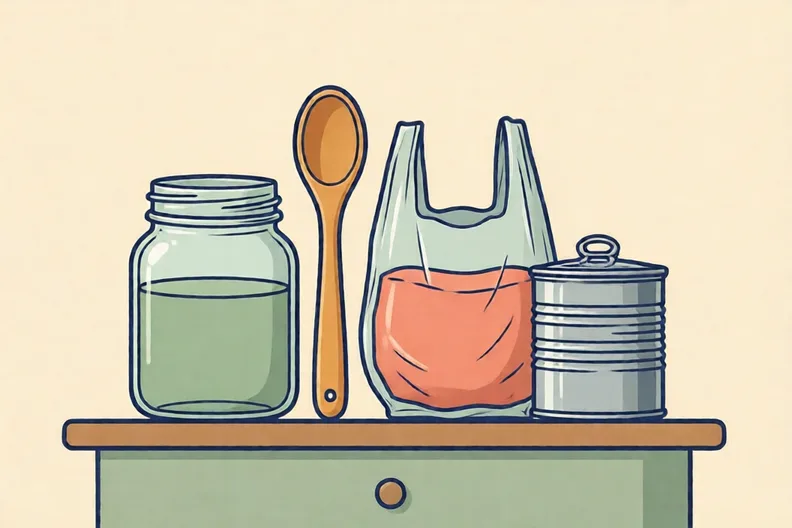
Read each question. Circle or write your answer. Each question changes one thing.
- 1.
Which material lets light pass through clearly? Circle one.
glasswoodsteel - 2.
Which material lets electricity flow through it easily? Circle one.
copper wirerubber bandwooden stick - 3.
Write each material into the right column.
steel paperclipiron nailaluminium foilwooden rulerAttracted to a magnet Not attracted - 4.
A steel paperclip and aluminium foil are both metals. Why does only one of them stick to a magnet? Write two sentences.
Say it out loud: What changed from one question to the next? Did the material change, or the property you were testing?
D Spot the mistake3 min
- 1.
Is Kit right? Explain in one sentence.
E Think deeper4 min
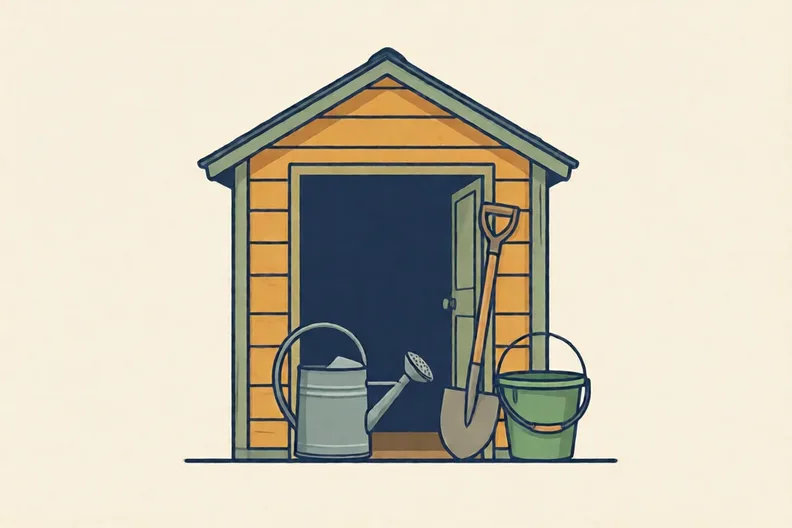
Look at the shed. Each object is made from a different material.
- 1.
Choose one object from the shed and the job it does. Name a property you would test to check it suits that job, and say how you would test it.