← Year 6 art worksheets

Year 6 Meaning and symbolism in art: drawing and painting worksheet

“One symbol, many meanings” is free to print, with no account. It is the first sheet in the Year 6 art unit “Meaning and symbolism in art: drawing and painting”, for children aged 10 to 11, and takes about 23 minutes.

Print it on A4. The child's pages come first; the answers, and what each wrong answer tells you, are on the grown-up page that follows. Weeks 9 to 14 of the year, 6 sheets in the unit.

Free sample · answers on the last page

One symbol, many meanings

Name: ____________ · Date: ____________
Year 6 · Art & design · about 23 minutes
Answers are on the grown-up page

Today I can explain that one symbol can carry different meanings in different places.

A Look back3 min

  1. 1.

    The swatches show two mixed colours. Which card names a primary colour? Circle it.

    greenorange
    greenredorangepurple
  2. 2.

    What do we call a colour made lighter by adding white?

    lightestdarkest
    tintshadeoutlinetexture
  3. 3.

    Red and yellow mixed together make which colour?

    redyellow
    orangepurplegreenbrown

B Watch me, then you4 min

In one town, a red decoration hangs in a shop for a festival. In another town, a red sign stands at a junction. Same colour, different places.

Watch me
red

Red can mean good fortune in China.

On a road sign, red can mean danger or stop.

One colour, two meanings: the place changes what it says.

Now you
  1. 1.

    In a new story, a clock is painted with its hands stopped at midnight. Name one meaning this could have in a painting.

C Your turn7 min

Read each question, then circle what the symbol means in that place.
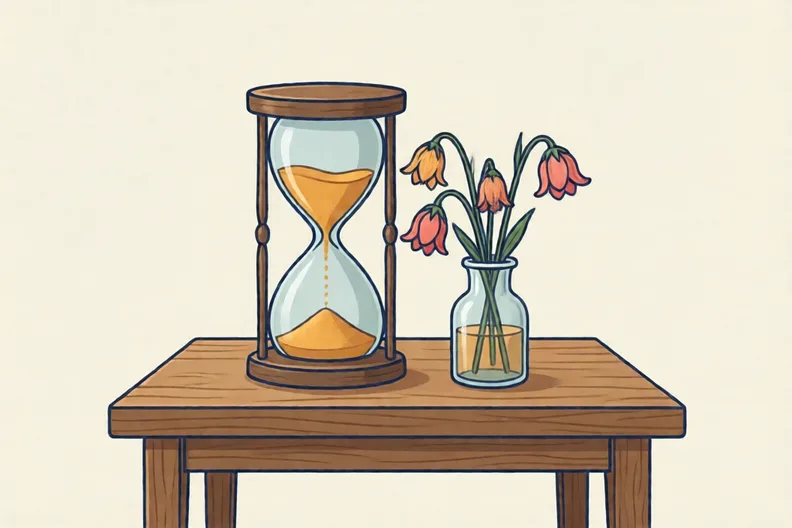
A still life of an hourglass beside a few wilting flowers on a wooden table
  1. 1.

    In China, the colour red often stands for ...

    good fortunea cold daya tall treea quiet night
  2. 2.

    On a road sign, red often means ...

    stop or dangergood fortunea cold daya tall tree
  3. 3.

    A Vanitas painting is a still life from about 400 years ago, made to remind people that life is short. In one, an hourglass often shows ...

    time running outgood fortunea tall treea windy sea
  4. 4.

    Decorated skulls in Mexico's Día de los Muertos celebrate and remember ...

    ancestorsa storma cold daya broken wall

Say it out loud: Questions 1 and 2 both use the colour red. Say it out loud: what changed its meaning?

D Spot the mistake3 min
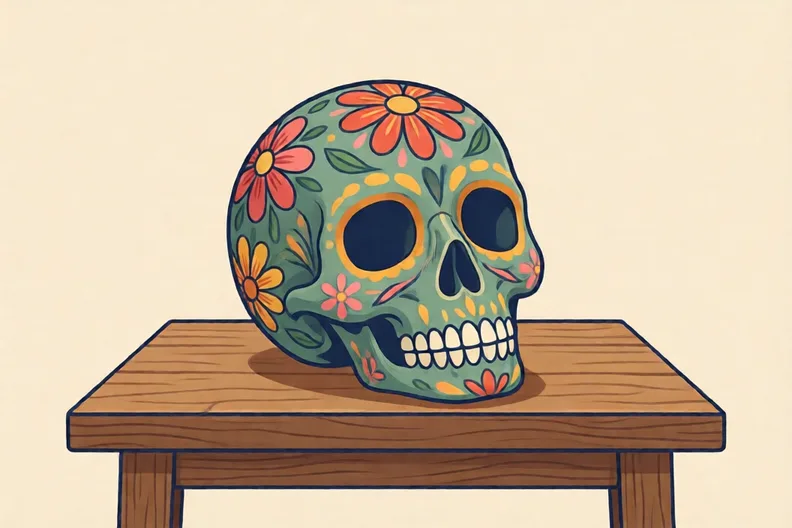
A bright painted clay skull with flower patterns on a wooden table
Kit says: “A skull always means danger or something scary, in every country.”
  1. 1.

    Is Kit right? Explain in one or two sentences.

E Think deeper4 min
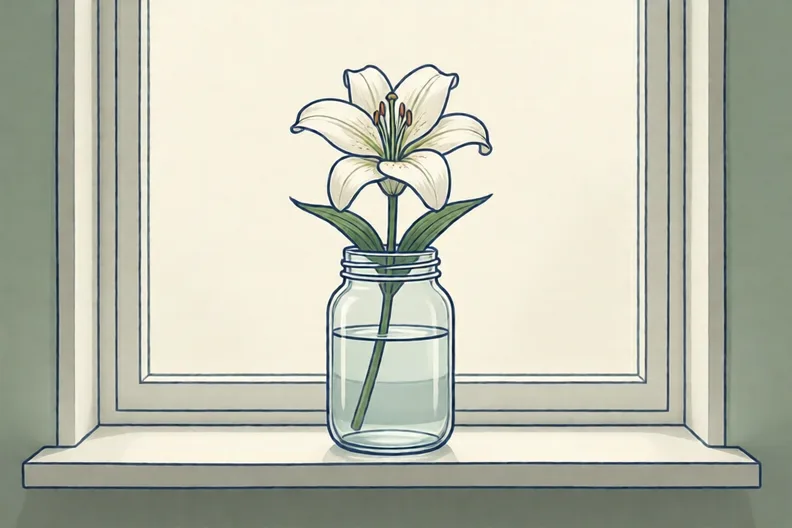
A single white lily in a clear glass jar on a windowsill
  1. 1.

    Look at the lily. Pick a meaning it could carry in one place or time, then a different meaning in another. Write a short story where each meaning fits.

How did it feel?2 min

I can do it Nearly Not yet
StudyDen · Year 6 · Art & design · Meaning and symbolism in art: drawing and paintingAnswers are on the grown-up page

For the grown-up

One symbol, many meanings · 2 minutes to read

Answers, and what a wrong one tells you

A

1. red If they chose green or orange, ask them to name the colours these were mixed from. Primary colours cannot be made by mixing other colours.

2. tint

3. orange If they chose green, they may be thinking of yellow and blue. Point to the red and yellow swatches and ask which colour you get from those two paints.

B

1. Look for: One meaning for a stopped clock, such as time stopping, an ending, or a moment that will not return.

C

1. good fortune If they chose a cold day or a tall tree, they may have picked a random idea. Ask them what red decorations make people feel in a festival.

2. stop or danger If they chose good fortune, they have taken the meaning from the festival. Ask them: is the place the same, or has it changed?

3. time running out If they chose good fortune, ask them what happens to the sand in an hourglass. Then ask what the sand says about time.

4. ancestors If they chose a storm or a broken wall, they may be thinking of a skull as only a sign of danger. Ask: what is the same skull doing in a festival?

D

1. Look for: Says Kit is wrong, and gives a reason such as decorated skulls in Mexico being joyful and remembering ancestors, so one symbol can mean different things. If they say Kit is right, ask: what do the bright skulls in Mexico celebrate? Then ask whether one object can mean more than one thing in different places.

E

1. Look for: Two different meanings for one flower, each linked to a different place, time, or story that fits.

Words to use

Say“Who might see this symbol differently, and why? What would they say it means?”
Instead of“Tell them the right answer is the one in the book.”

After the sheet

Look at a candle, a tea towel or a book cover at home. Ask: what might this mean to a different family or in a different country? Talk it through, no writing needed.

Tick what your child got right in StudyDen. Anything missed comes back in a later Look back box, so there's no need to redo the sheet.

The rest of this unit

5 more sheets come with a StudyDen plan, in teaching order:

  1. Designing a Story Character(with a plan)
  2. Choosing meaningful objects(with a plan)
  3. Planning a Story Artwork(with a plan)
  4. Layers of a scene(with a plan)
  5. Colour and detail in your story(with a plan)

Every Year 6 art worksheet

The worksheets plan opens a printable sheet for every lesson in Years 1 to 6, each with its answers on a separate page for you. It costs £6.99 a month or £59 a year for the whole family, with no free trial.

The full StudyDen plan adds the lessons themselves, marked as your child works, with the worksheets included. It is 7 days free, then £29.99 a month.

Both start with a free account; you choose the plan when you sign up.