← Year 6 art worksheets

Year 6 Street Art: digital and new media worksheet

“Who makes street art?” is free to print, with no account. It is the first sheet in the Year 6 art unit “Street Art: digital and new media”, for children aged 10 to 11, and takes about 20 minutes.

Print it on A4. The child's pages come first; the answers, and what each wrong answer tells you, are on the grown-up page that follows. Weeks 1 to 3 of the year, 6 sheets in the unit.

Free sample · answers on the last page

Who makes street art?

Name: ____________ · Date: ____________
Year 6 · Art & design · about 20 minutes
Answers are on the grown-up page

Today I can tell street art from vandalism and name common street art methods.

A Look back3 min

  1. 1.

    Red and blue mixed together make which colour? Circle the answer.

    redblue
    purpleorangegreenbrown
  2. 2.

    Which pencil line is darker? Circle the answer.

    lightestdarkest
    a hard pressa soft touch
  3. 3.

    Which of these is a secondary colour? Circle the answer.

    blueyellow
    redgreenblueyellow

B Watch me, then you4 min

The wall's owner paid an artist to paint this wall with a bird and a tree. Is it vandalism?
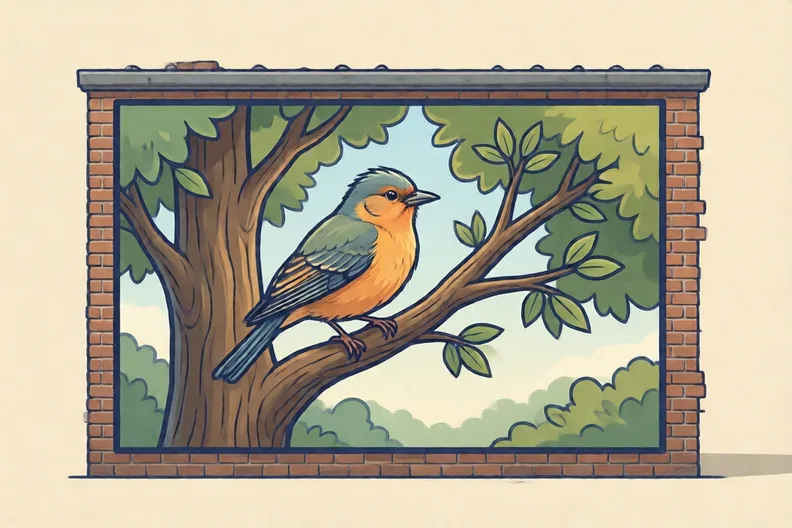
Watch me
A brick wall in a town with a bright painted bird and tree, no people

Did the owner or council say yes?

Yes, so the artist was asked and paid.

This is street art, not vandalism.

Now you
  1. 1.

    A café asks an artist to paint its outside wall. What is this? Circle the answer.

    VandalismCommissioned street art
  2. 2.

    Someone sprays their name on a bus shelter without asking anyone. What is this? Circle the answer.

    Commissioned street artGraffiti without permission

C Your turn6 min

Read each method. Circle the name of the method.
A plain grey wall in a town street, ready for an artwork
  1. 1.

    An artist cuts a shape from card and sprays paint through the hole. Circle the method.

    stencilwheat-pastingyarn bombingreverse graffiti
  2. 2.

    An artist glues printed posters onto a wall. Circle the method.

    stencilwheat-pastingyarn bombingreverse graffiti
  3. 3.

    Knitted wool is wrapped around lampposts and benches in a town. Circle the method.

    stencilwheat-pastingyarn bombingreverse graffiti
  4. 4.

    Dirt is scrubbed off part of a dirty wall, so the clean patches show a design. Circle the method.

    stencilwheat-pastingyarn bombingreverse graffiti

Say it out loud: What changed in each row, and what stayed the same? How did each artist put the design in the street?

D Spot the mistake3 min
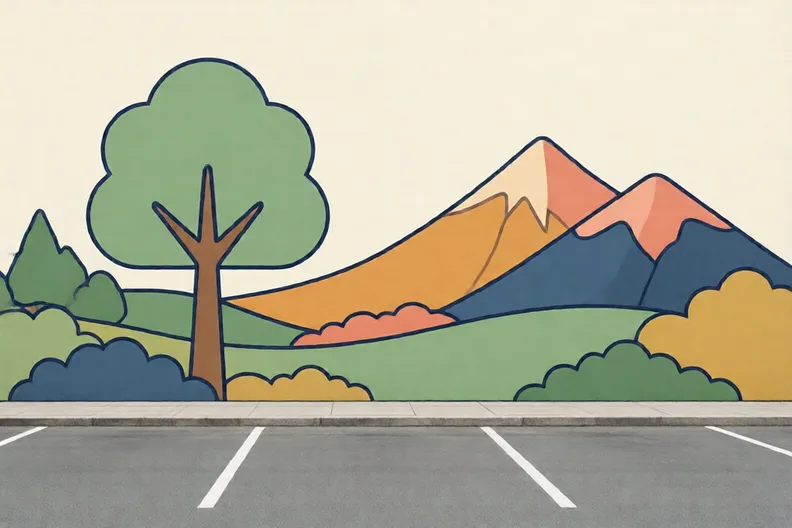
A bright tree mural on a tidy town car park wall
Kit says: “All street art is vandalism, because artists paint walls without asking.”
  1. 1.

    Is Kit right? Write one reason.

E Think deeper4 min
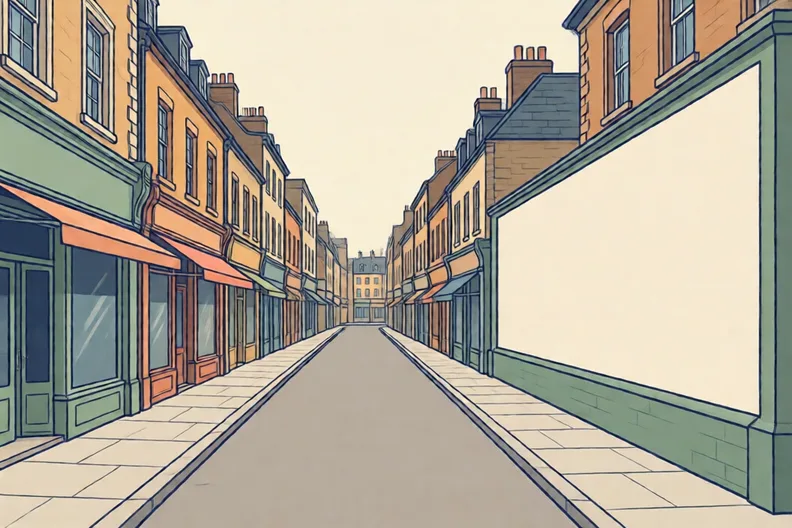
A long blank wall on a busy high street with shop fronts
  1. 1.

    Ola wants people who never visit galleries to see her message about litter. Where should she paint it, and why? Write two sentences.

How did it feel?

I can do it Nearly Not yet
StudyDen · Year 6 · Art & design · Street Art: digital and new mediaAnswers are on the grown-up page

For the grown-up

Who makes street art? · 2 minutes to read

Answers, and what a wrong one tells you

A

1. purple If they circle orange, ask which two colours they mixed. Orange comes from red and yellow. Red and blue make purple.

2. a hard press If they circle a soft touch, ask them to draw two lines with a pencil, one pressed hard and one light. The harder line shows more tone.

3. green If they circle blue or yellow, remind them these are primary colours. Secondary colours are made by mixing two primaries, so green is the answer.

B

1. Commissioned street art If they circle vandalism, ask who asked the artist to paint the wall. Work that is asked for and paid for is street art.

2. Graffiti without permission If they circle commissioned street art, ask whether the owner said yes. Painting someone else's property without permission is vandalism.

C

1. stencil If they circle yarn bombing, ask what the artist cuts and sprays through. A card template with spray paint is a stencil.

2. wheat-pasting

3. yarn bombing If they circle wheat-pasting, check what is being glued. Printed posters are glued on, but wool is wrapped around objects. That is yarn bombing.

4. reverse graffiti If they circle stencil, ask whether paint was added or taken away. Here dirt is removed, so the design is made by cleaning.

D

1. Look for: Says Kit is wrong and gives a reason such as commissioned or permitted murals, so not all street art is vandalism. If they say Kit is right, look at the car park mural together. Ask whether the council could have asked an artist to paint it. Some street art is commissioned.

E

1. Look for: Names a public place many people walk past, with a reason linked to people who do not go to galleries.

Words to use

Say“Who asked for this picture to be painted, and who sees it every day?”
Instead of“Street art is just graffiti, isn't it?”

After the sheet

Walk past a painted wall or look at a photo of one together. Ask: who made it, did they have permission, and who sees it every day?

Tick what your child got right in StudyDen. Anything missed comes back in a later Look back box, so there's no need to redo the sheet.

The rest of this unit

5 more sheets come with a StudyDen plan, in teaching order:

  1. Layers and shadows in graffiti(with a plan)
  2. Layers, Gradients and Shadows(with a plan)
  3. Messages on the Wall(with a plan)
  4. Design a Street Art Mural(with a plan)
  5. Planning Street Art Digitally(with a plan)

Every Year 6 art worksheet

The worksheets plan opens a printable sheet for every lesson in Years 1 to 6, each with its answers on a separate page for you. It costs £6.99 a month or £59 a year for the whole family, with no free trial.

The full StudyDen plan adds the lessons themselves, marked as your child works, with the worksheets included. It is 7 days free, then £29.99 a month.

Both start with a free account; you choose the plan when you sign up.