← Year 6 PE worksheets

Year 6 Dance: the power of unity worksheet

“The domino effect” is free to print, with no account. It is the first sheet in the Year 6 PE unit “Dance: the power of unity”, for children aged 10 to 11, and takes about 20 minutes.

Print it on A4. The child's pages come first; the answers, and what each wrong answer tells you, are on the grown-up page that follows. Weeks 19 to 24 of the year, 12 sheets in the unit.

Free sample · answers on the last page

The domino effect

Name: ____________ · Date: ____________
Year 6 · PE · about 20 minutes
Answers are on the grown-up page

Today I can explain and show how a canon uses staggered timing.

A Look back3 min

  1. 1.

    Before a dance, what should you do first?

    DanceCool down
    Jog gently to warm upSprint at full speedLie down and rest
  2. 2.

    How should you land a small jump safely?

    JumpStand
    Bend your kneesLock your knees straightLand on one foot with a stiff back
  3. 3.

    Where is the safest place to dance at home?

    Warm upDance
    A clear space away from windowsNext to a glass doorOn a slippery rug

B Watch me, then you4 min

Ali, Bea and Cal practise a canon in a clear hallway. Use a soft ball, stay away from windows and keep a grown-up watching.
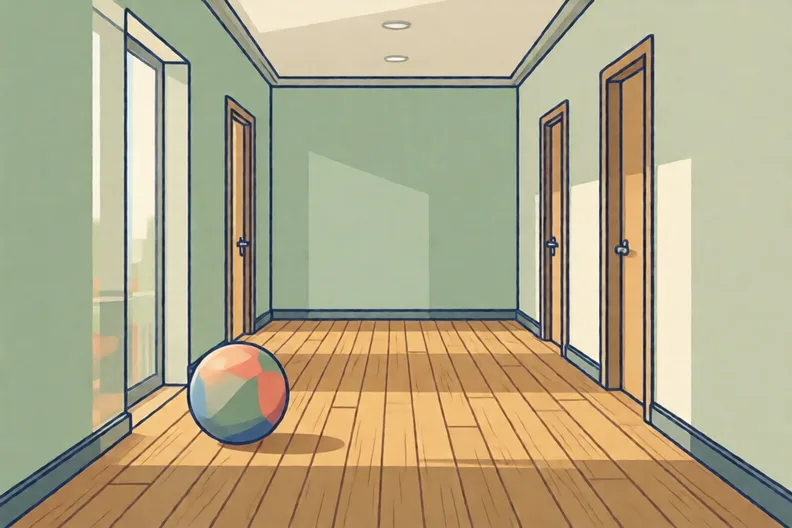
An empty hallway with a soft ball resting by the wall
Watch me
Ali jumpsBea jumpsCal jumps

Ali starts first and freezes after the jump.

Bea sees Ali begin and jumps one beat later.

Cal sees Bea and jumps next. That is a canon.

Now you
  1. 1.

    In a canon, Ali jumps first. Cal waits for Bea, and Bea waits for Ali. Write the name of the dancer who moves second.

    Ali
  2. 2.

    Four dancers do a canon. Ali starts. Dev waits for Bea, Bea waits for Ali, and Cal waits for Dev. Who moves last?

    Ali

C Your turn8 min

Each row changes one thing. Read the picture, then answer.

  1. 1.

    Number these steps in the order a canon should happen.

    StartRespondRespondRespond
    1. Person 3 sees Person 2 and jumps
    2. Person 1 starts a jump and freezes
    3. Person 4 sees Person 3 and jumps
    4. Person 2 sees the jump begin and jumps
  2. 2.

    Match each skill to the coaching point that helps it.

    See itMove on cueHold still
    RespondingSpatial awarenessControl
    Know where you are in the spaceStart when you see the move beginHold your shape until the cue
  3. 3.

    A group all jump at once and the wave is lost. Which coaching point fixes it?

    All jump at onceWave is lost
    Start your jump when you see the one before you moveEverybody jumps on the same countKeep your eyes on the floor
  4. 4.

    Do the wave three times. Mark one tally for each try, then write one reason your best try was smooth.

    Try 1Try 2Try 3

Say it out loud: What changed between the first row and the last row? Which dancer always starts the wave?

D Spot the mistake3 min

Kit says: “In a canon, every dancer must do exactly the same jump at the same time.”
AliBeaCal
  1. 1.

    Why is Kit wrong? Write one sentence.

E Think deeper4 min

  1. 1.

    Make up a three-move canon. Write the three moves in order and say how each dancer knows when to start.

How did it feel?

I can do it Nearly Not yet
StudyDen · Year 6 · PE · Dance: the power of unityAnswers are on the grown-up page

For the grown-up

The domino effect · 2 minutes to read

Answers, and what a wrong one tells you

A

1. Jog gently to warm up

2. Bend your knees Locked knees jolt the body. Ask your child to try a small hop with soft knees and feel the difference.

3. A clear space away from windows

B

1. Look for: Bea, because Bea moves as soon as she sees Ali begin. If your child writes Cal, ask who Cal is waiting for. Bea must move before Cal can start.

2. Look for: Cal, because the order is Ali, Bea, Dev, then Cal. If your child writes Dev, ask who Cal is waiting for. Cal can only move after Dev.

C

1. 1 Person 1 starts a jump and freezes · 2 Person 2 sees the jump begin and jumps · 3 Person 3 sees Person 2 and jumps · 4 Person 4 sees Person 3 and jumps

2. Responding → Start when you see the move begin; Spatial awareness → Know where you are in the space; Control → Hold your shape until the cue If the pairs are mixed up, ask your child what their body does first when a partner moves. That is the responding skill.

3. Start your jump when you see the one before you move Choosing “everybody jumps on the same count” means your child thinks identical timing makes a canon. Ask who went first and who followed.

4. Look for: Three tries marked on the tally, and one reason why the best try was smooth, such as waiting for the partner's move.

D

1. Look for: Mentions staggered timing or starting after the one before, and says the moves do not have to match. If your child agrees with Kit, they think the moves must match. Ask who starts first, then try two different moves with a short gap.

E

1. Look for: Three moves in a set order, with each dancer starting when they see the move before begin.

Words to use

Say“Who started first? Who responded to them? Show me the ripple.”
Instead of“Tell them all to do the same move at the same time.”

After the sheet

Clear a hallway with a soft ball nearby and stay away from windows. Stand in a line of three. One person jumps, and the next follows one beat later. Swap who starts.

Tick what your child got right in StudyDen. Anything missed comes back in a later Look back box, so there's no need to redo the sheet.

The rest of this unit

11 more sheets come with a StudyDen plan, in teaching order:

  1. Newton's Cradle chain(with a plan)
  2. Moving as one(with a plan)
  3. Up, down and across(with a plan)
  4. Distance tells a story(with a plan)
  5. Shapes on the floor(with a plan)
  6. Gentle force, big control(with a plan)
  7. Speeds in between(with a plan)
  8. Speed and force together(with a plan)
  9. Sharing the balance(with a plan)
  10. Supports that stay safe(with a plan)
  11. Holding weight, telling stories(with a plan)

Every Year 6 PE worksheet

The worksheets plan opens a printable sheet for every lesson in Years 1 to 6, each with its answers on a separate page for you. It costs £6.99 a month or £59 a year for the whole family, with no free trial.

The full StudyDen plan adds the lessons themselves, marked as your child works, with the worksheets included. It is 7 days free, then £29.99 a month.

Both start with a free account; you choose the plan when you sign up.