← Year 1 English worksheets

Year 1 Speaking loud and proud worksheet

“Standing up to speak” is free to print, with no account. It is the first sheet in the Year 1 English unit “Speaking loud and proud”, for children aged 5 to 6, and takes about 20 minutes.

Print it on A4. The child's pages come first; the answers, and what each wrong answer tells you, are on the grown-up page that follows. Week 36 of the year, 4 sheets in the unit.

Free sample · answers on the last page

Standing up to speak

Name: ____________ · Date: ____________
Year 1 · English · about 20 minutes
Answers are on the grown-up page

Today I can stand up and speak in full sentences to an audience.

A Look back3 min

  1. 1.

    Which word should have a capital letter? Circle it.

    samranhome.
    samranhome
  2. 2.

    Which word does not rhyme with cat? Circle it.

    catmatdog
    matdog
  3. 3.

    Which mark ends this sentence? Circle it.

    Canyoucomehome
    ?.!

B Watch me, then you4 min

Ali has a shell for show and tell. He stands up and says ‘Shell.’ His friends are not sure what he means. Then he says a full sentence.
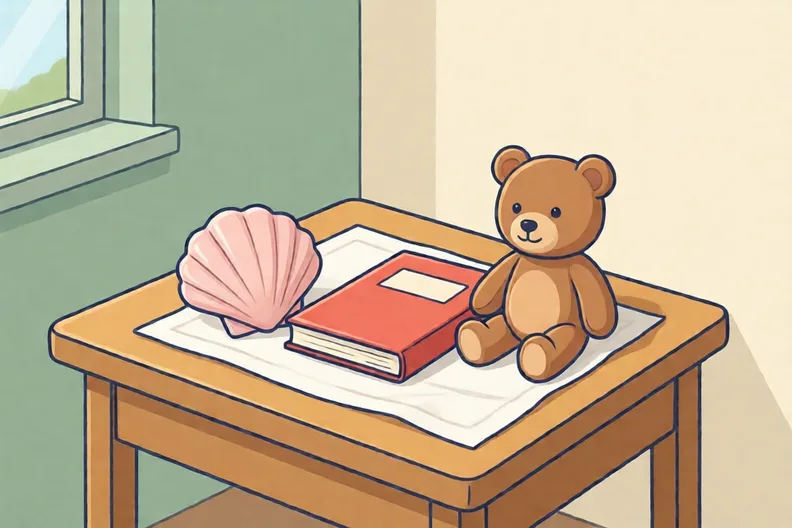
A show and tell table with a shell, a book and a toy bear in a sunny classroom corner
Watch me
Thisismyshell.

‘Shell.’ is too few words to help the listeners.

‘This is my shell.’ Now everyone knows what it is.

Full sentences help the audience understand you.

Now you
  1. 1.

    Turn ‘Red ball.’ into a full sentence. Write it here.

    Redball

C Your turn8 min

Read each one. Then circle the answer.

  1. 1.

    Which word starts this sentence? Circle it.

    thisismyshell.
    thisThis
  2. 2.

    Which mark ends this question? Circle it.

    Canyouseeit
    ?.
  3. 3.

    Which one tells your grown-up about your toy? Circle it.

    softbear
    Bear.It is my soft bear.
  4. 4.

    Which sentence starts with a capital letter? Circle it.

    bunnycalledHop Hop
    my bunny is called Hop Hop.My bunny is called Hop Hop.

Say it out loud: Stand up and say each answer out loud in a big, clear voice.

D Spot the mistake3 min
A big soft teddy bear sitting on a show and tell table
Kit holds up a teddy at show and tell and just says: “Teddy.”
  1. 1.

    What could Kit say instead? Write a full sentence about the teddy.

E Think deeper4 min

Think about the listeners at show and tell.
Rows of small chairs in a circle on a carpet, with a teddy sitting on one chair
  1. 1.

    Why is it a good idea to stand up when you share? Tell your grown-up one reason. Write it here.

How did it feel?

I can do it Nearly Not yet
StudyDen · Year 1 · English · Speaking loud and proudAnswers are on the grown-up page

For the grown-up

Standing up to speak · 2 minutes to read

Answers, and what a wrong one tells you

A

1. sam

2. dog

3. ? your child chose a full stop. A question ends with a question mark, so look for the question.

B

1. Look for: A full sentence about a red ball that starts with a capital letter and ends with a full stop.

C

1. This your child picked the small letter. The first word of a sentence needs a capital letter.

2. ? your child chose a full stop. A question needs a question mark at the end.

3. It is my soft bear. your child chose the single word. A full sentence tells the listeners more.

4. My bunny is called Hop Hop. your child picked the sentence with the small letter at the start. Check the first letter of the sentence.

D

1. Look for: A full sentence about the teddy, such as This is my big teddy, with a capital letter and a full stop. If your child wrote one word, ask: would the listeners know what Kit means? Add whose it is or what it is like.

E

1. Look for: A reason that says standing up helps the listeners see or hear the speaker, or helps the speaker feel brave or confident.

Words to use

Say“Tell me one thing you did really well when you spoke. Which sentence did you say loudest?”
Instead of“Speak up, nobody heard that! Say it again properly.”

After the sheet

Stand by the kitchen table with a spoon or a toy. Say two full sentences about it, once quietly and once in a big clear voice, and ask the family which one they heard best.

Tick what your child got right in StudyDen. Anything missed comes back in a later Look back box, so there's no need to redo the sheet.

The rest of this unit

3 more sheets come with a StudyDen plan, in teaching order:

  1. Our Poem Performance(with a plan)
  2. Sharing what we like(with a plan)
  3. Sharing our opinions(with a plan)

Every Year 1 English worksheet

The worksheets plan opens a printable sheet for every lesson in Years 1 to 6, each with its answers on a separate page for you. It costs £6.99 a month or £59 a year for the whole family, with no free trial.

The full StudyDen plan adds the lessons themselves, marked as your child works, with the worksheets included. It is 7 days free, then £29.99 a month.

Both start with a free account; you choose the plan when you sign up.