← Year 5 English worksheets

Year 5 Key grammar terminology, including determiners and fronted adverbials worksheet

“Little words, big jobs” is free to print, with no account. It is the first sheet in the Year 5 English unit “Key grammar terminology, including determiners and fronted adverbials”, for children aged 9 to 10, and takes about 20 minutes.

Print it on A4. The child's pages come first; the answers, and what each wrong answer tells you, are on the grown-up page that follows. Week 2 of the year, 3 sheets in the unit.

Free sample · answers on the last page

Little words, big jobs

Name: ____________ · Date: ____________
Year 5 · English · about 20 minutes
Answers are on the grown-up page

Today I can find the determiner in a phrase, even when adjectives sit between it and the noun.

A Look back2 min

  1. 1.

    In 'Birds sing loudly', circle the noun.

    singloudly
    birdssingloudly
  2. 2.

    In 'Cold winds blow', circle the adjective.

    windsblow
    coldwindsblow
  3. 3.

    In 'Snow falls softly', circle the verb.

    Snowsoftly
    snowfallssoftly

B Watch me, then you4 min

Ola writes: 'A red kite flew over the hill.' Find the determiner that goes with 'kite'.

A grassy hill on a breezy day with one kite high in the sky
Watch me
aredkite

Find the noun first: kite.

Look left. 'Red' is an adjective, so skip it.

'A' is the determiner. It is an article, so it means any kite.

Now you
  1. 1.

    Circle the determiner in 'my shiny bike'.

    shinybike
    myshinybike

C Your turn6 min

Circle the determiner in each phrase. Watch what changes from row to row.

  1. 1.

    In 'the garden', circle the determiner.

    garden
    thegarden
  2. 2.

    In 'my garden', circle the determiner.

    garden
    mygarden
  3. 3.

    In 'the old garden', circle the determiner.

    oldgarden
    theoldgarden
  4. 4.

    In 'our tall green garden', circle the determiner.

    tallgreengarden
    ourtallgreengarden

Say it out loud: What changed from row to row? Did the determiner ever move away from the front of the phrase?

D Spot the mistake3 min
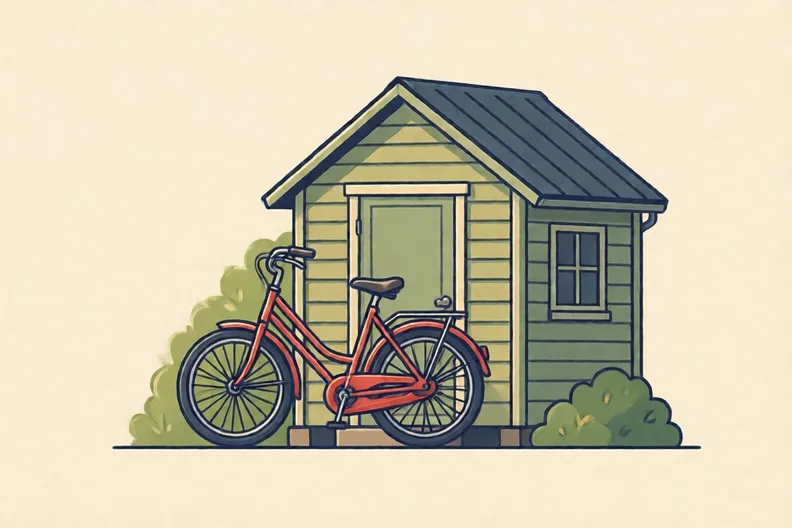
A red bike leaning against a garden shed in the sunshine
Ali says: “In ‘the shiny bike’, the determiner is ‘shiny’.”
  1. 1.

    Ali is wrong. Circle the word that really is the determiner.

    shinybike
    theshinybike

E Think deeper4 min

  1. 1.

    Write two sentences about a bus stop. In one, use 'a' before a noun. In the other, use 'the'. Underline each determiner. Then tell your grown-up which sentence points to one special bus stop.

    abus stop

How did it feel?

I can do it Nearly Not yet
StudyDen · Year 5 · English · Key grammar terminology, including determiners and fronted adverbialsAnswers are on the grown-up page

For the grown-up

Little words, big jobs · 2 minutes to read

Answers, and what a wrong one tells you

A

1. birds

2. cold

3. falls

B

1. my If your child circles 'shiny', they have found the adjective. Find the noun 'bike', then look left past 'shiny' to 'my'.

C

1. the If your child circles 'garden', they have circled the noun. The determiner comes before the noun.

2. my

3. the If your child circles 'old', they have found the adjective. Look left of 'old' for the determiner.

4. our If your child circles 'green', they stopped at the nearest adjective. Keep looking left until you reach 'our'.

D

1. the Ali picked 'shiny' because it sits next to the noun. Find the noun first ('bike'), then look left past 'shiny' to 'the'.

E

1. Look for: Two sentences about a bus stop, one with 'a' and one with 'the', determiners underlined, and a reason that 'the' means one particular bus stop.

Words to use

Say“Find the noun first, then look left past any adjectives. Which word sits right at the front?”
Instead of“Tell them the answer straight away.”

After the sheet

Walk round the kitchen. Point at a cup, a tin and a spoon, saying 'a', then 'the', then 'my' before each. Ask what changes each time.

Tick what your child got right in StudyDen. Anything missed comes back in a later Look back box, so there's no need to redo the sheet.

The rest of this unit

2 more sheets come with a StudyDen plan, in teaching order:

  1. Determiners that show how much or which(with a plan)
  2. Starting sentences well(with a plan)

Every Year 5 English worksheet

The worksheets plan opens a printable sheet for every lesson in Years 1 to 6, each with its answers on a separate page for you. It costs £6.99 a month or £59 a year for the whole family, with no free trial.

The full StudyDen plan adds the lessons themselves, marked as your child works, with the worksheets included. It is 7 days free, then £29.99 a month.

Both start with a free account; you choose the plan when you sign up.