← Year 6 science worksheets

Year 6 Climate change and sustainability (non-statutory) worksheet

“Ancient energy under our feet” is free to print, with no account. It is the first sheet in the Year 6 science unit “Climate change and sustainability (non-statutory)”, for children aged 10 to 11, and takes about 20 minutes.

Print it on A4. The child's pages come first; the answers, and what each wrong answer tells you, are on the grown-up page that follows. Weeks 33 to 36 of the year, 8 sheets in the unit.

Free sample · answers on the last page

Ancient energy under our feet

Name: ____________ · Date: ____________
Year 6 · Science · about 20 minutes
Answers are on the grown-up page

Today I can explain where fossil fuels come from and why they are non-renewable.

A Look back3 min

  1. 1.

    Which animal is missing from the middle of this food chain? Circle it.

    grassfox
    rabbitfoxgrasssun
  2. 2.

    Water turns to ice at 0°C. Circle a temperature where water is a solid.

    -10°C0°C10°C20°C30°C
    -5°C10°C25°C
  3. 3.

    How many pupils chose the owl or the fox?

    Pupils' favourite animals (made up)012345678owlfrogfox

B Watch me, then you4 min

In a made-up village, each home burns one main fuel. How many homes use a fossil fuel?

Watch me
Homes using each fuel (made up)012345678910coalwoodgas

Coal and gas formed from living things buried millions of years ago, so they are fossil fuels.

Wood comes from trees that grew recently, so it is not a fossil fuel.

3 + 4 = 7, so 7 homes use a fossil fuel.

Now you
  1. 1.

    In this made-up village, how many homes use a fossil fuel?

    Homes using each fuel (made up)012345678910coaloilwood

C Your turn6 min

Fill in the missing link in each energy story. Each time, one thing changes.

  1. 1.

    Which link is missing from this energy story? Circle it.

    sunlightfossil fuel
    plantsrockswind
  2. 2.

    Which link is missing from this energy story? Circle it.

    sunlighttiny sea animalsfossil fuel
    plantsraincoal
  3. 3.

    Which link is missing from this energy story? Circle it.

    sunlightplantsfossil fuel
    tiny sea animalsrockswind
  4. 4.

    Which link is missing from the start of this energy story? Circle it.

    plantstiny sea animalsfossil fuel
    sunlightrockswind

Say it out loud: What changed between row 1 and row 4? Where was the blank each time, and why does the story start with sunlight?

D Spot the mistake3 min
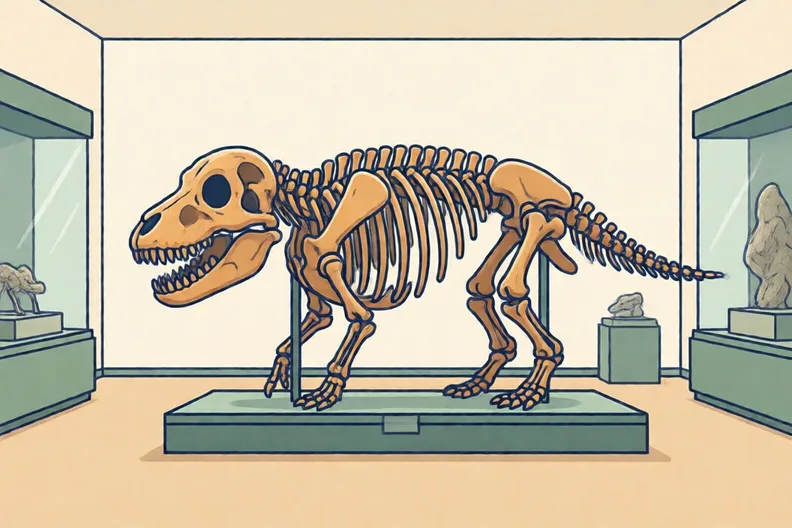
A large dinosaur skeleton standing in a museum hall
Sam says: “Fossil fuels are made from fossils, so digging up old bones could make petrol.”
  1. 1.

    Is Sam right? Circle one.

    plants and sea lifeburied for agesfossil fuel
    Yes, Sam is right.No. Made from remains of living things, changed by heat.

E Think deeper4 min

  1. 1.

    Look at the timeline. Explain in your own words why we cannot make more coal in a human lifetime.

    360000000 BC300000000 BC240000000 BC180000000 BC120000000 BC60000000 BCAD 1coal formingtoday

How did it feel?

I can do it Nearly Not yet
StudyDen · Year 6 · Science · Climate change and sustainability (non-statutory)Answers are on the grown-up page

For the grown-up

Ancient energy under our feet · 2 minutes to read

Answers, and what a wrong one tells you

A

1. rabbit

2. -5°C If they circle a warm temperature, ask: is the water a liquid or ice at that temperature? Solid water is ice, and it forms when it is cold enough.

3. 6 They have probably added all three bars, which gives 13. Ask them to point to only the owl bar and the fox bar before they add.

B

1. 13 If they write 19, they have counted wood too. Wood comes from trees that grew recently, so it is not a fossil fuel.

C

1. plants

2. plants

3. tiny sea animals

4. sunlight

D

1. No. Made from remains of living things, changed by heat. Sam has mixed up a fossil with a fossil fuel. A fossil is a trace of a living thing in rock. A fossil fuel is the remains of living things changed by heat and pressure over millions of years. Ask: could you burn a bone?

E

1. Look for: Mentions that coal took millions of years to form, and that a human life is far too short to make more.

Words to use

Say“Which link is missing, and what does the arrow mean? Where does the energy start?”
Instead of“Just tell them the answer, or say that fossil fuels are old fossils.”

After the sheet

Make a chain at home with three cards: sunlight, plants, coal. Draw arrows to show where the energy goes, then cover one card and ask which link is missing.

Tick what your child got right in StudyDen. Anything missed comes back in a later Look back box, so there's no need to redo the sheet.

The rest of this unit

7 more sheets come with a StudyDen plan, in teaching order:

  1. Air that looks clean(with a plan)
  2. Where Carbon Is Found(with a plan)
  3. Hidden Gases, Big Footprints(with a plan)
  4. Trapping carbon underground(with a plan)
  5. Power from the Sun(with a plan)
  6. Power from moving air(with a plan)
  7. Water that does the work(with a plan)

Every Year 6 science worksheet

The worksheets plan opens a printable sheet for every lesson in Years 1 to 6, each with its answers on a separate page for you. It costs £6.99 a month or £59 a year for the whole family, with no free trial.

The full StudyDen plan adds the lessons themselves, marked as your child works, with the worksheets included. It is 7 days free, then £29.99 a month.

Both start with a free account; you choose the plan when you sign up.