← Year 6 science worksheets

Year 6 Evolution and inheritance worksheet

“Where fossils hide” is free to print, with no account. It is the first sheet in the Year 6 science unit “Evolution and inheritance”, for children aged 10 to 11, and takes about 22 minutes.

Print it on A4. The child's pages come first; the answers, and what each wrong answer tells you, are on the grown-up page that follows. Weeks 19 to 25 of the year, 14 sheets in the unit.

Free sample · answers on the last page

Where fossils hide

Name: ____________ · Date: ____________
Year 6 · Science · about 22 minutes
Answers are on the grown-up page

Today I can say where fossils are most likely to be found, and why.

A Look back3 min

  1. 1.

    In this food chain, the rabbit eats the grass. Circle the animal that eats the rabbit.

    grassrabbit
    foxgrassrabbit
  2. 2.

    The frog's life cycle goes round in a circle. Which stage comes after frogspawn?

    frogspawnfrogletadult frog
  3. 3.

    Water vapour cools and turns back into tiny drops of liquid. What is this step of the water cycle called?

    evaporationprecipitationcollection

B Watch me, then you4 min

Ola searches a beach and a hill for fossils. She uses a tally to record where each fossil came from.
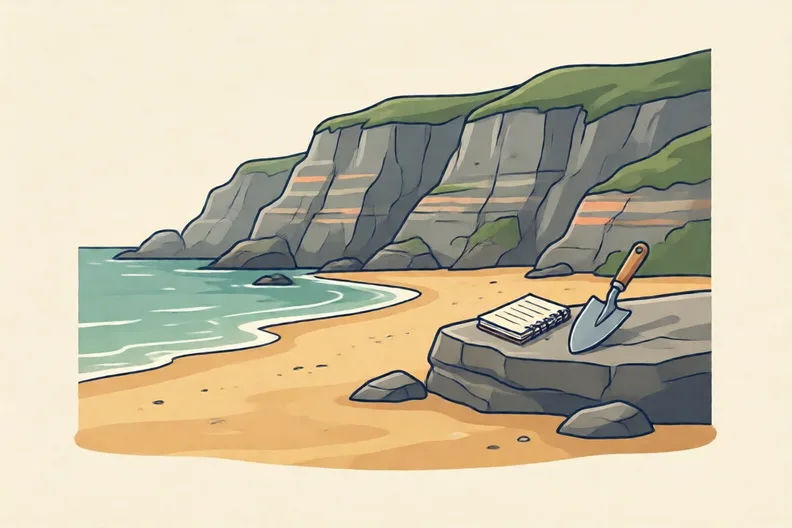
A sandy beach with a grey cliff behind it and a notebook on a rock ledge
Watch me
sedimentaryigneousmetamorphic

Ola makes one mark for each fossil she finds.

Sedimentary rock has 6 marks. Igneous and metamorphic rock have none.

Sedimentary rock forms from layers of sand and mud, which can bury remains and keep them.

Now you
  1. 1.

    Ola's tally shows where her fossils came from. Which kind of rock is the best place to hunt for fossils? Circle one.

    sedimentaryigneousmetamorphic
    sedimentaryigneousmetamorphic

C Your turn7 min

Read the chart. Each bar shows the fossil finds at one place on the coast. Then sort the places.

Fossil finds at four places012345678910cliffsquarryrivervolcano
  1. 1.

    Which place has rock made from hot melted rock, so any remains there would be destroyed? Circle one.

    cliffsquarryrivervolcano
  2. 2.

    Use the chart. Which place is the best for fossil hunting? Circle one.

    cliffsquarryrivervolcano
  3. 3.

    Number these places from most finds (1) to fewest finds (4).

    1. river
    2. volcano
    3. cliffs
    4. quarry
  4. 4.

    Sort these places. Write each one in the right column.

    sandstone clifflava fieldlimestone quarrymarble wallriver mud bankgranite hill
    Good place to huntPoor place to hunt

Say it out loud: Look at the tallest bar and the shortest bar. What does the height of each bar tell you?

D Spot the mistake3 min
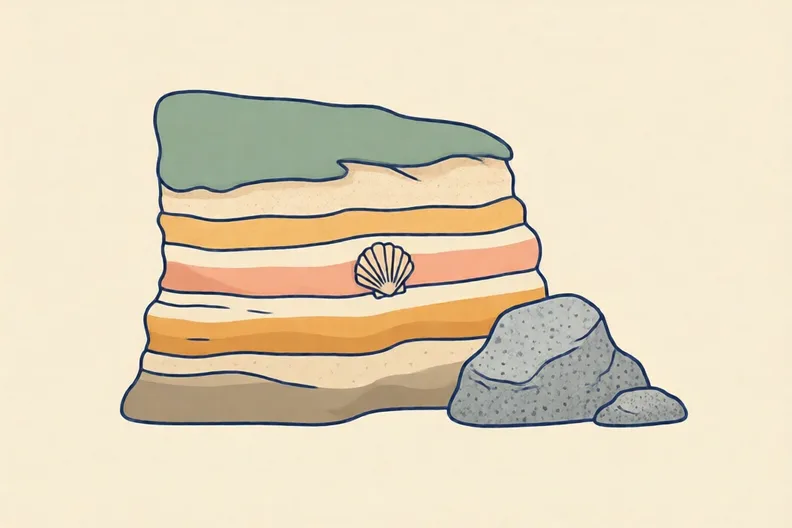
A coastal cliff with stripes of pale sand-coloured layers and a small shell pressed into one layer
Lou says: “Fossils are in every type of rock, so I can dig for them anywhere.”
  1. 1.

    Where should Lou dig? Circle one.

    granite hillsandstone cliffmarble wallbasalt rock

E Think deeper4 min
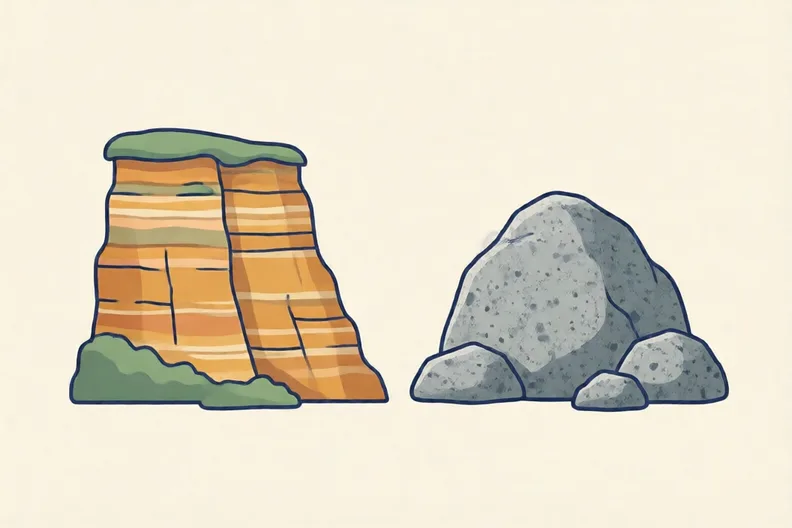
A sandstone cliff with horizontal layers beside a granite hill with speckled rock
  1. 1.

    You can search the sandstone cliff or the granite hill for fossils. Which would you choose, and why? Give two reasons.

How did it feel?

I can do it Nearly Not yet
StudyDen · Year 6 · Science · Evolution and inheritanceAnswers are on the grown-up page

For the grown-up

Where fossils hide · 2 minutes to read

Answers, and what a wrong one tells you

A

1. fox If your child circled the rabbit, they have read the arrow the wrong way. Arrows point from the food to the eater, so ask which animal the rabbit is food for.

2. Look for: tadpole, the stage that hatches from frogspawn and later grows legs If your child wrote frogspawn, they have named the stage the cycle starts from. Ask what hatches out of the eggs.

3. Look for: condensation, where water vapour cools and turns into liquid droplets

B

1. sedimentary If your child circled igneous or metamorphic, ask which row has the most marks. Then ask which rock forms in layers of sand and mud.

C

1. volcano

2. cliffs

3. 1 cliffs · 2 quarry · 3 river · 4 volcano

4. Good place to hunt: sandstone cliff, limestone quarry, river mud bank · Poor place to hunt: lava field, marble wall, granite hill

D

1. sandstone cliff If your child circled granite or basalt, they think any rock will do. Ask which rock forms from layers of sand and mud that settle in water.

E

1. Look for: Chooses the sandstone cliff and gives two sensible reasons, such as sandstone being sedimentary rock whose layers bury and keep remains, granite forming from hot melted rock that destroys remains, or waves wearing the cliff away to show fossils.

Words to use

Say“Which rock do you think the fossil would be in? What makes you think so?”
Instead of“Tell them the answer straight away, or say any rock can have fossils.”

After the sheet

Look at a piece of sandstone or limestone from the garden or a shop. Feel the grains or layers, then ask how this rock could have formed from sand or shells settling in water.

Tick what your child got right in StudyDen. Anything missed comes back in a later Look back box, so there's no need to redo the sheet.

The rest of this unit

13 more sheets come with a StudyDen plan, in teaching order:

  1. What Fossils Tell Us(with a plan)
  2. Reading the rock layers(with a plan)
  3. Skulls Tell a Story(with a plan)
  4. Similar but not identical(with a plan)
  5. Family Trees and Features(with a plan)
  6. Inherited or environmental?(with a plan)
  7. Animal adaptations at work(with a plan)
  8. Darwin's Finch Beaks(with a plan)
  9. How plants survive(with a plan)
  10. Leaves That Solve Problems(with a plan)
  11. Fittest means best suited(with a plan)
  12. Evidence for evolution(with a plan)
  13. Sharing science clearly(with a plan)

Every Year 6 science worksheet

The worksheets plan opens a printable sheet for every lesson in Years 1 to 6, each with its answers on a separate page for you. It costs £6.99 a month or £59 a year for the whole family, with no free trial.

The full StudyDen plan adds the lessons themselves, marked as your child works, with the worksheets included. It is 7 days free, then £29.99 a month.

Both start with a free account; you choose the plan when you sign up.