Rock salt or table salt?
Today I can compare rock salt and table salt by looking closely at their crystals.
A Look back3 min
- 1.
Sand and salt were stirred into water, then poured through filter paper. Circle the word for what stays on the paper.
sandsaltwater - 2.
Water in a puddle warms up and turns into vapour. Circle the word for this change.
evaporationcondensationmelting - 3.
In this made-up test, 8 spoons of sugar dissolved in water and no sand did. Circle the material that dissolves.
sugarsand
B Watch me, then you4 min
Kit looks at 10 crystals of table salt and 10 crystals of rock salt with a hand lens. He counts how many are neat cubes.
Table salt: 9 of the 10 crystals are cubes.
Rock salt: 2 of the 10 crystals are cubes.
Most table salt crystals are neat cubes, so the two salts look different.
- 1.
In Mia's test, table salt had 7 cube crystals and rock salt had 3, out of 10 each. How many more table salt crystals were cubes?
C Your turn8 min
Each chart shows the cube crystals and the total. Work out how many were not cubes. Each row changes one thing from the row above.
- 1.
Table salt: 9 of the 10 crystals are cubes. How many are not cubes?
- 2.
Table salt: 18 of the 20 crystals are cubes. How many are not cubes?
- 3.
Rock salt: 2 of the 10 crystals are cubes. How many are not cubes?
- 4.
Rock salt: 2 of the 20 crystals are cubes. How many are not cubes?
Say it out loud: What did you take away from, every time? Why did you choose that number?
D Spot the mistake3 min
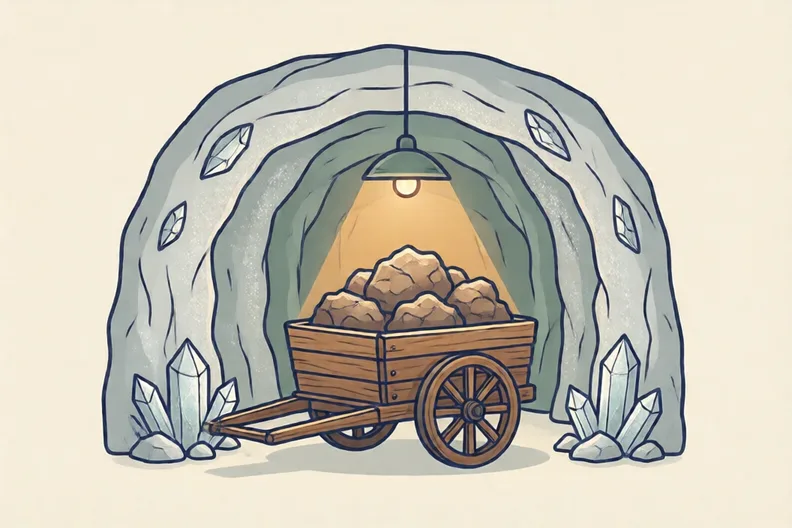
- 1.
Explain in one or two sentences why Ali is wrong.
E Think deeper4 min
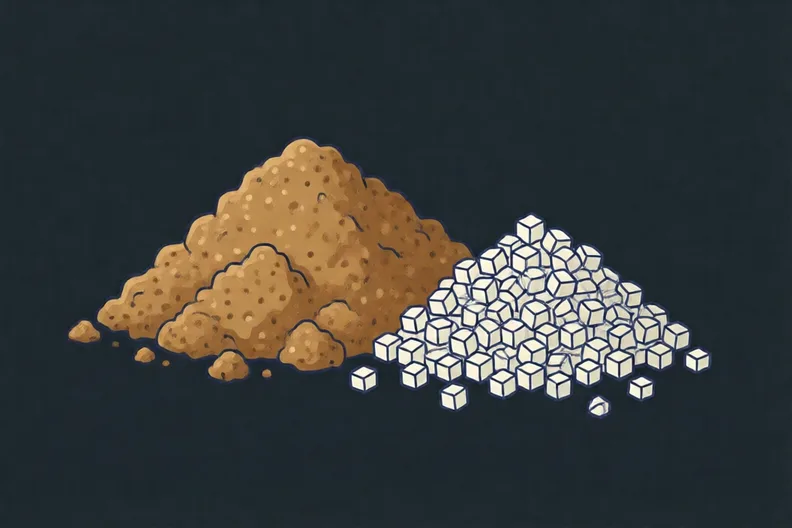
- 1.
Look at the two heaps. Write one reason they look different, and one reason they are still the same salt.