← Year 6 science worksheets

Year 6 Why we group and classify living things worksheet

“Comparing living things” is free to print, with no account. It is the first sheet in the Year 6 science unit “Why we group and classify living things”, for children aged 10 to 11, and takes about 20 minutes.

Print it on A4. The child's pages come first; the answers, and what each wrong answer tells you, are on the grown-up page that follows. Weeks 12 to 18 of the year, 13 sheets in the unit.

Free sample · answers on the last page

Comparing living things

Name: ____________ · Date: ____________
Year 6 · Science · about 20 minutes
Answers are on the grown-up page

Today I can compare living things using observable characteristics.

A Look back3 min

  1. 1.

    Which stage comes straight after the tadpole? Circle one.

    frog spawntadpoleadult frog
    frog spawnfrogletadult frog
  2. 2.

    What does the heron eat in this food chain? Circle one.

    grassgrasshopperheron
    grassgrasshopperfrogheron
  3. 3.

    Which stage comes straight after the egg? Circle one.

    eggpupaadultbutterfly
    caterpillarpupaadult butterfly

B Watch me, then you4 min

Zara compares an ant and a dog. She uses this chart to see how many legs each one has.

Watch me
Number of legs012345678antdog

The chart shows the ant has 6 legs and the dog has 4.

Both have legs, so that is a similarity.

The number of legs is different, so that is a difference.

Now you
  1. 1.

    A robin and a dog both have legs. Is that a similarity or a difference? Circle one.

    Number of legs01234robindog
    similaritydifference

C Your turn7 min

Use the chart of legs to answer each question.

Number of legs02468antdogspiderrobin
  1. 1.

    Insects have six legs. Use the chart to find the insect. Circle one.

    antdogspiderrobin
  2. 2.

    Birds have two legs. Use the chart to find the bird. Circle one.

    antspiderrobin
  3. 3.

    The ant has 6 legs and the dog has 4 legs. Is that a similarity or a difference? Circle one.

    similaritydifference
  4. 4.

    Compare an ant and a spider. Write each card in the right column.

    Both have legsThe ant has 6 legsThe spider has 8 legs
    SimilarityDifference

Say it out loud: Which questions asked for a similarity, and which asked for a difference? How did you tell?

D Spot the mistake3 min
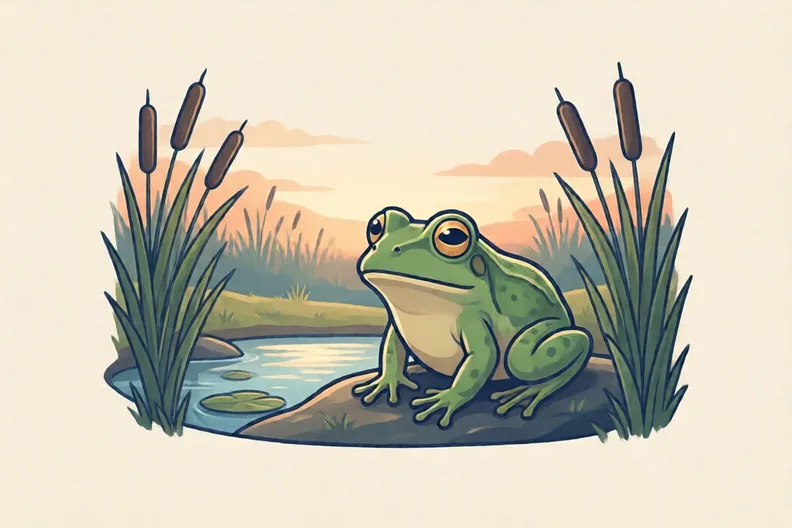
A frog sitting by a pond at dusk with reeds around it
Kit says: “If you cannot see it in a photo, it is not an observable characteristic.”
  1. 1.

    Is Kit right? Explain in one or two sentences.

E Think deeper3 min
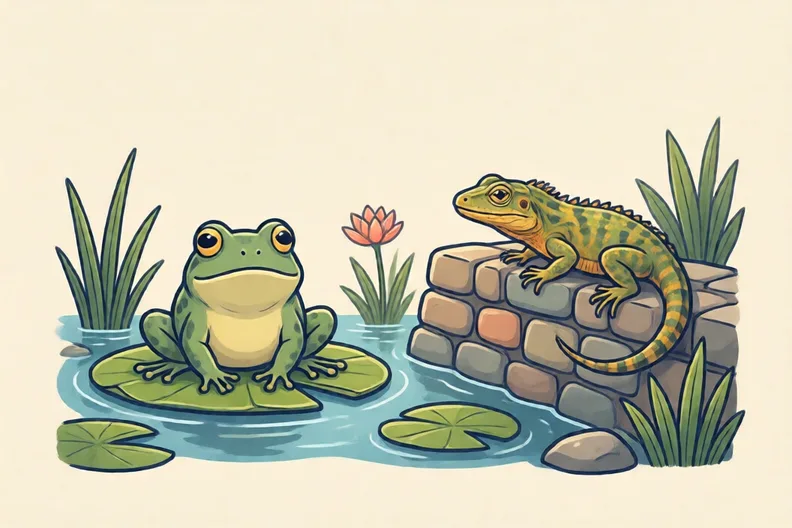
A frog on a lily pad and a lizard on a sunny stone wall
  1. 1.

    A frog and a lizard both have four legs. Name one difference that shows they belong to different groups. Explain how it helps.

How did it feel?

I can do it Nearly Not yet
StudyDen · Year 6 · Science · Why we group and classify living thingsAnswers are on the grown-up page

For the grown-up

Comparing living things · 2 minutes to read

Answers, and what a wrong one tells you

A

1. froglet

2. frog

3. caterpillar

B

1. similarity If your child says difference, they are comparing the numbers. Ask what both animals have, then how many they have.

C

1. ant If your child chose the spider, point out that it has eight legs. Ask them to find the bar that stops at 6.

2. robin If your child chose the ant, ask how many legs the ant has. Then find the bar that stops at 2.

3. difference If your child chose similarity, ask whether 6 and 4 are the same number. A different number of legs is a difference.

4. Difference: The ant has 6 legs, The spider has 8 legs · Similarity: Both have legs

D

1. Look for: Says Kit is wrong and explains that behaviour seen or heard over time is observable without a photo. If your child agrees with Kit, ask: can you hear a frog call at night without a photo? Then ask them to name the five senses.

E

1. Look for: Names one observable difference such as body covering, and explains that one difference can separate two living things even when they share a feature.

Words to use

Say“Which feature did you use to decide, and could you see it, hear it or watch it happen?”
Instead of“Just tell me the right answer.”

After the sheet

Find two plants or two pets at home, or two birds in the garden. Make a similarities and differences list together, then decide which difference matters most for telling them apart.

Tick what your child got right in StudyDen. Anything missed comes back in a later Look back box, so there's no need to redo the sheet.

The rest of this unit

12 more sheets come with a StudyDen plan, in teaching order:

  1. Sorting animals by their spines(with a plan)
  2. Flowering or not?(with a plan)
  3. Tiny but living(with a plan)
  4. Sorting Micro-organisms(with a plan)
  5. Plan a mould test(with a plan)
  6. The 5 Rs and compost(with a plan)
  7. Mould that helps us(with a plan)
  8. Planning a yeast test(with a plan)
  9. Yeast Fair Tests(with a plan)
  10. Mould and micro-organisms review(with a plan)
  11. Carl Linnaeus and classification(with a plan)
  12. Naming new species(with a plan)

Every Year 6 science worksheet

The worksheets plan opens a printable sheet for every lesson in Years 1 to 6, each with its answers on a separate page for you. It costs £6.99 a month or £59 a year for the whole family, with no free trial.

The full StudyDen plan adds the lessons themselves, marked as your child works, with the worksheets included. It is 7 days free, then £29.99 a month.

Both start with a free account; you choose the plan when you sign up.