← Year 5 PE worksheets

Year 5 Dance: your tag, everyday art worksheet

“Turning a tag into movement” is free to print, with no account. It is the first sheet in the Year 5 PE unit “Dance: your tag, everyday art”, for children aged 9 to 10, and takes about 22 minutes.

Print it on A4. The child's pages come first; the answers, and what each wrong answer tells you, are on the grown-up page that follows. Weeks 22 to 27 of the year, 12 sheets in the unit.

Free sample · answers on the last page

Turning a tag into movement

Name: ____________ · Date: ____________
Year 5 · PE · about 22 minutes
Answers are on the grown-up page

Today I can make a dance motif that shows a tag's shape, energy and feel.

A Look back3 min

Clear a space with nothing breakable nearby, away from windows. A grown-up watches. Warm up for one minute: march on the spot, then do slow arm circles.

  1. 1.

    Dance speed can go from slow to fast. Which word fits in the middle? Circle it.

    SlowFast
    mediumstophigh
  2. 2.

    Which part of a PE lesson comes first? Circle it.

    Main danceCool down
    warm upcool downmain dance
  3. 3.

    Before you dance at home, what must you check first? Circle it.

    Warm upDance
    clear space and no breakables nearbydance on the sofadance near the window

B Watch me, then you4 min

Sam wants his tag to look sharp and pointed. He makes a motif of four actions and repeats it.

Watch me
ReachSnapFreezeTurn

Sam's tag is sharp, so his actions have sharp points.

Reach out, snap the hand in, then freeze the shape.

Turn, then repeat the whole motif to make it his.

Now you
  1. 1.

    Sam wants one more sharp action at the end. Which fits best? Circle it.

    pointed elbow flickfloppy waveslow melting sink

C Your turn8 min

Clear your space and warm up for one minute first. Draw your own tag on paper, then make a motif of four actions that shows its shape and energy. A grown-up watches.
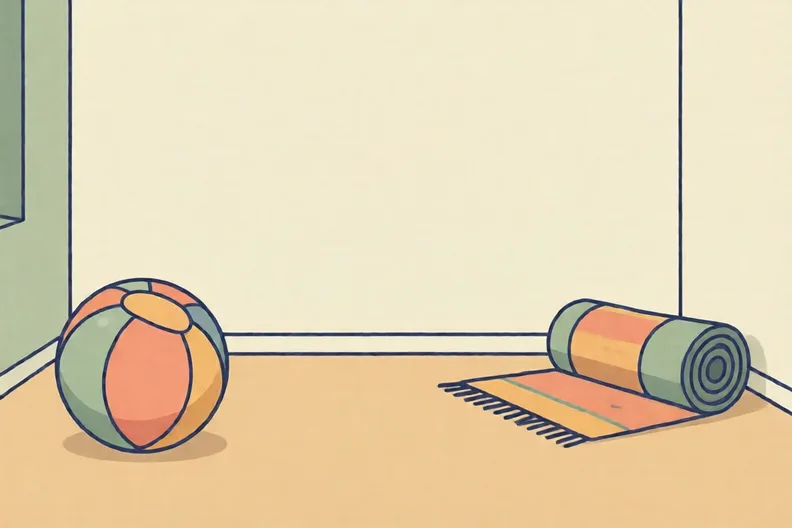
A bare living room floor, cleared of furniture, with a soft ball in one corner
  1. 1.

    Number the first three steps of Sam’s motif in the right order.

    1. Freeze in a sharp shape
    2. Reach one arm out fast
    3. Snap your elbow in
  2. 2.

    Join each tag style to the coaching point that helps it most.

    Spiky and sharpSwirly and smoothChunky and boldShared crew tag
    Let the arms swing round in curvesMove together and match your timingKeep points sharp and hold each shape crispUse strong, heavy movements that fill the space
  3. 3.

    Sam’s next motif starts low, near the floor. It ends as he slowly comes out of his high shape. Number these four steps in the right order.

    1. Hold the high shape
    2. Lower one arm slowly
    3. Sink low and wait
    4. Spring up tall
  4. 4.

    Hold your tag shape as still as you can. Do it three times and record your seconds on the bar chart. Then write your best time here.

    My three tries (seconds)051015202530Try 1Try 2Try 3

Say it out loud: Show your motif to your grown-up. Which action shows your tag's shape or energy best?

D Spot the mistake3 min

A sheet of plain paper with bold sharp shapes sketched in pencil
Kit says: “To dance my tag, I must write every letter big in the air with my arm.”
  1. 1.

    Why is Kit wrong? Write one reason.

E Think deeper4 min

  1. 1.

    Tell a grown-up about the first version of your motif and the version you changed. Explain the change and why it suits your tag.

    Firstversion

How did it feel?

Think about your tag motif. Which action felt most like your tag, and why?

I can do it Nearly Not yet
StudyDen · Year 5 · PE · Dance: your tag, everyday artAnswers are on the grown-up page

For the grown-up

Turning a tag into movement · 2 minutes to read

Answers, and what a wrong one tells you

A

1. medium If your child circles 'high', they are thinking of level, not speed. Ask: is the middle one slower than fast but faster than slow?

2. warm up

3. clear space and no breakables nearby If your child circles a choice near furniture or a window, they have missed the safety check. Walk the space together and point out the hazards.

B

1. pointed elbow flick If your child circles the floppy wave, they have matched a soft feel, not the sharp style. Ask: which action has a clear point?

C

1. 1 Reach one arm out fast · 2 Snap your elbow in · 3 Freeze in a sharp shape

2. Spiky and sharp → Keep points sharp and hold each shape crisp; Swirly and smooth → Let the arms swing round in curves; Chunky and bold → Use strong, heavy movements that fill the space; Shared crew tag → Move together and match your timing If your child joins a swirly style to sharp points, they are matching the wrong feel. Ask which words describe curves and which describe points.

3. 1 Sink low and wait · 2 Spring up tall · 3 Hold the high shape · 4 Lower one arm slowly

4. Look for: The longest of the three tries, in seconds, matching the tallest bar on the chart.

D

1. Look for: a tag can be shown through shapes, energy or feel, so writing letters in the air is not required If your child says Kit is right, they think a tag must be traced. Ask what else a tag carries: its shapes, its energy and its feel.

E

1. Look for: names one change to speed, size or an action, and gives a reason linked to the tag's shape, energy or feel

Words to use

Say“Show me the shape first, then tell me how it feels. What did you change to make it grow?”
Instead of“Just copy the letters in the air so it looks like a proper tag.”

After the sheet

Draw a simple tag on paper with sharp, swirly or chunky shapes. Hold each shape still for three slow counts, then change the speed of one action and ask your child which version feels more like the tag.

Tick what your child got right in StudyDen. Anything missed comes back in a later Look back box, so there's no need to redo the sheet.

The rest of this unit

11 more sheets come with a StudyDen plan, in teaching order:

  1. Posture and sharp Hip Hop shapes(with a plan)
  2. Making Your Mark(with a plan)
  3. Dance from a painting(with a plan)
  4. Dynamics and object dance(with a plan)
  5. Reading Movement Clues(with a plan)
  6. Moving Like Spray Paint(with a plan)
  7. Floating and tearing(with a plan)
  8. Showing ideas with your body(with a plan)
  9. Motifs that talk back(with a plan)
  10. Structuring a short dance(with a plan)
  11. Clear shapes, shared dance(with a plan)

Every Year 5 PE worksheet

The worksheets plan opens a printable sheet for every lesson in Years 1 to 6, each with its answers on a separate page for you. It costs £6.99 a month or £59 a year for the whole family, with no free trial.

The full StudyDen plan adds the lessons themselves, marked as your child works, with the worksheets included. It is 7 days free, then £29.99 a month.

Both start with a free account; you choose the plan when you sign up.